Greece:
Athens (Page 2)
Greece:
Athens (Page 2)
Greece:
Athens (Page 2)
|
|||
|
<<< Previous Page Next Page >>> |
|||
|
|||
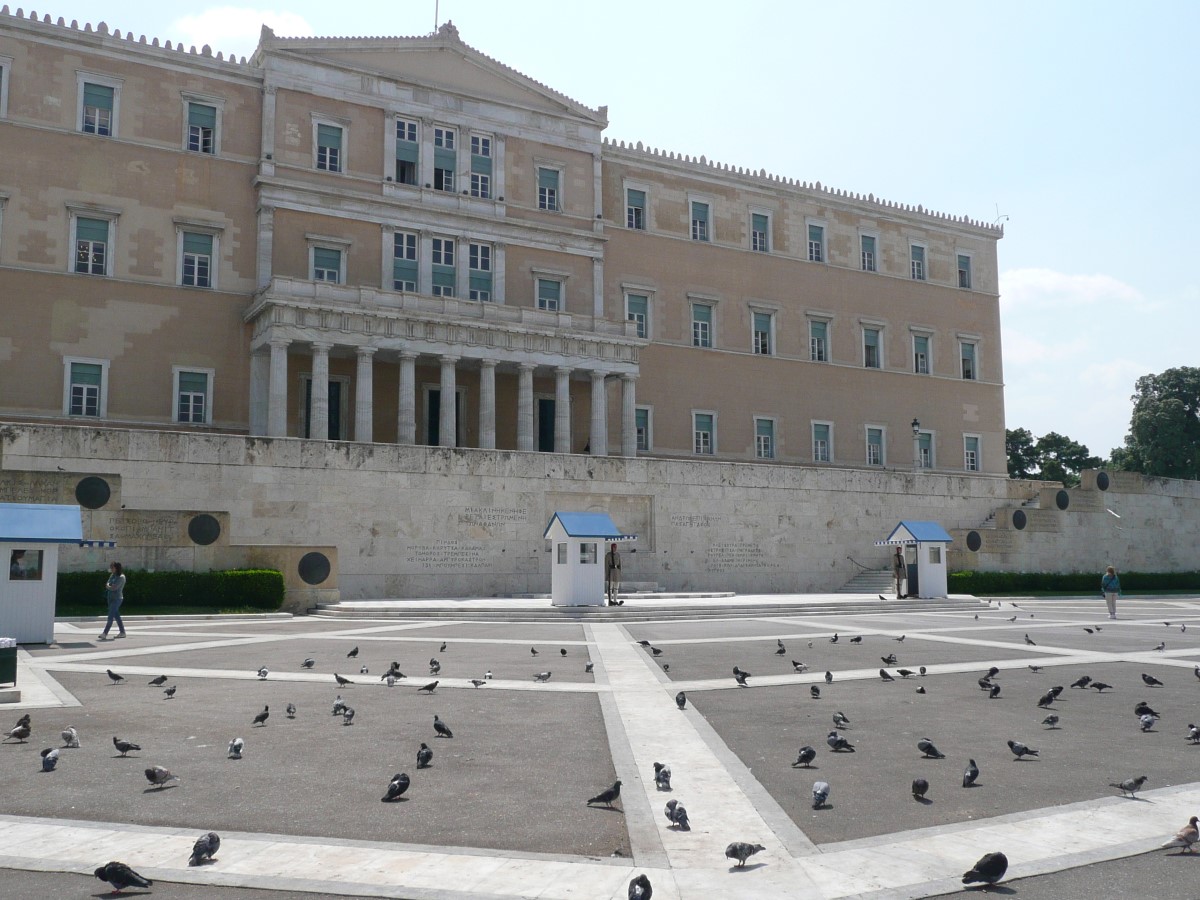
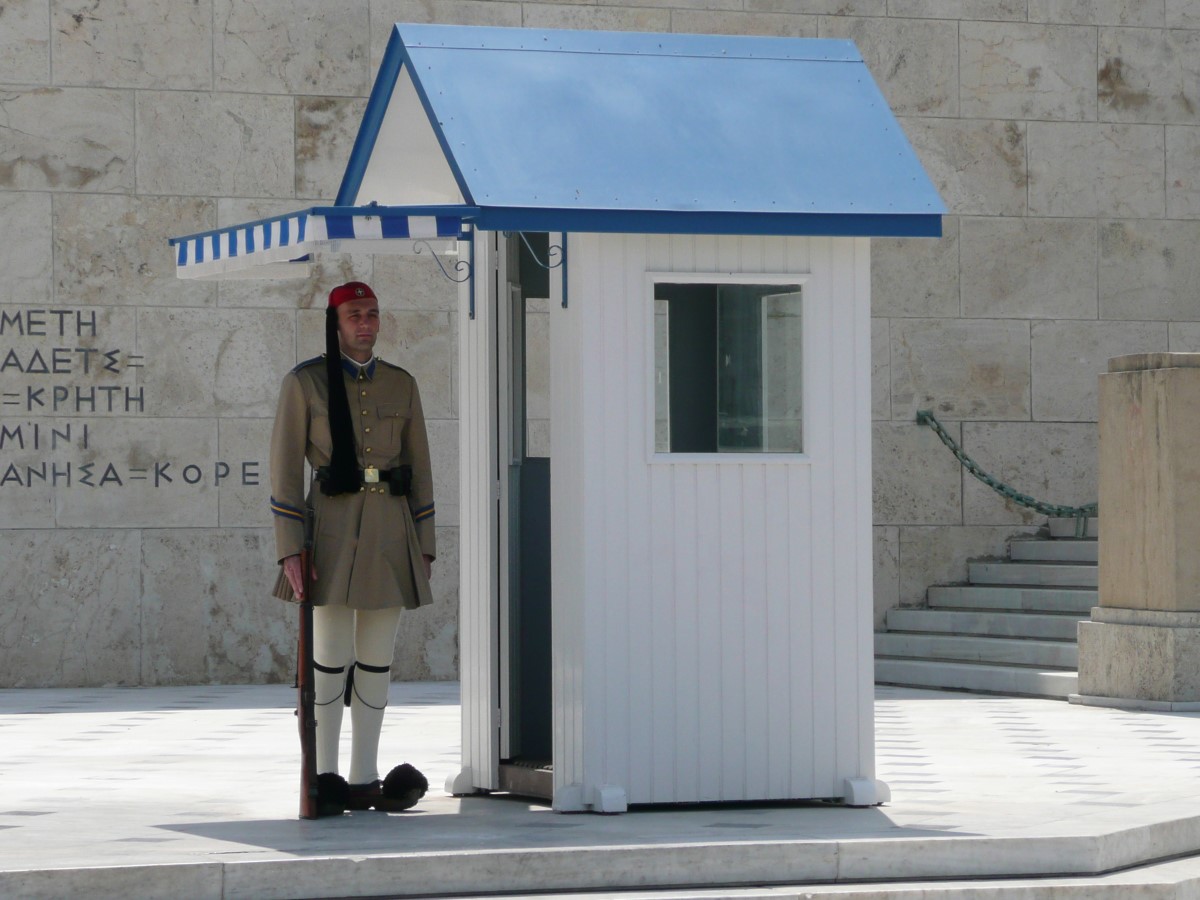
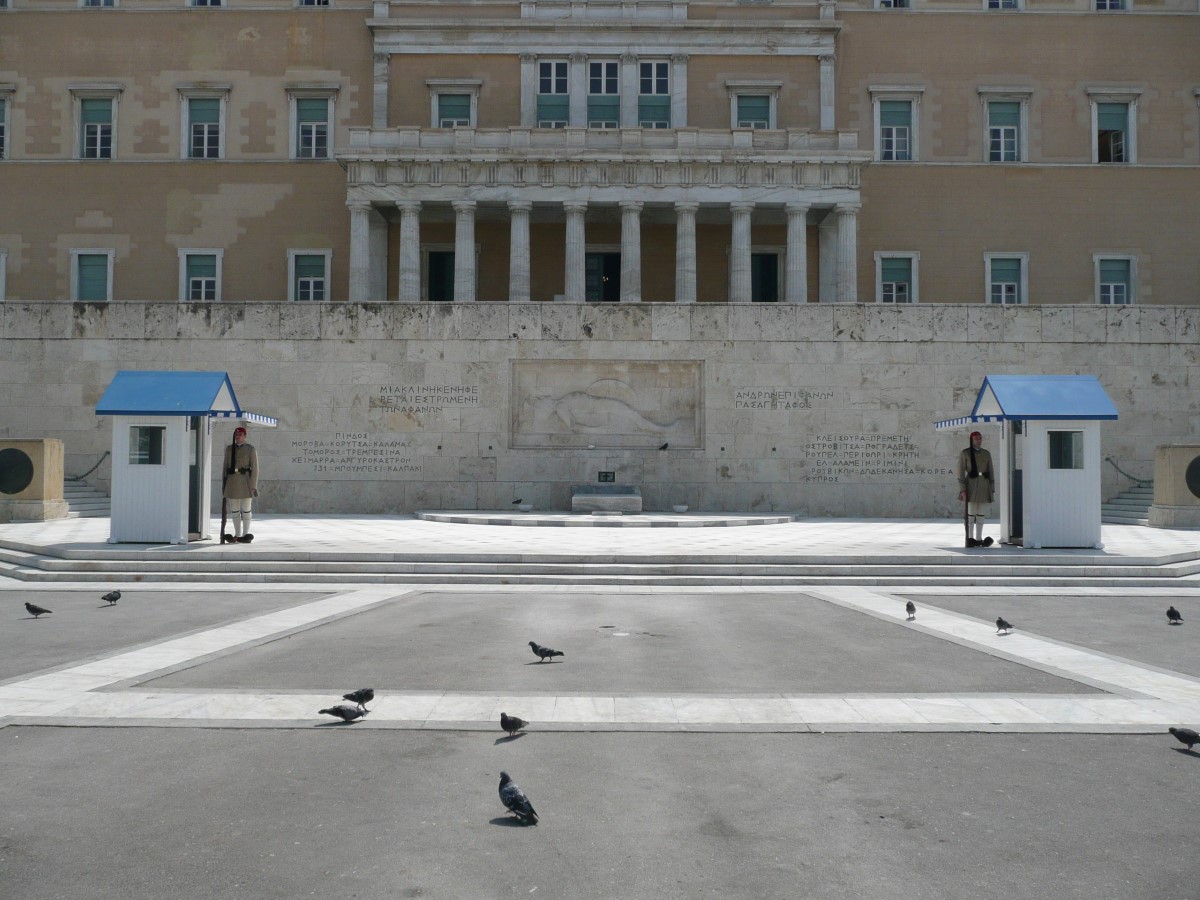
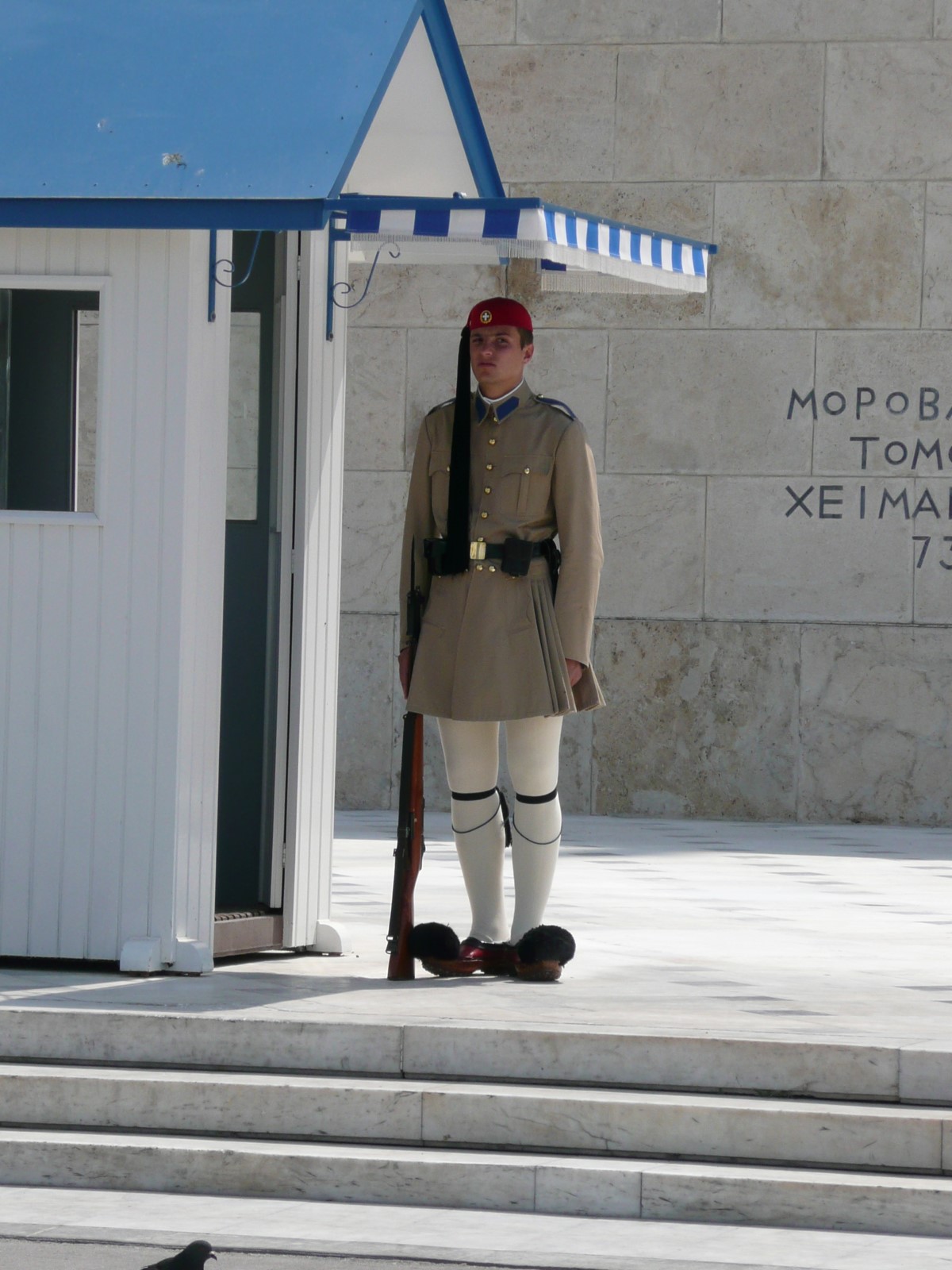
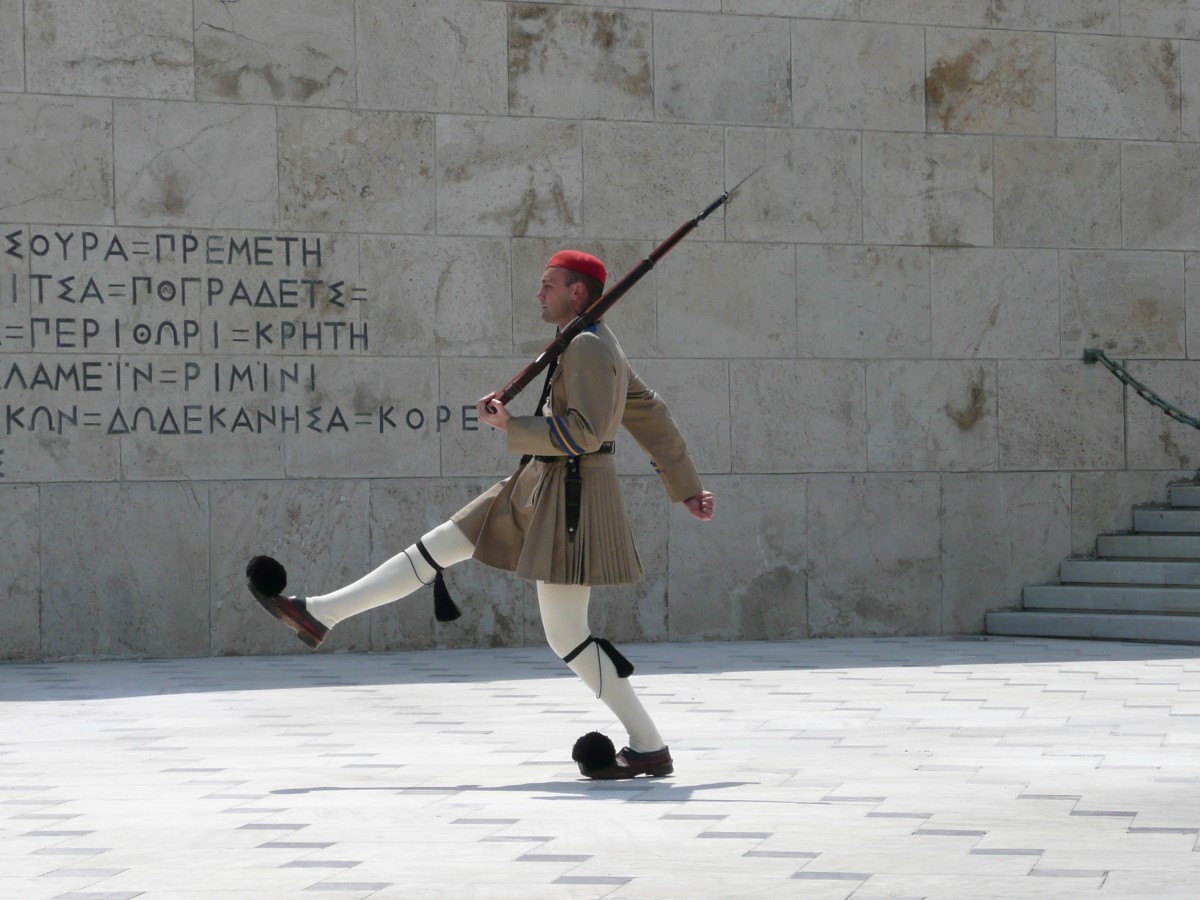
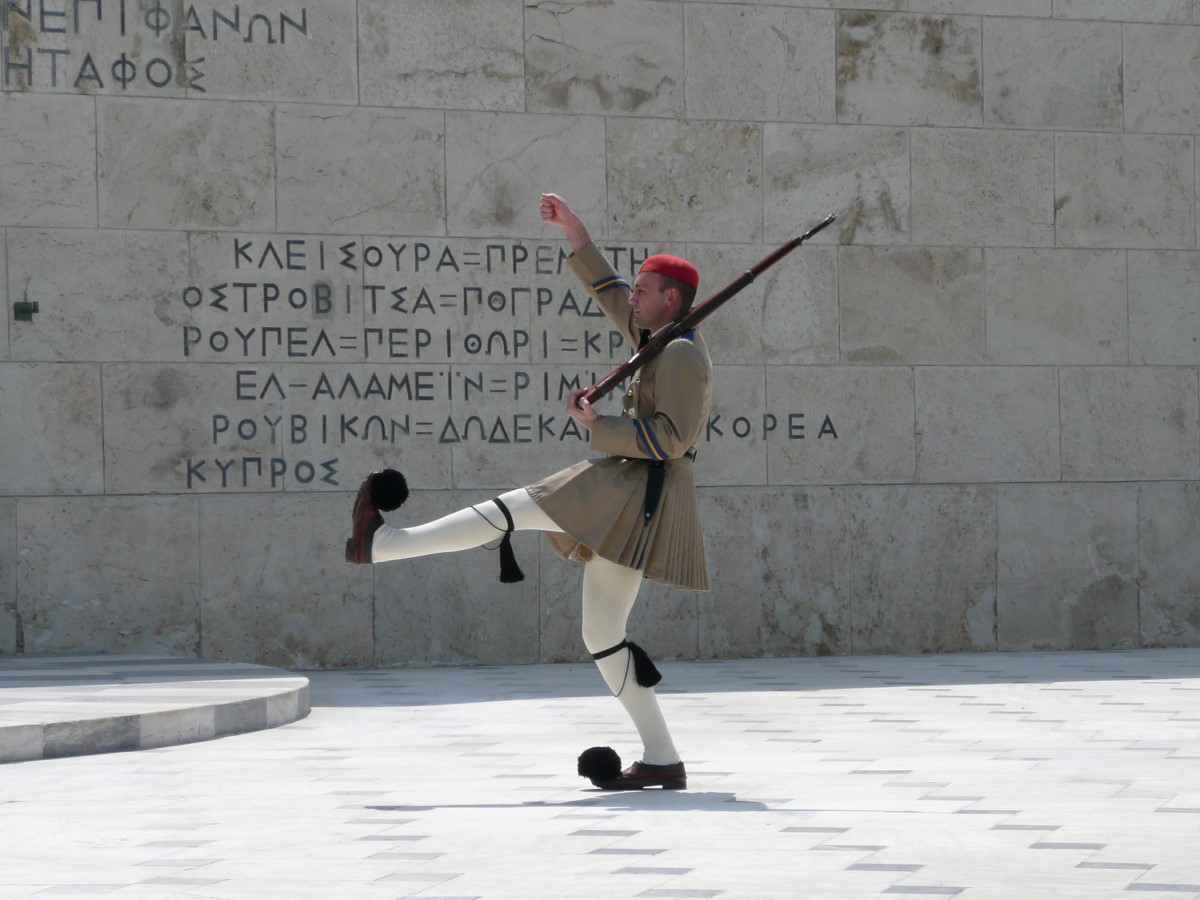
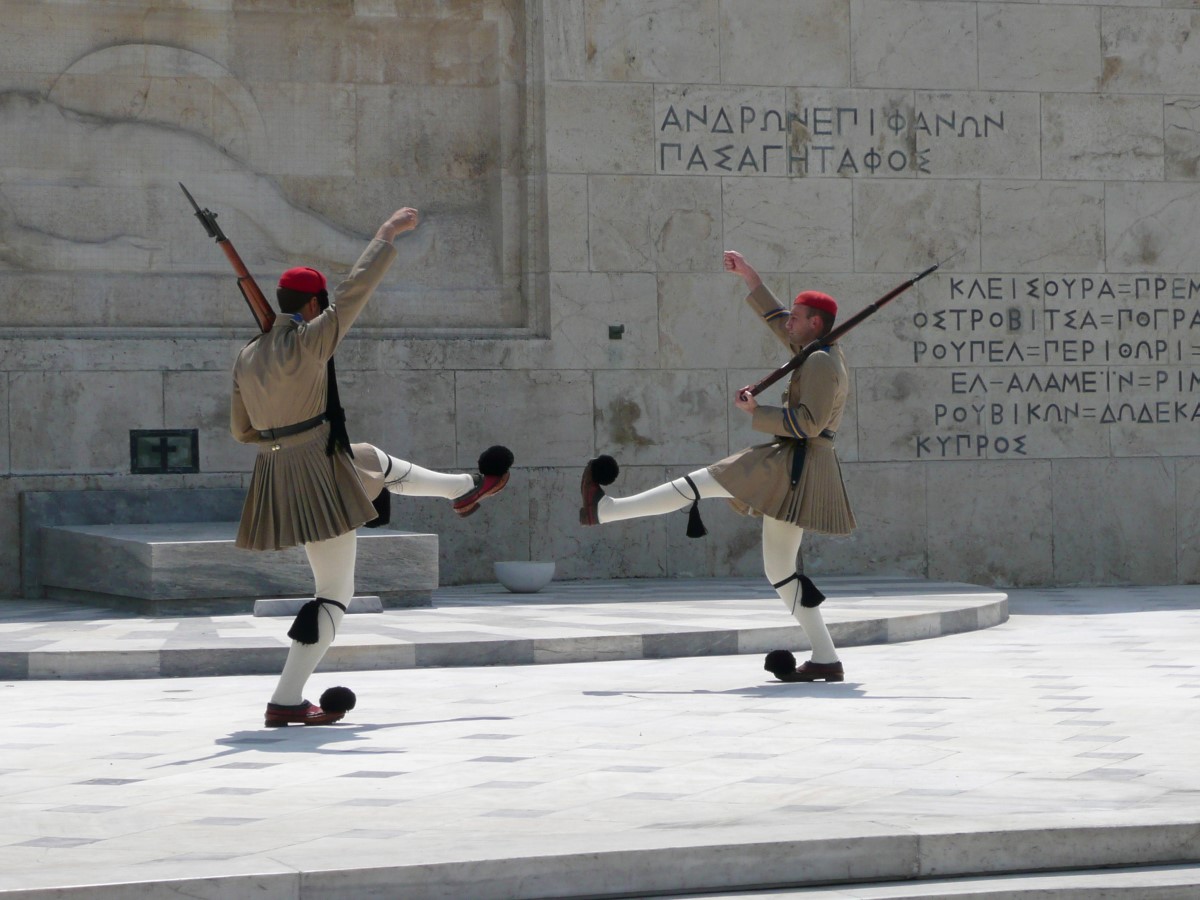
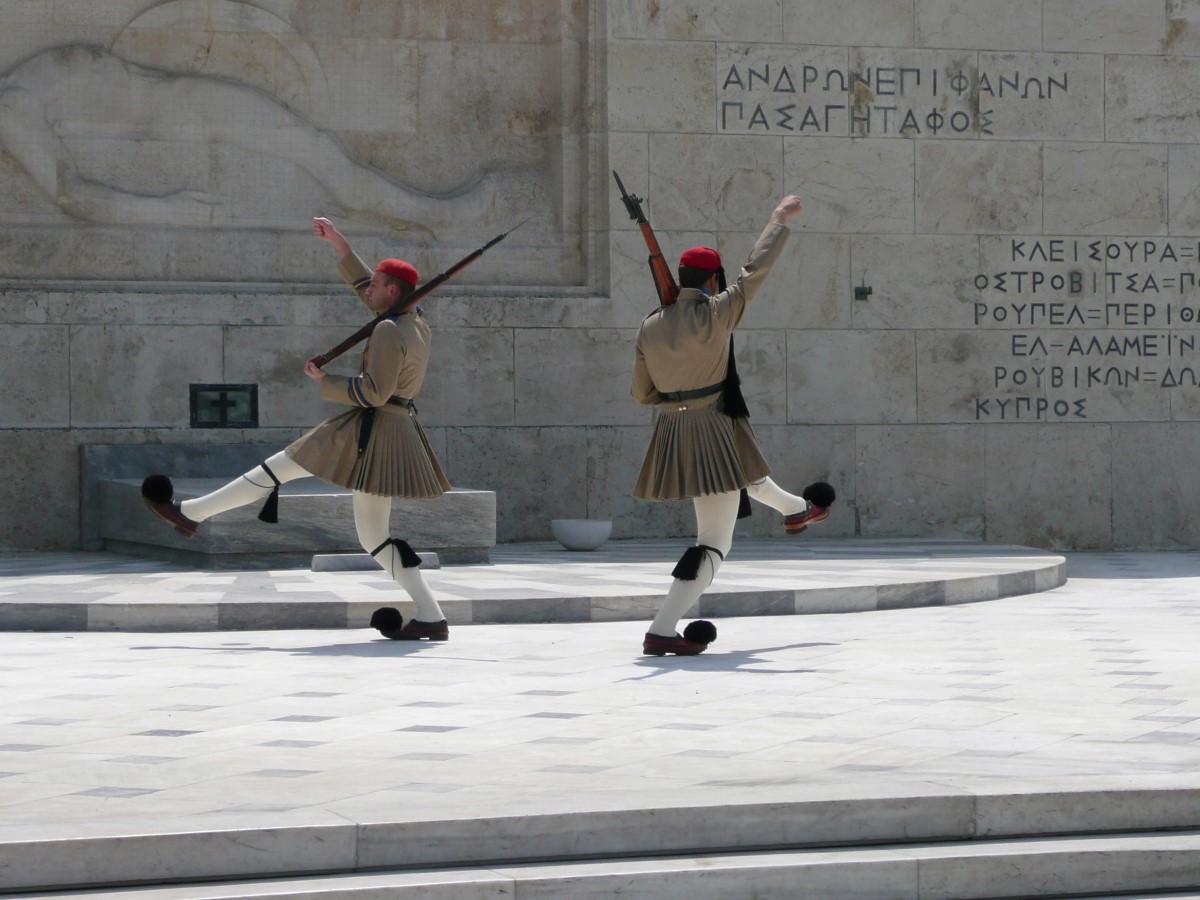
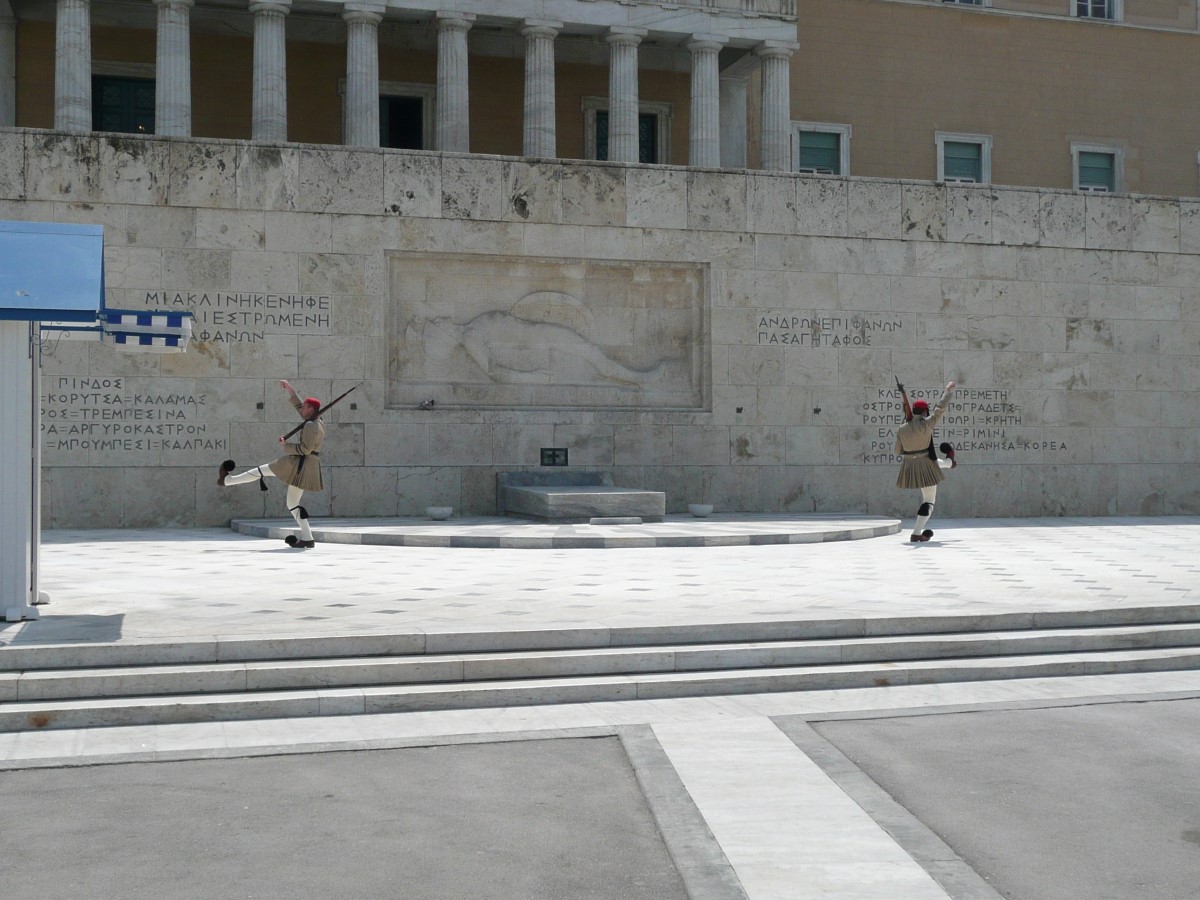
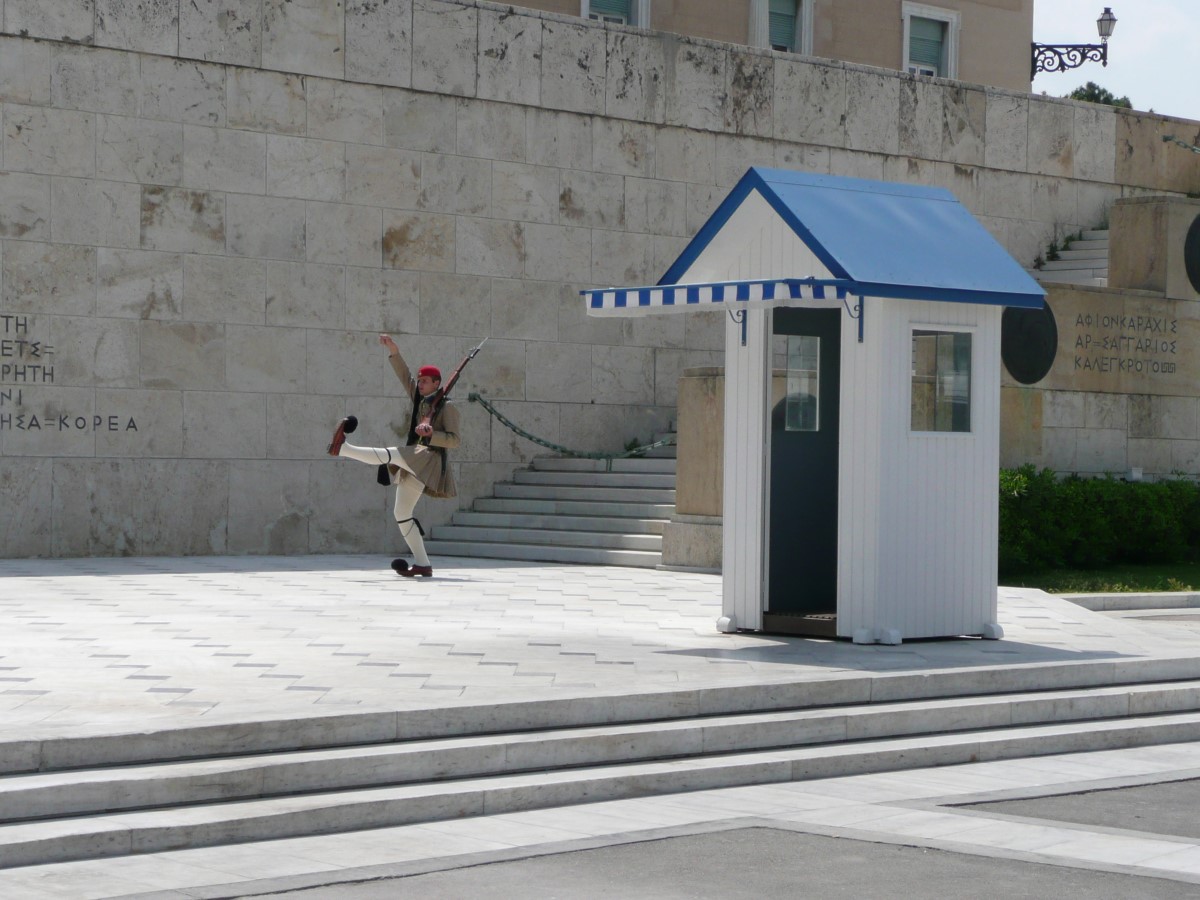
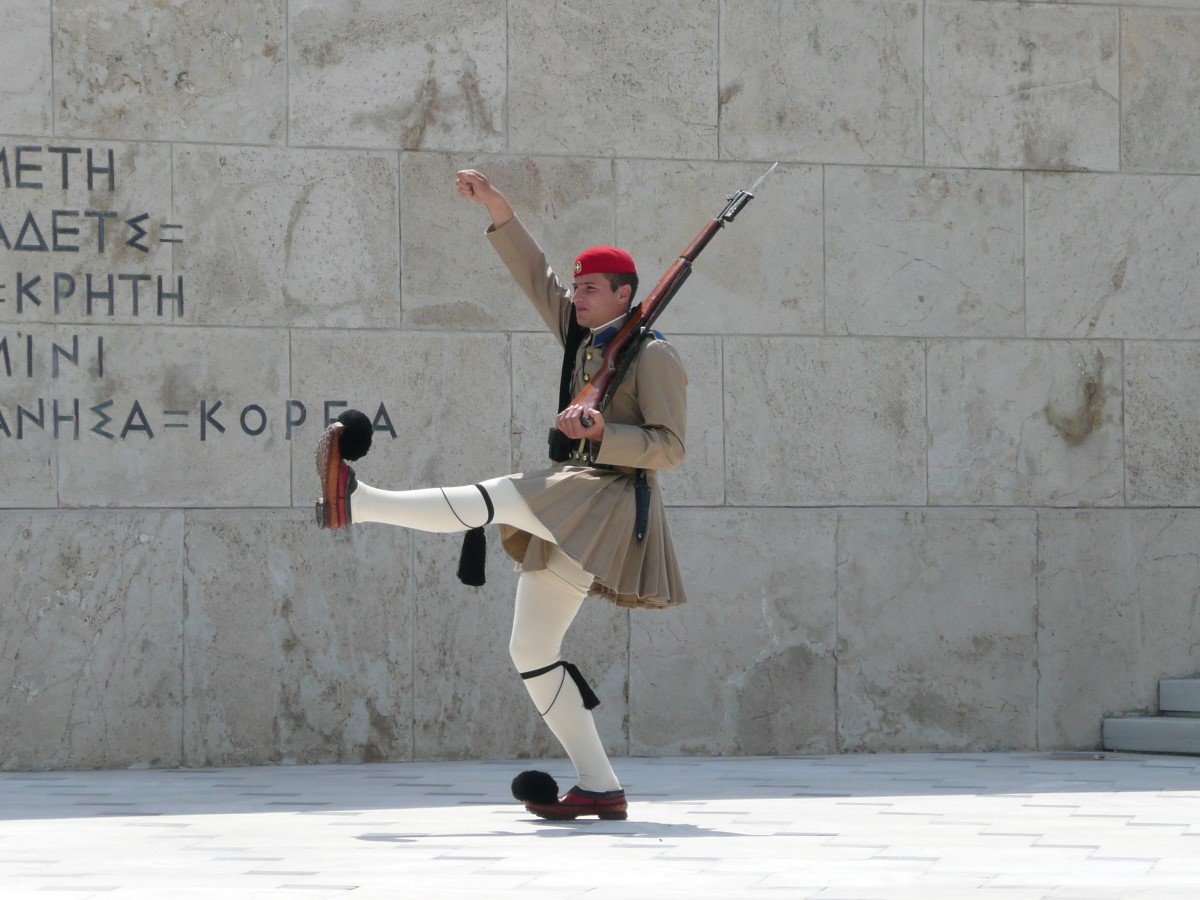
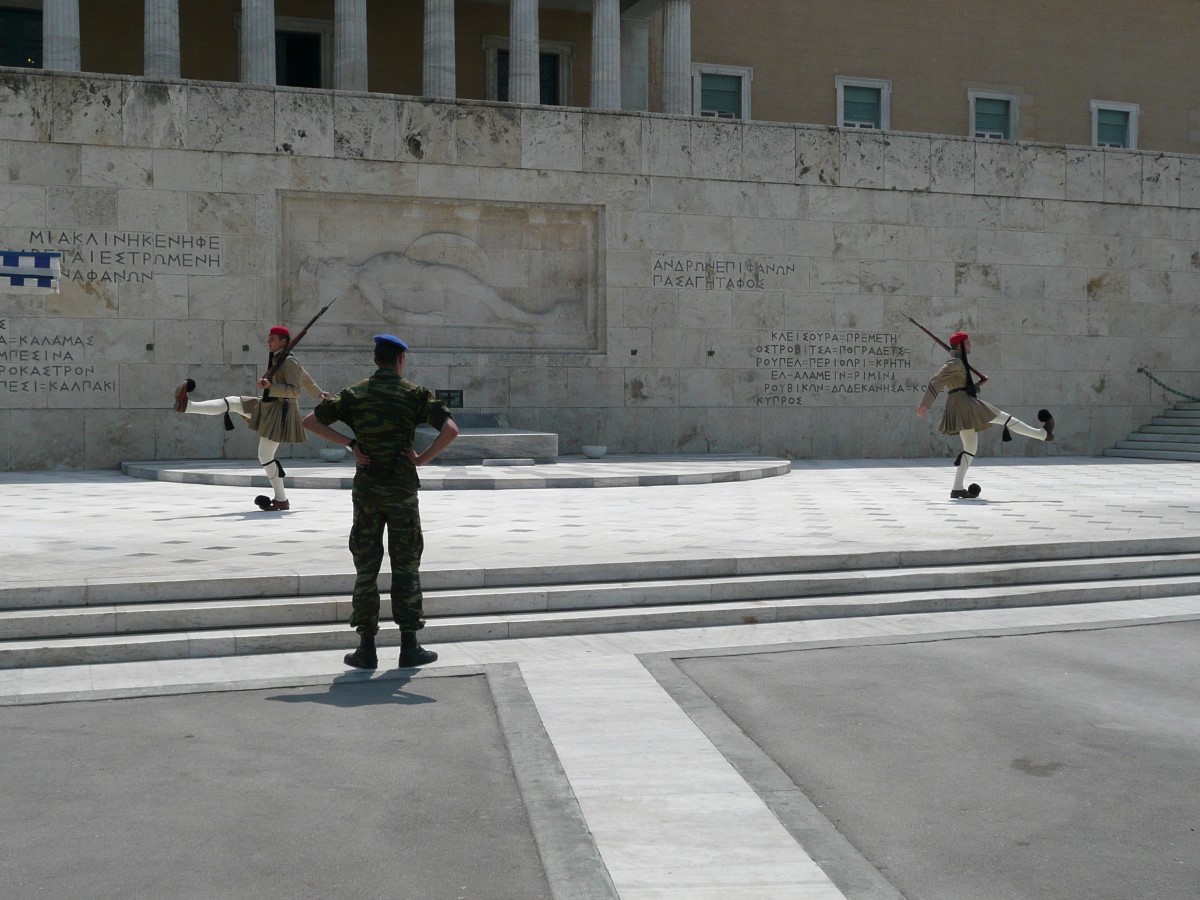
| Changing of the Guards | |||
| Changing of the guards at the tomb of the unknown soldier. | |||
|
|||
| Ancient Agora | |||
| The Ancient Agora, or marketplace, is located to the northwest of the Acropolis and is bounded on the south by the hill of the Areopagus ("Hill of Ares" a.k.a. "Mar's Hill" in Roman times) and on the west by the hill of Colonus Agoraeus. It was the political and administrative center of ancient Athens as well as the place where social, commercial and religious activities concentrated. The site was occupied without interruption in all periods of the city's history. It was used as a residential and burial area as early as the Late Neolithic period (3000 BCE). Early in the 6th century BCE, in the time of Solon, the Agora became a public area. After a series of repairs and remodeling, it reached its final rectangular form in the 2nd century BCE. Extensive building activity occurred after the serious damage made by the Persians in 480-79 BCE, by the Romans in 89 BCE and by the Heruli in 267 CE. After the Slavic invasion in 580 CE, it was gradually abandoned. | |||
|
|
|||
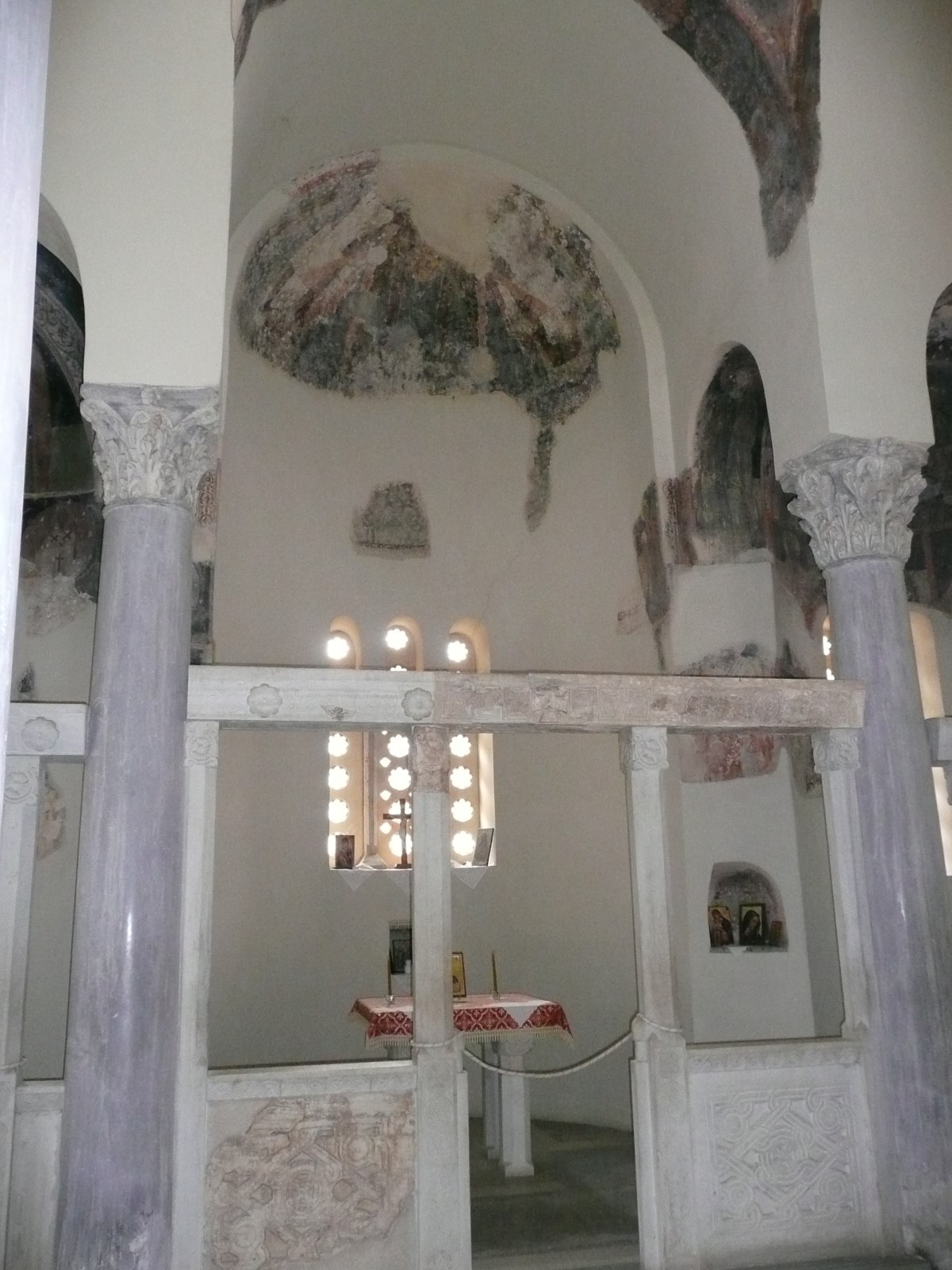
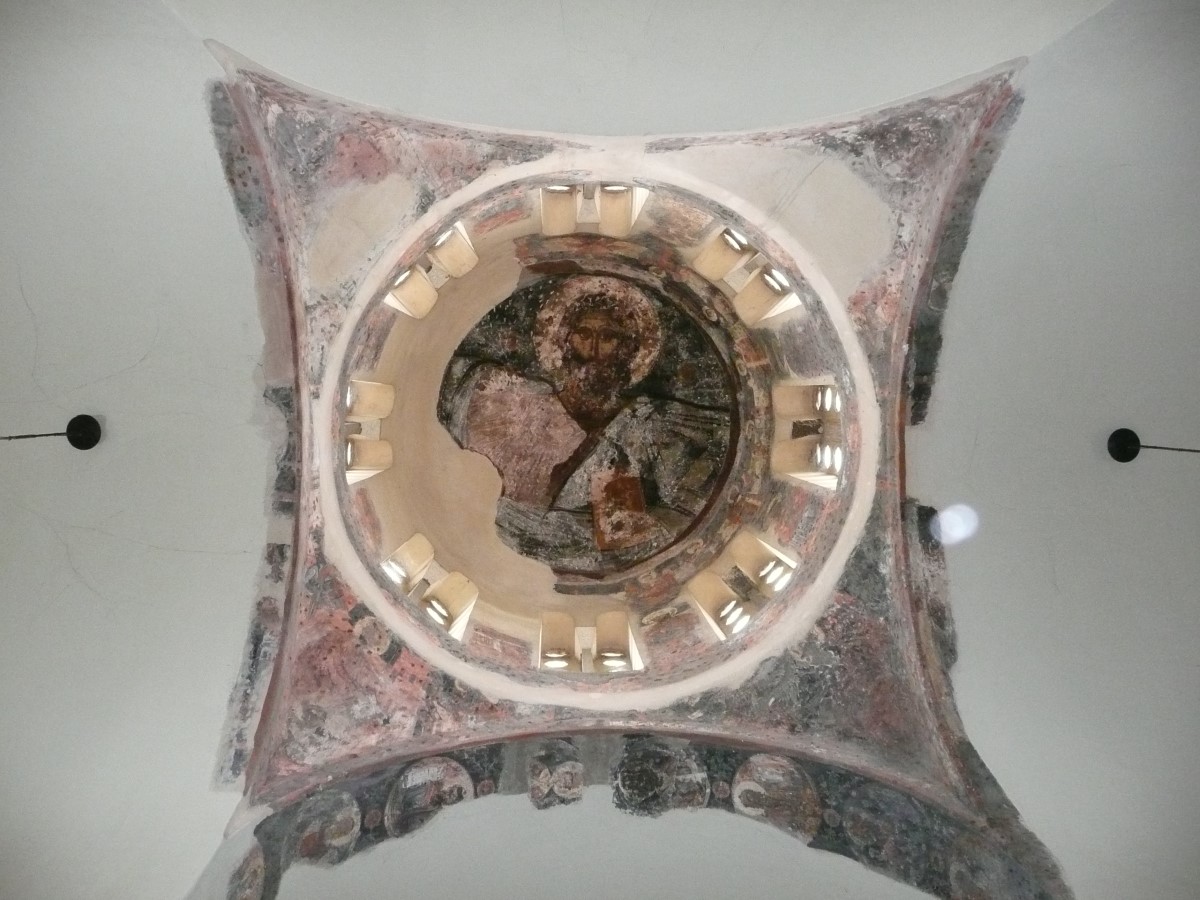
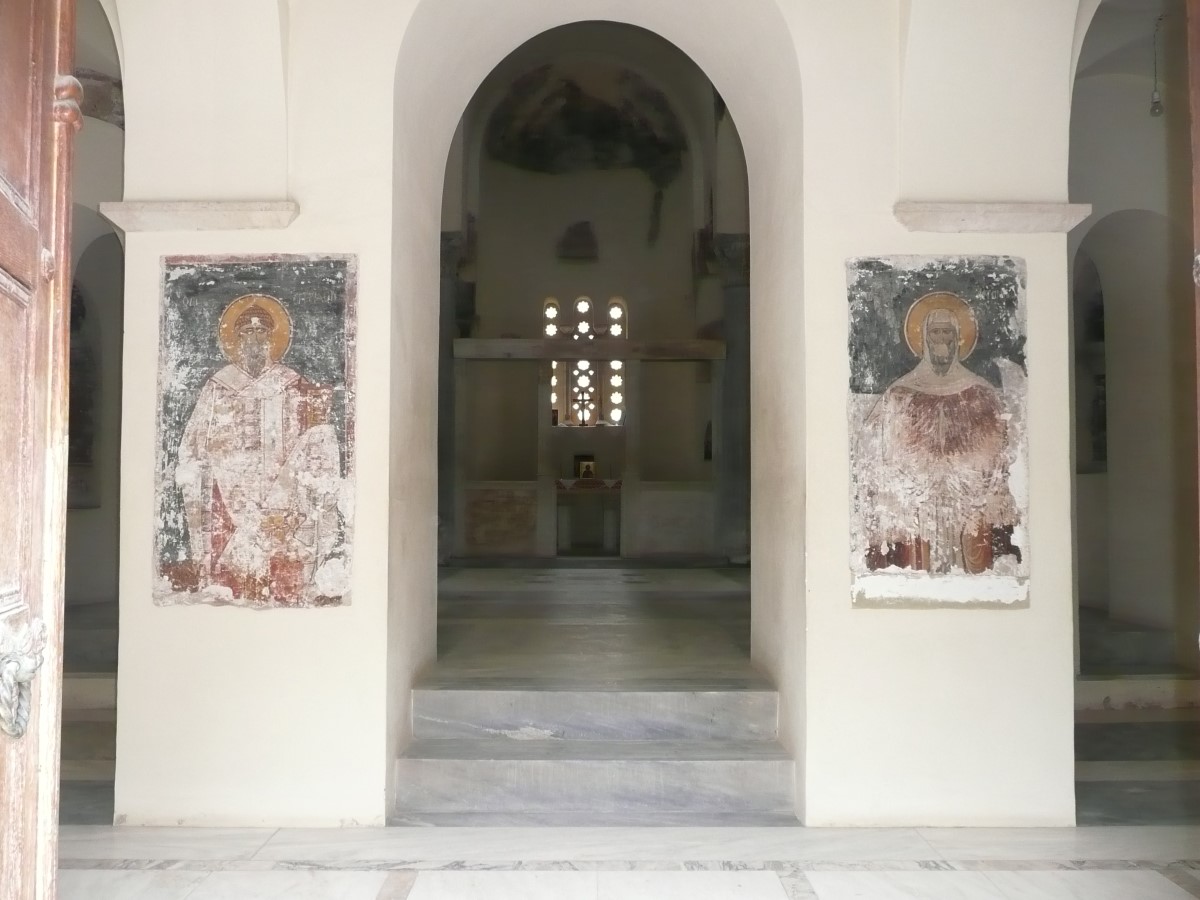
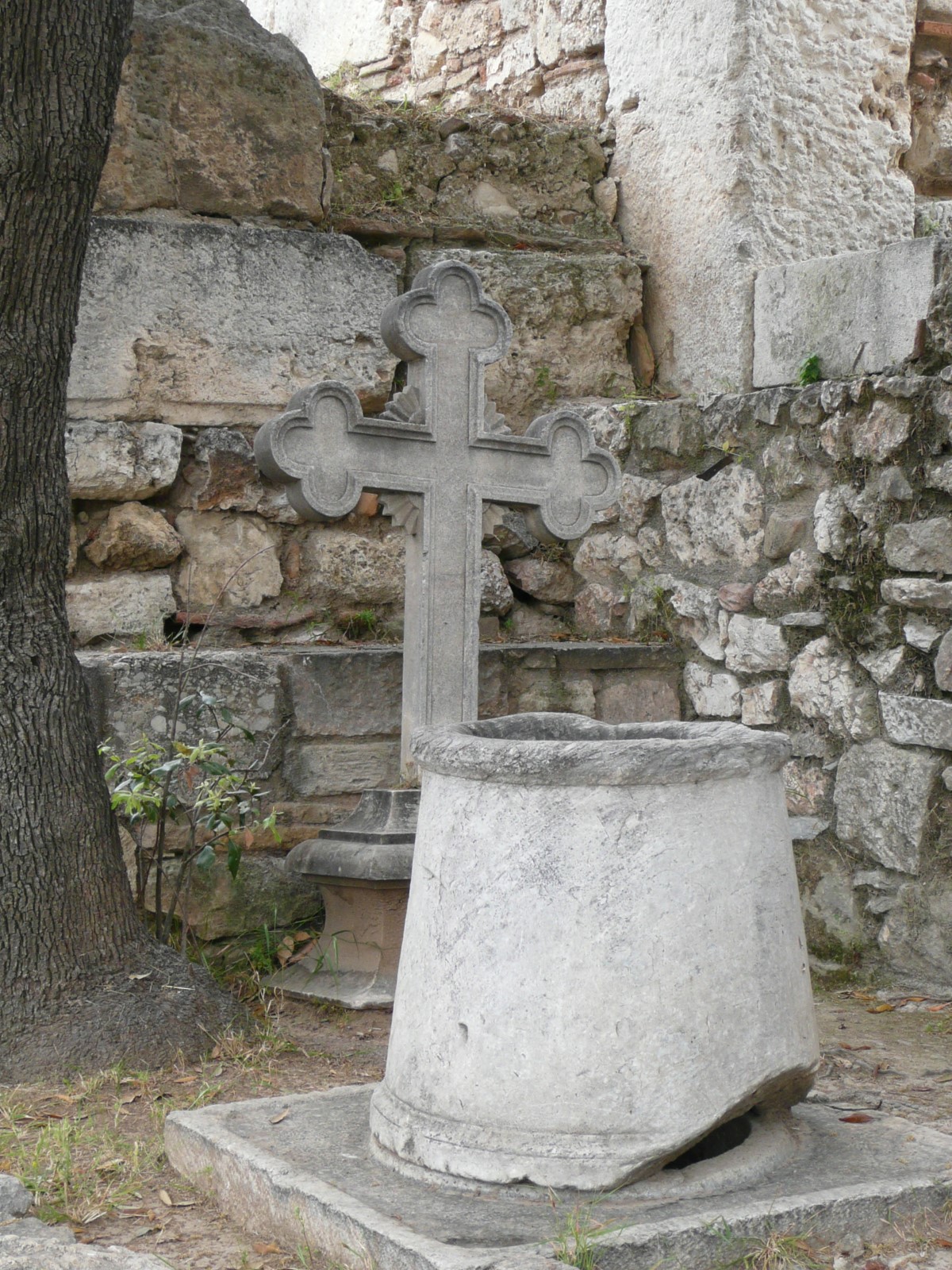
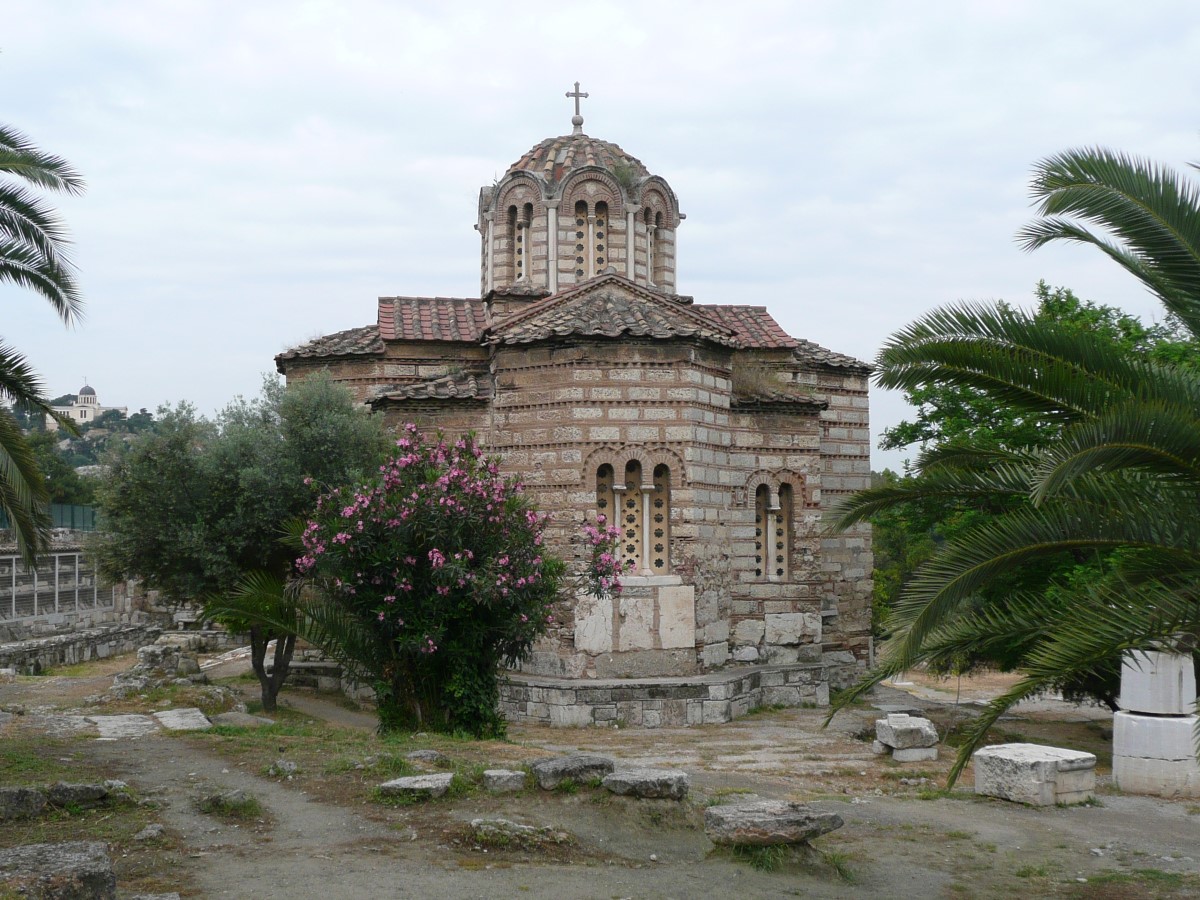
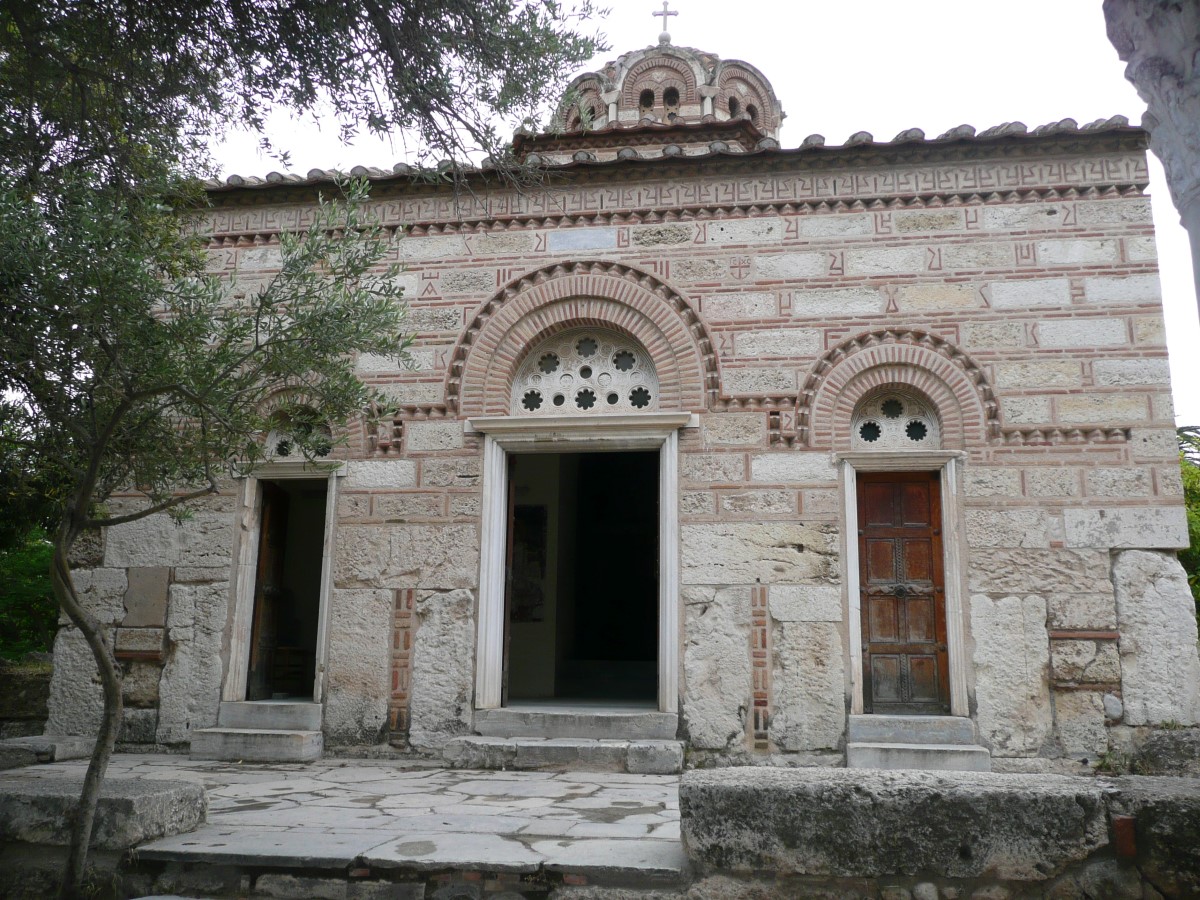
| Holy Apostles Church: The church, which was built in the Eleventh Century, was deconsecrated about 50 years ago. At the same time, archeologists restored the building to its original grandeur. | |||
|
|||
|
|
|||
|
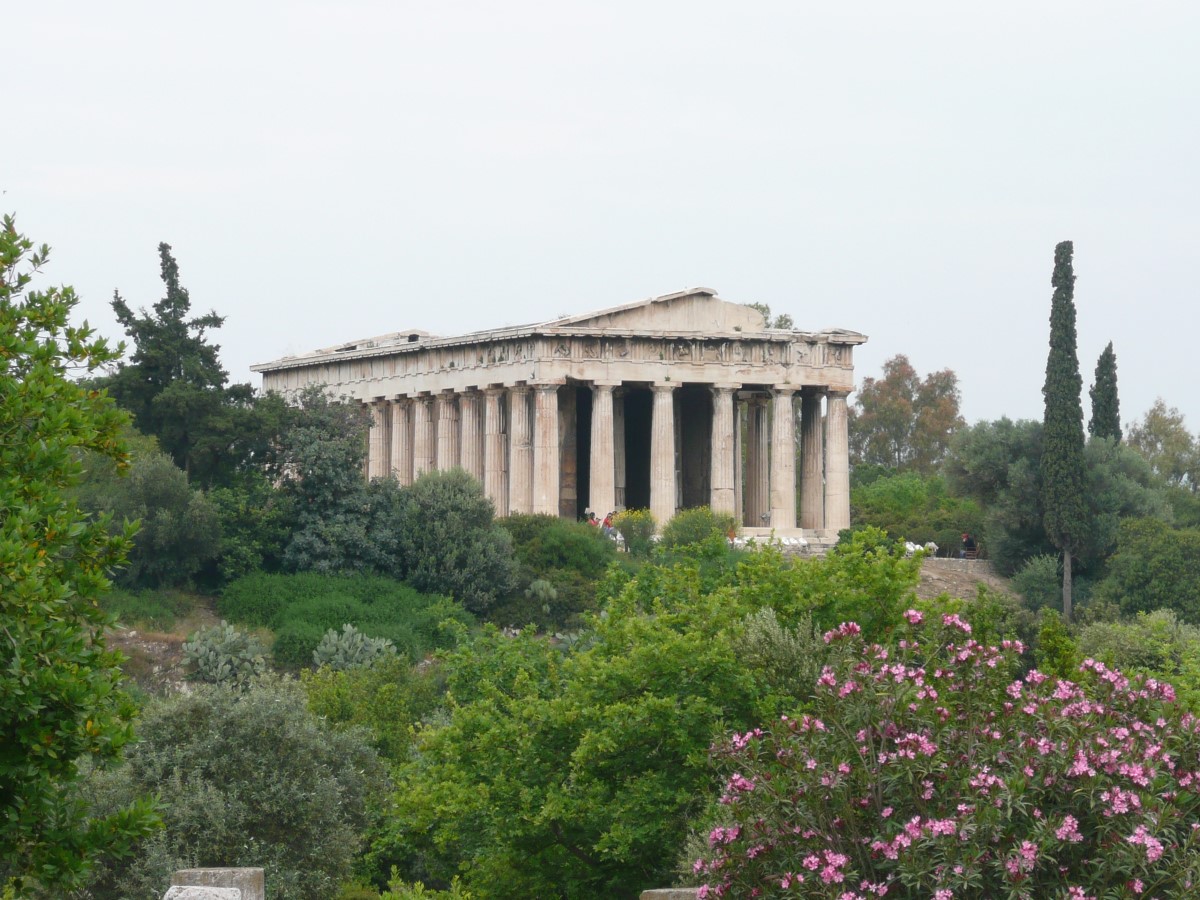
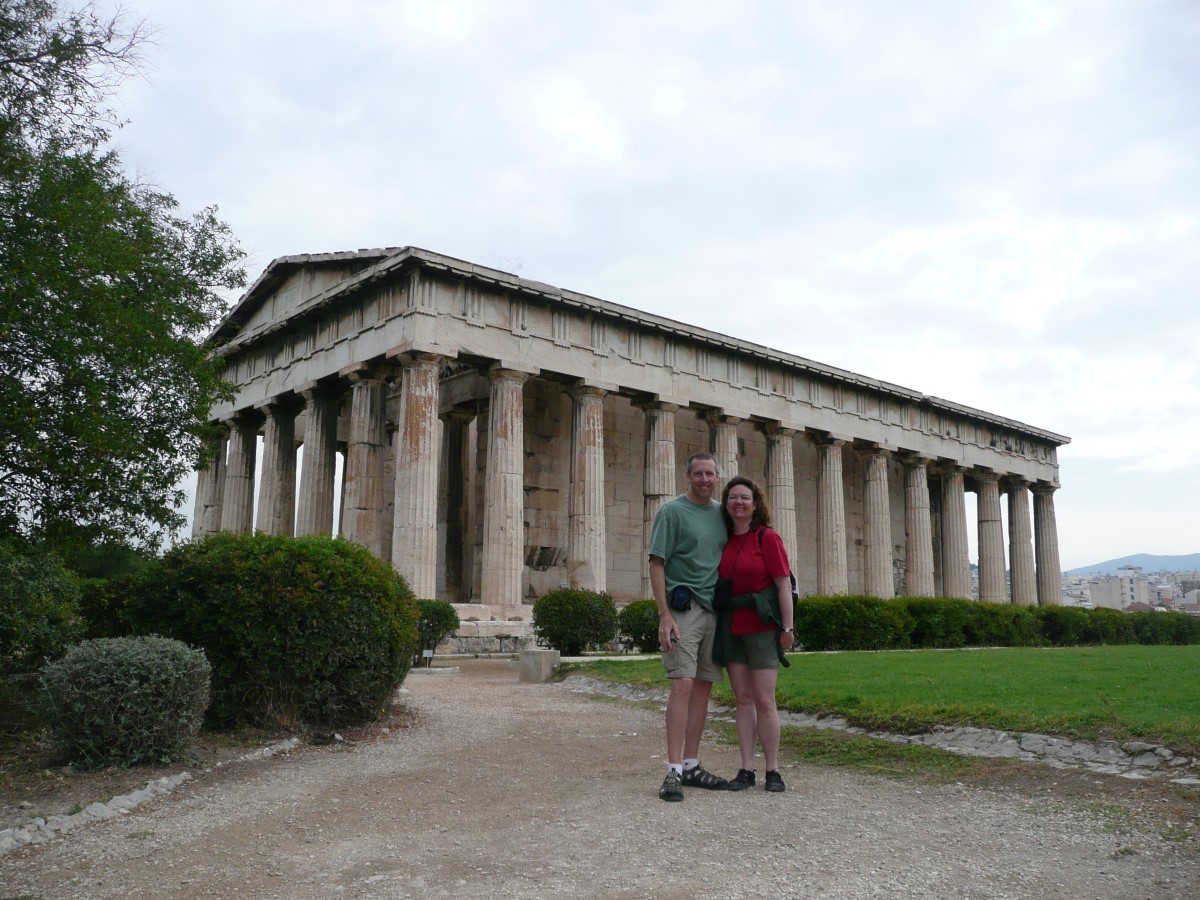
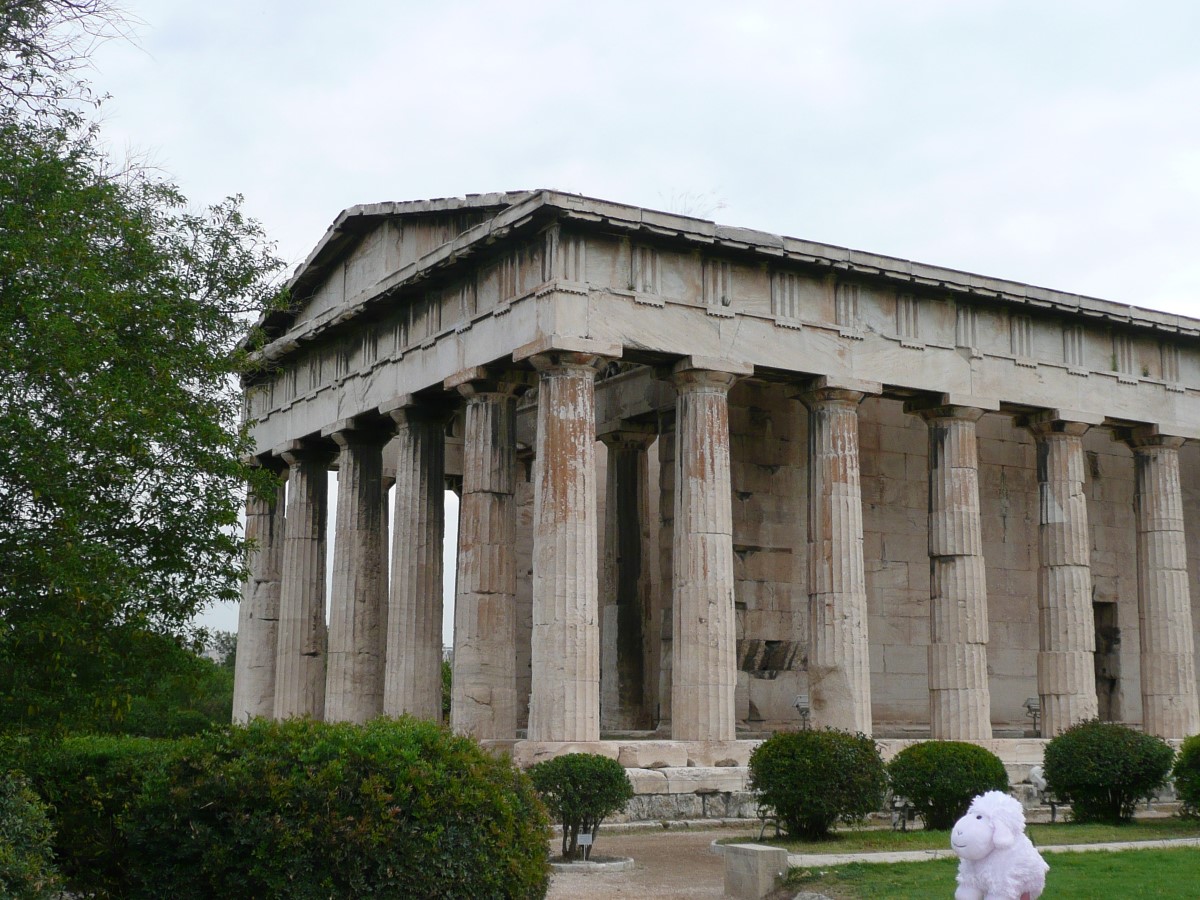
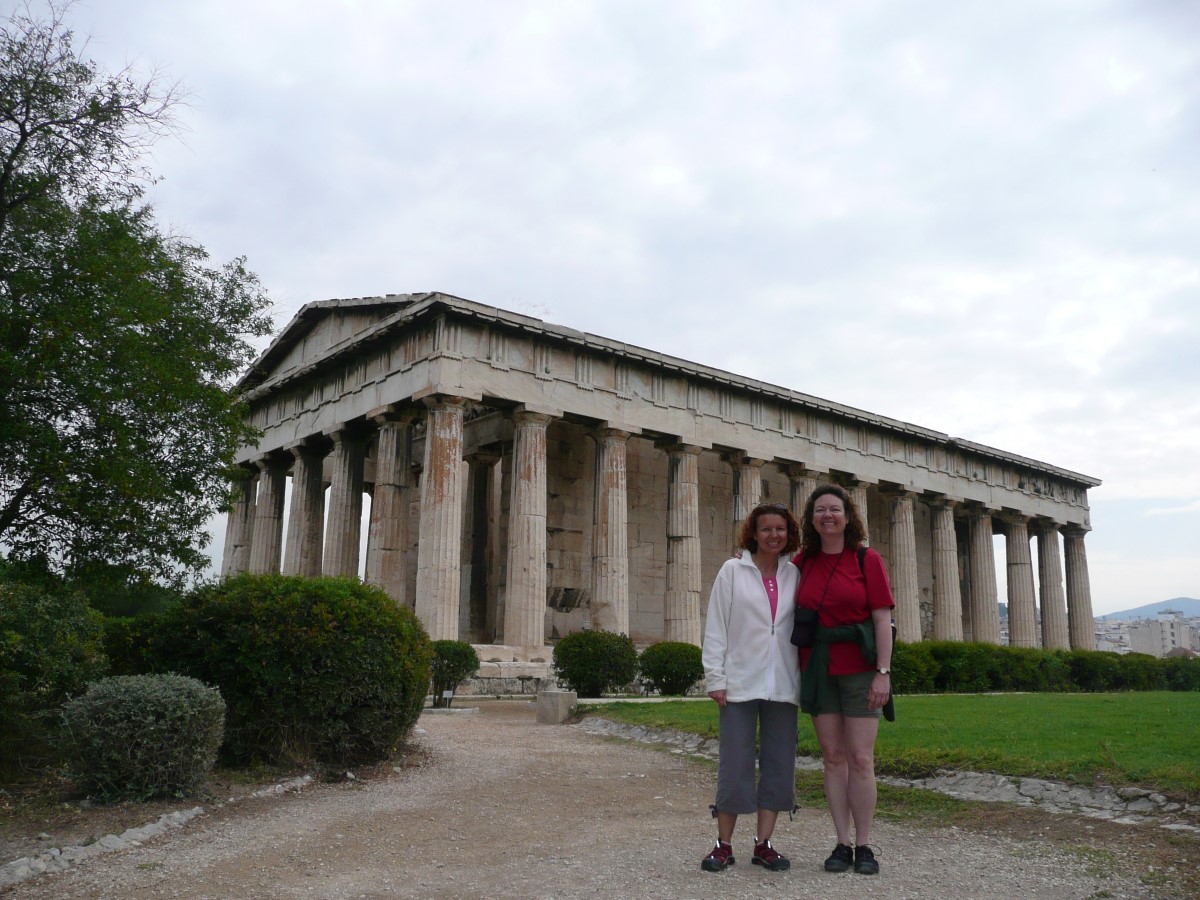
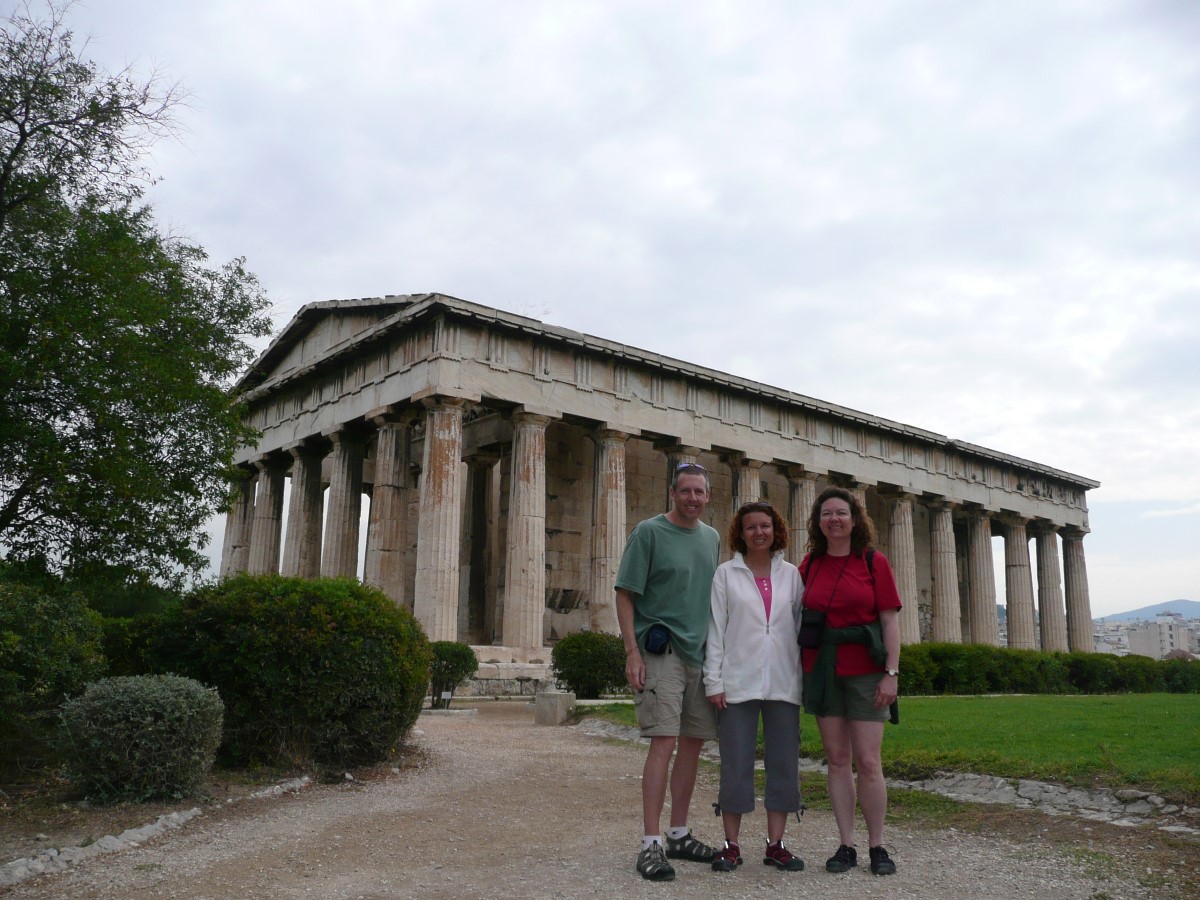
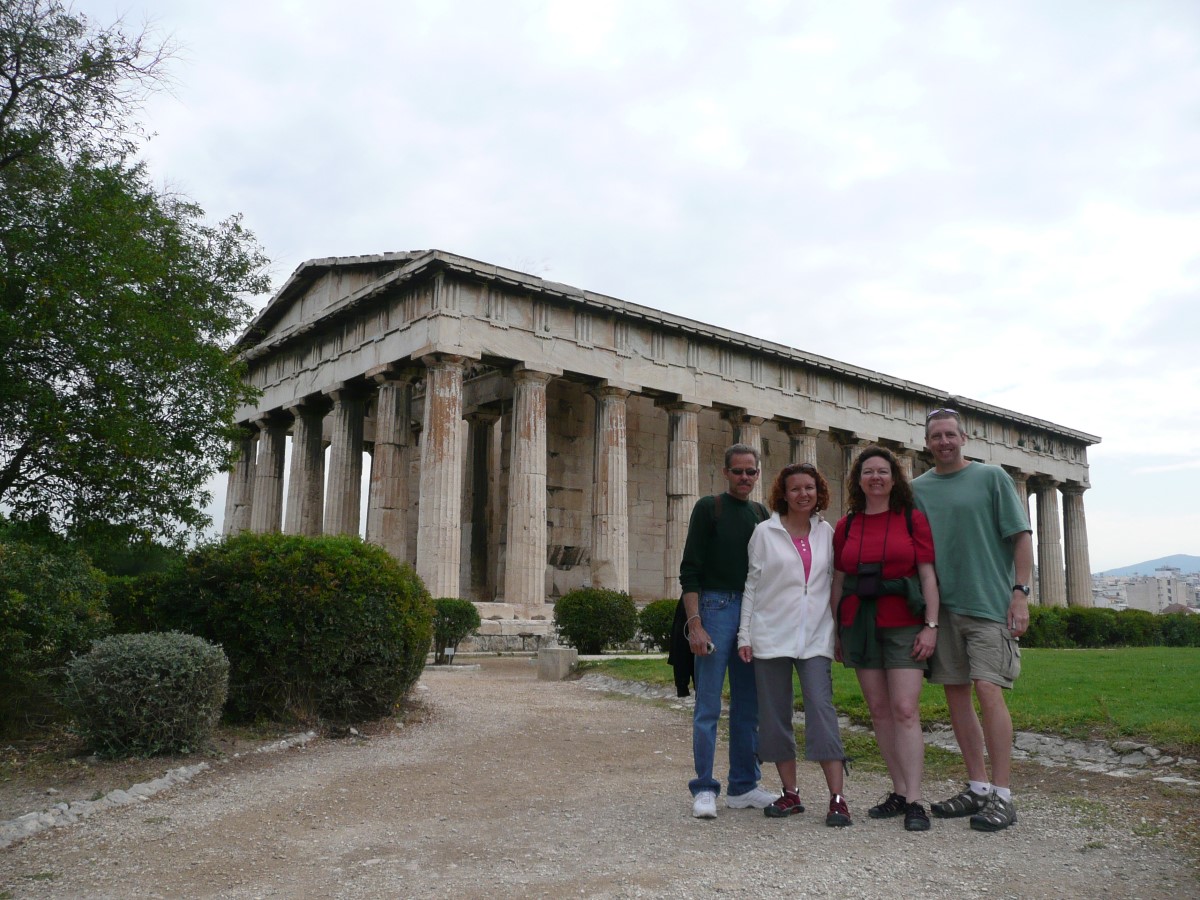
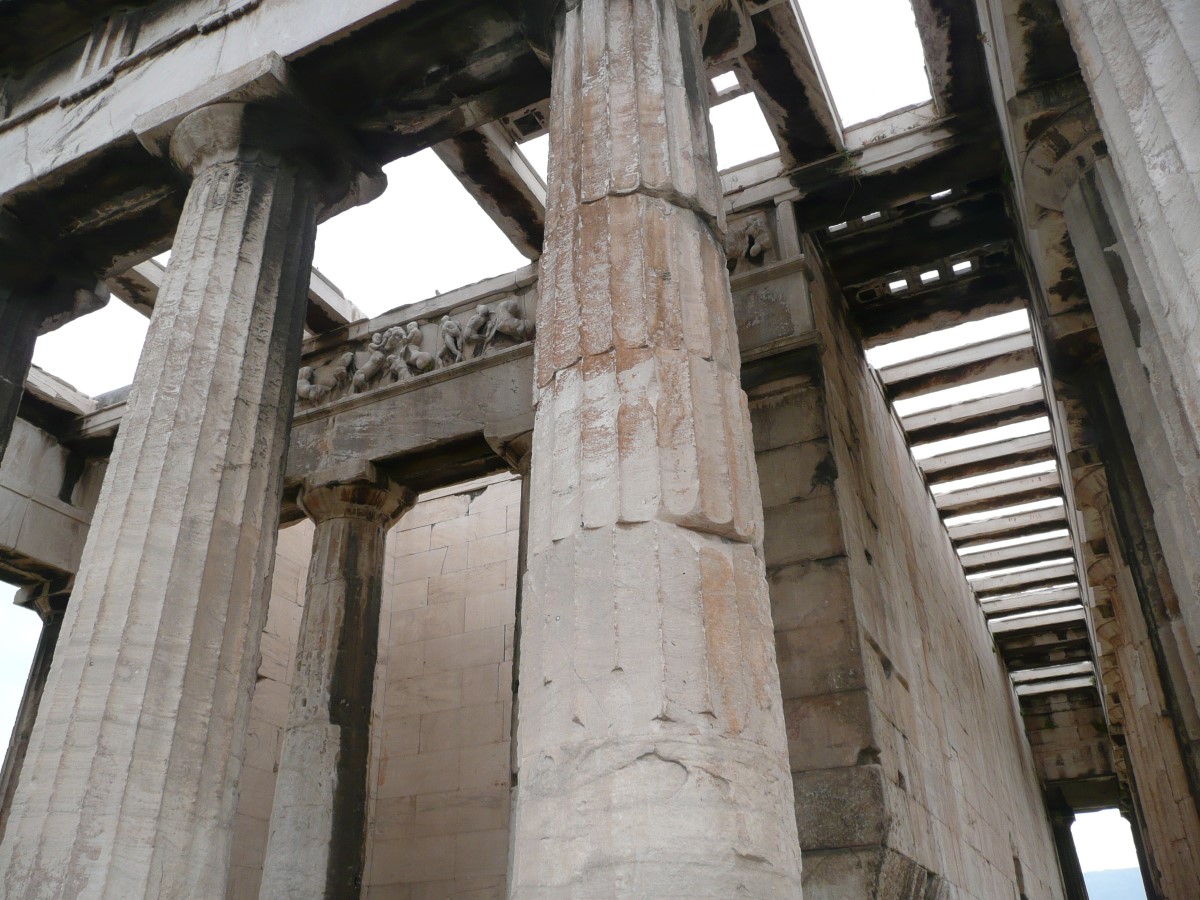
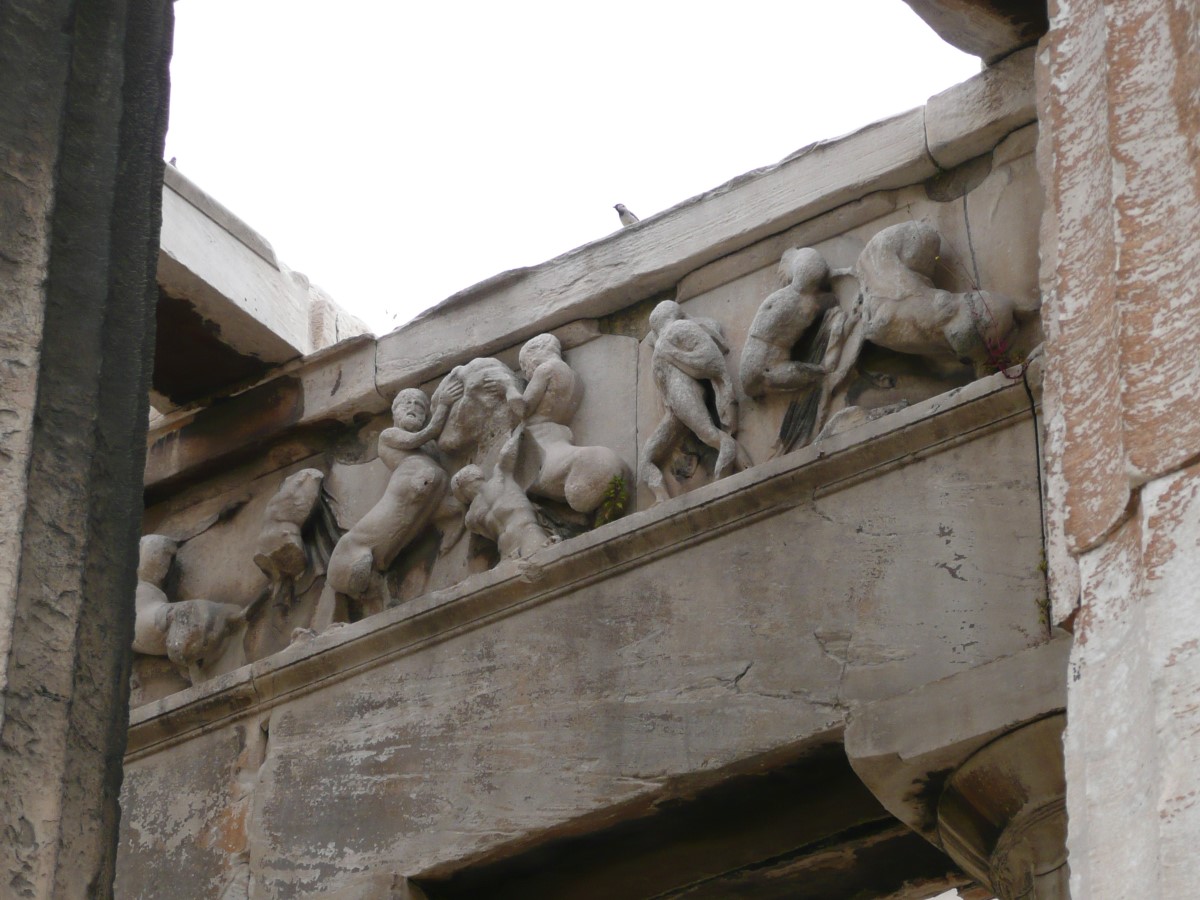
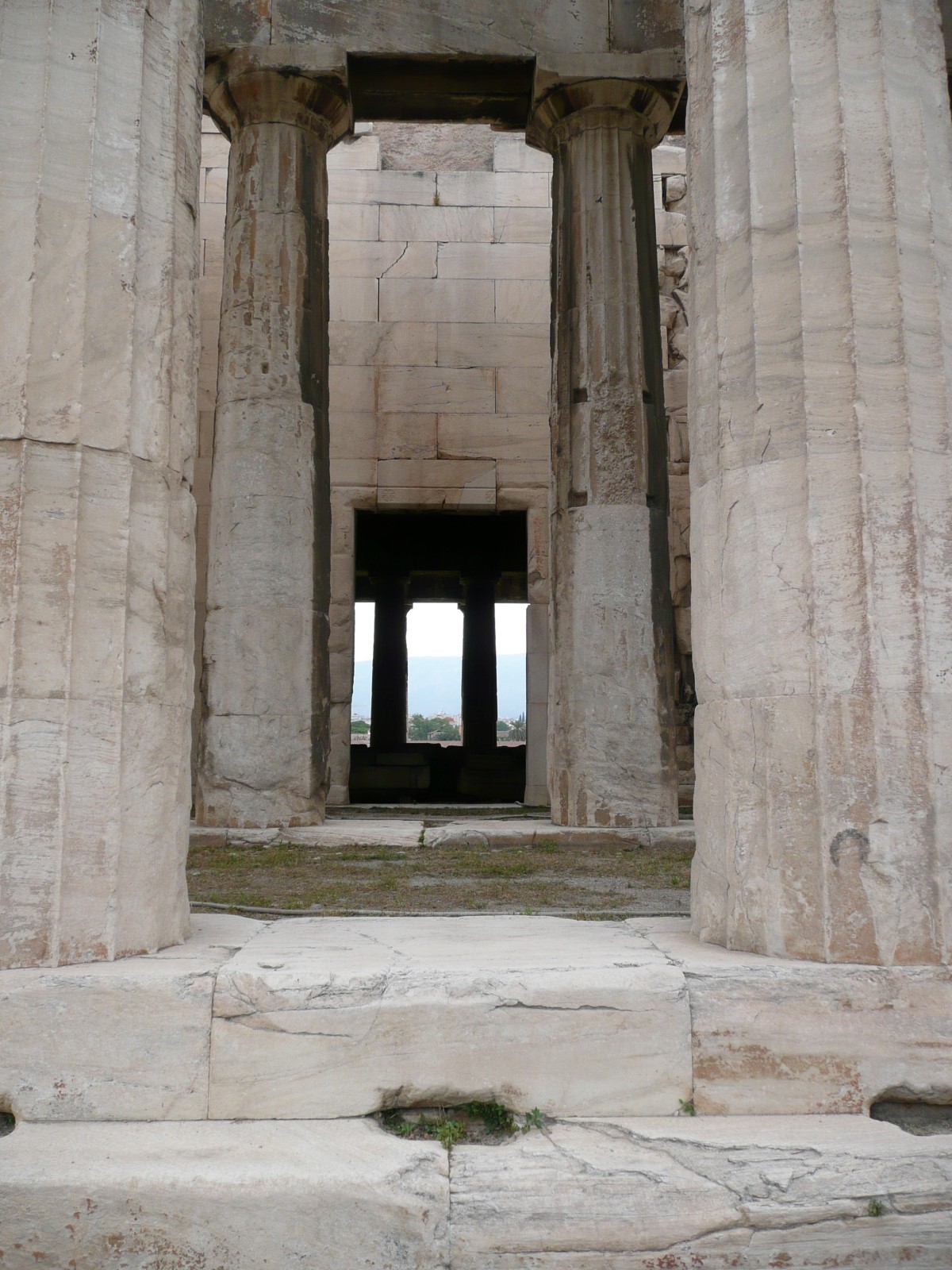
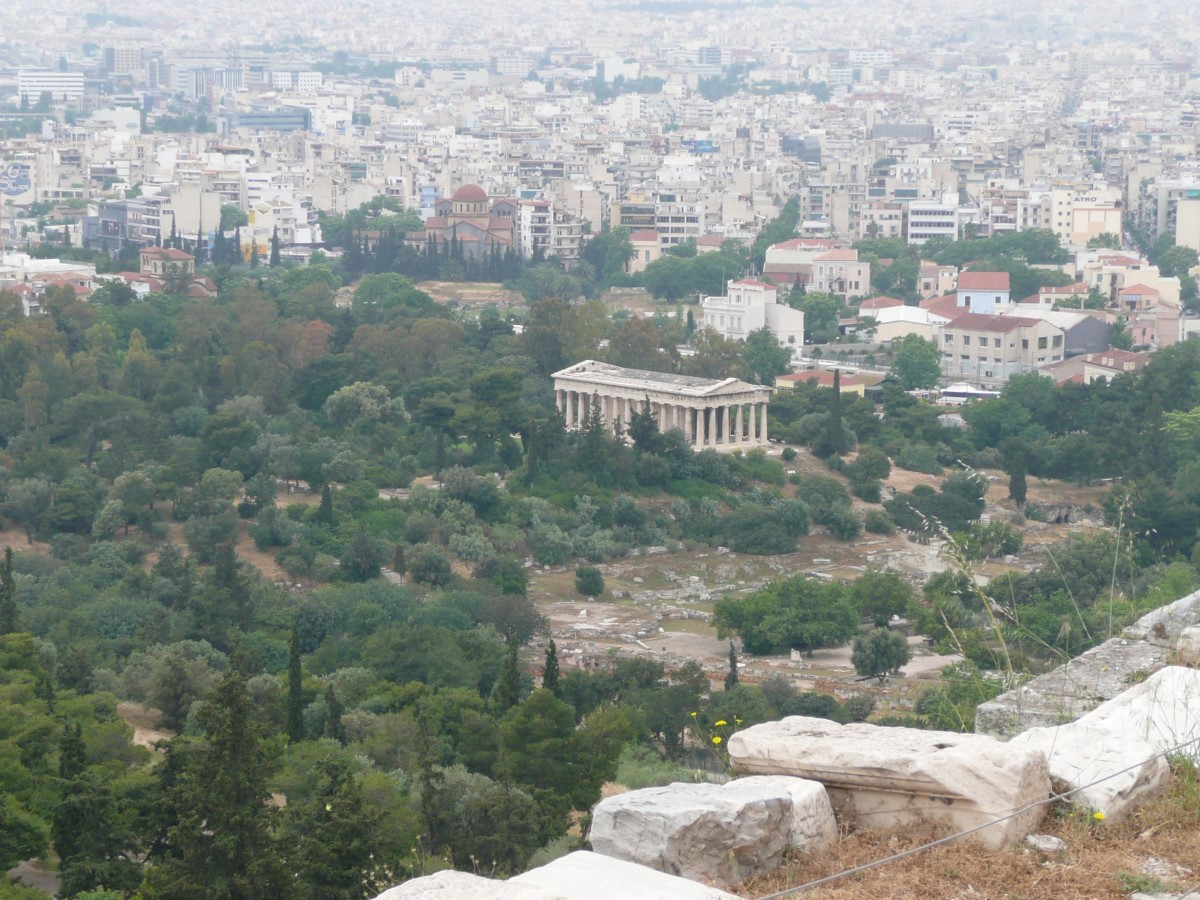
Temple of Hephaistos:
Overlooking the Agora in Athens is the Temple of Hephaistos, a well-preserved structure built
between 449 and 420 BC. Much smaller than the Temple of Zeus at Olympia, it is still a fair representative of the Doric temples of the fifth century. The temple is almost completely intact as a result of its conversion into a church by early Christians. |
|||
|
|||
|
|
|||
|
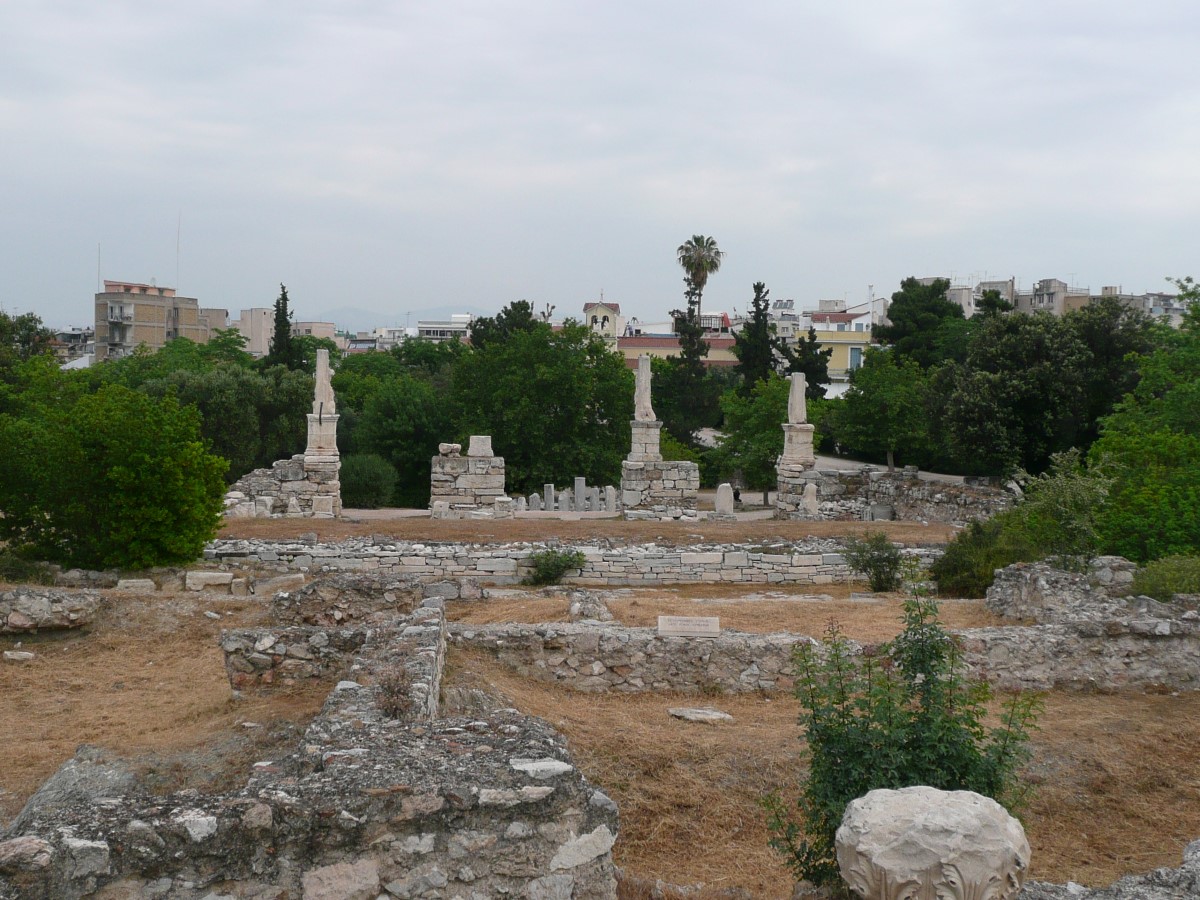
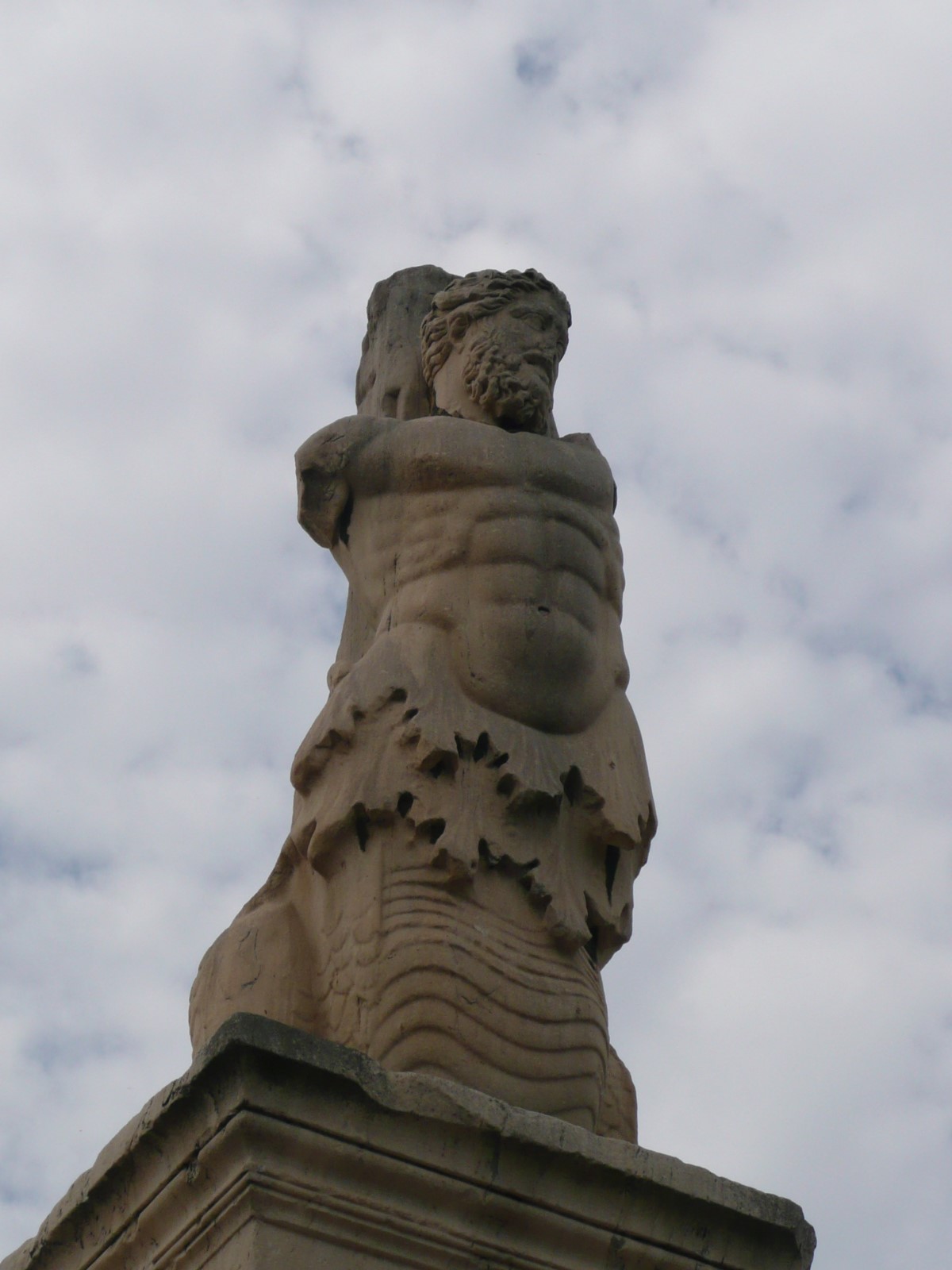
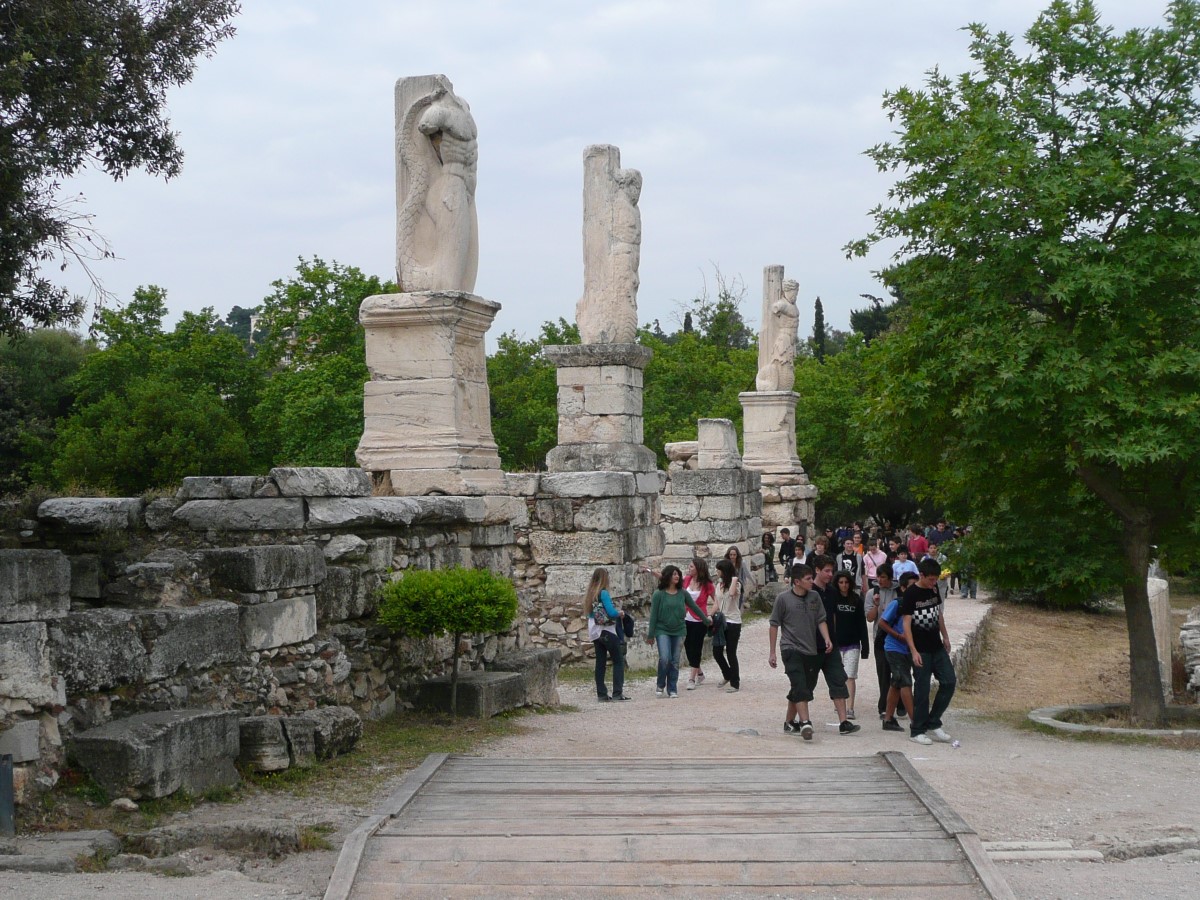
Odeon of Agrippa: The Odeion of Agrippa. Its north side is adorned by three (of the original four) colossal figures of Giants and Tritons set up on massive pedestals. These were added to the Odeion after 150 CE.
A Triton is a mythological Greek god, the messenger of the deep. He is the son of Poseidon, god of the sea, and Amphitrite, goddess of the sea. He is usually represented as a merman, having the upper body of a human and the tail of a fish. It had an indoor theatre which was built late in the 1st century BC. It was was richly decorated with fine marble and beautiful statues. It could hold an audience of about 1200 people. At the back was a double wall of columns. This allowed the sunlight to fall directly onto the stage. It also created an open area just outside the auditorium where the audience could gather. |
|||
|
|||
|
|
|||
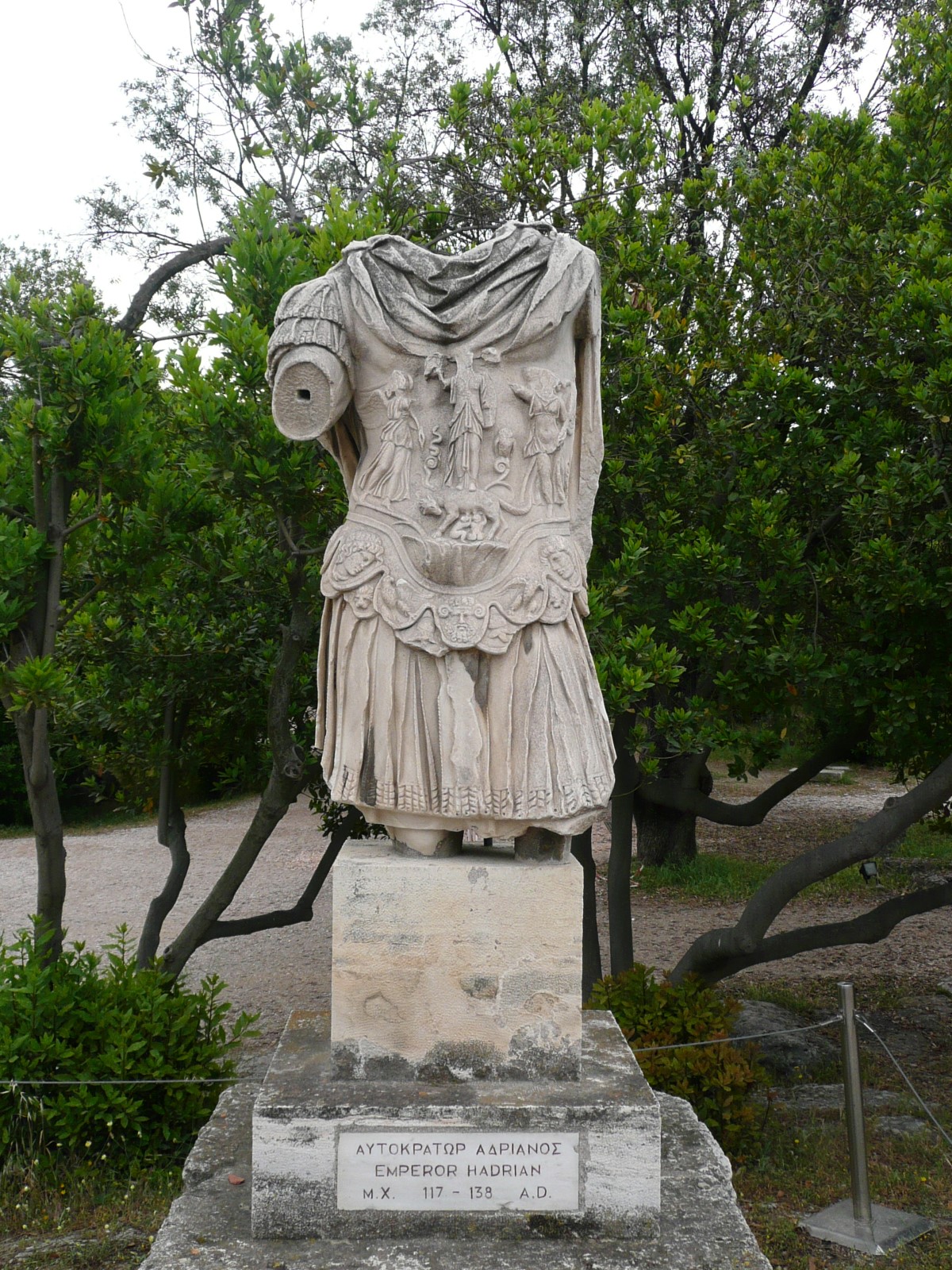
| Statue of Hadrian: Publius Aelius Traianus Hadrianus (January 24, 76 – July 10, 138), known as Hadrian in English, was emperor of Rome from 117 to 138 AD, as well as a Stoic and Epicurean philosopher. A member of the gens Aelia, Hadrian was the third of the Five Good Emperors. His reign had a faltering beginning, a glorious middle, and a tragic conclusion. | |||
|
|||
|
|
|||
|
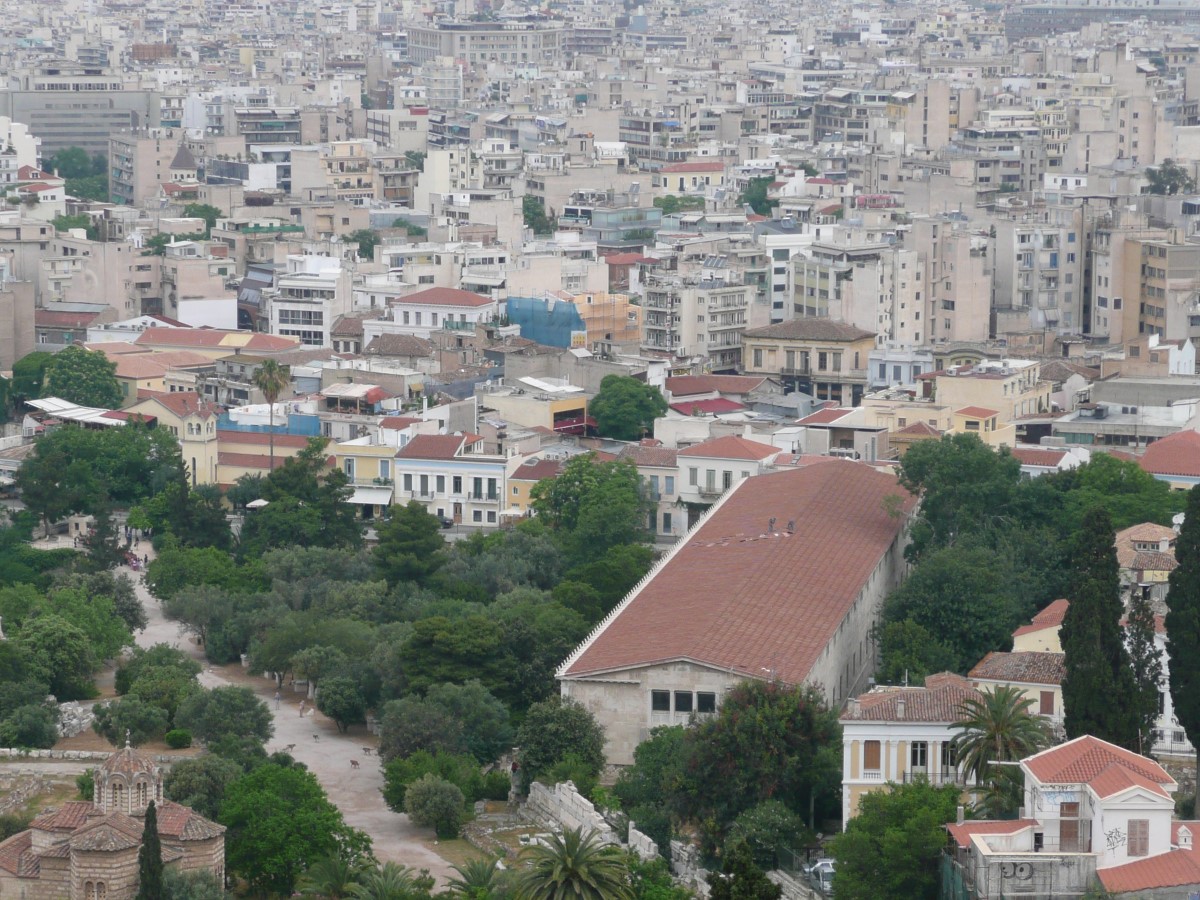
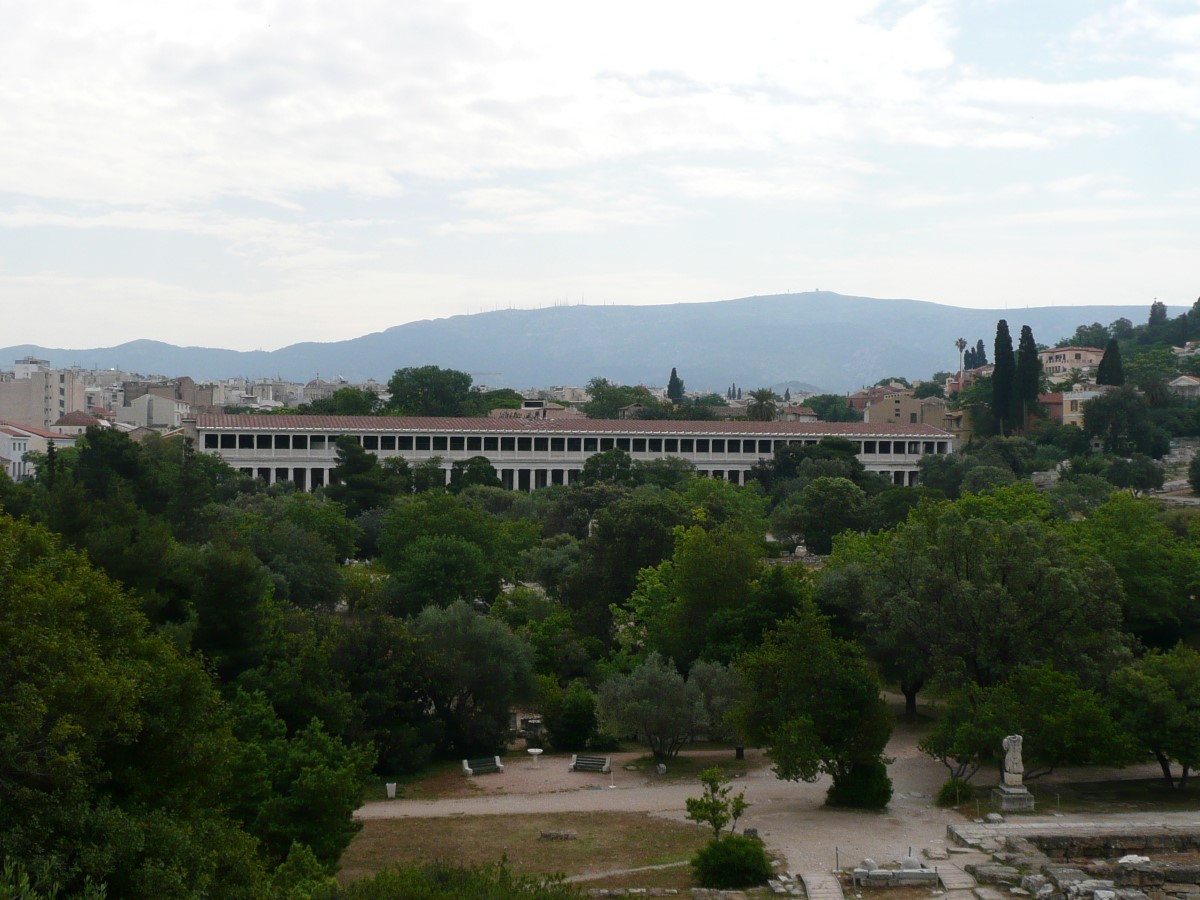
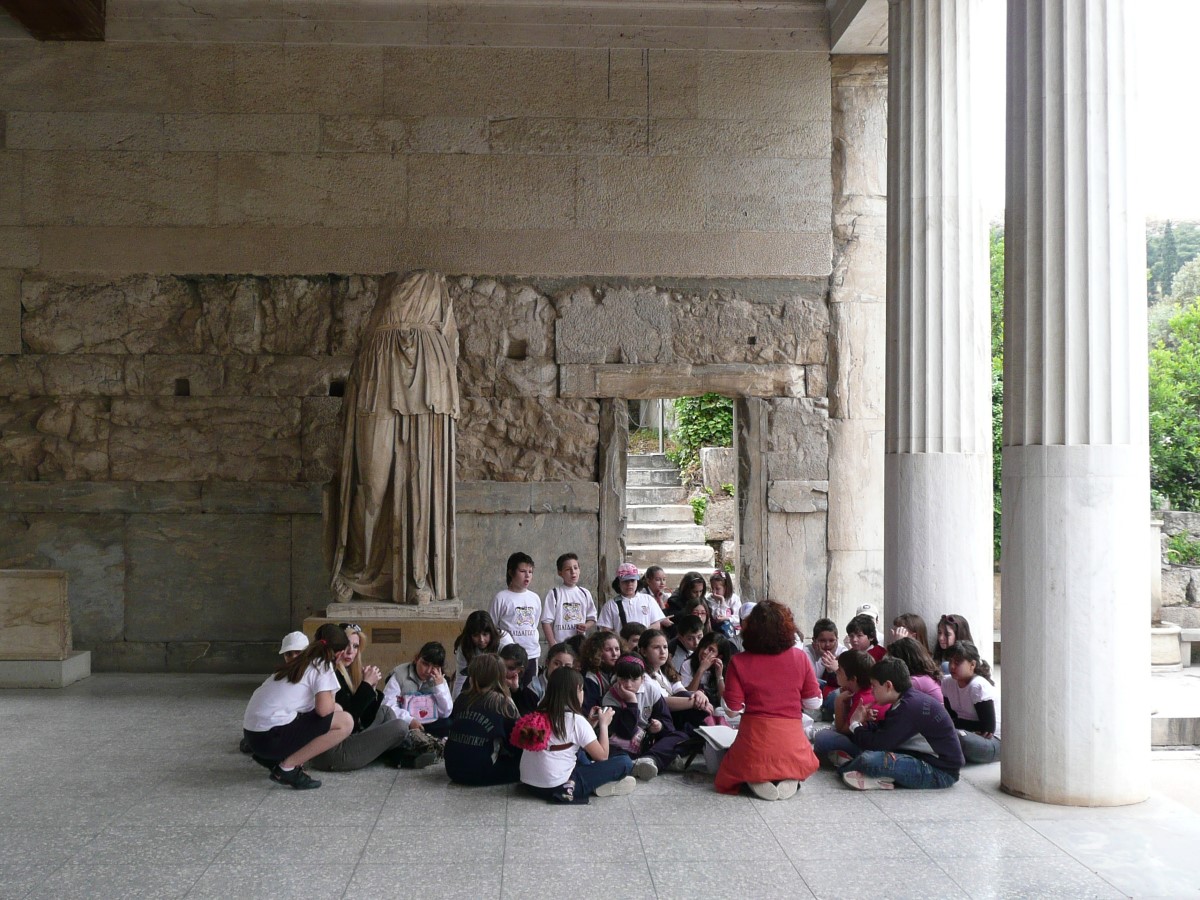
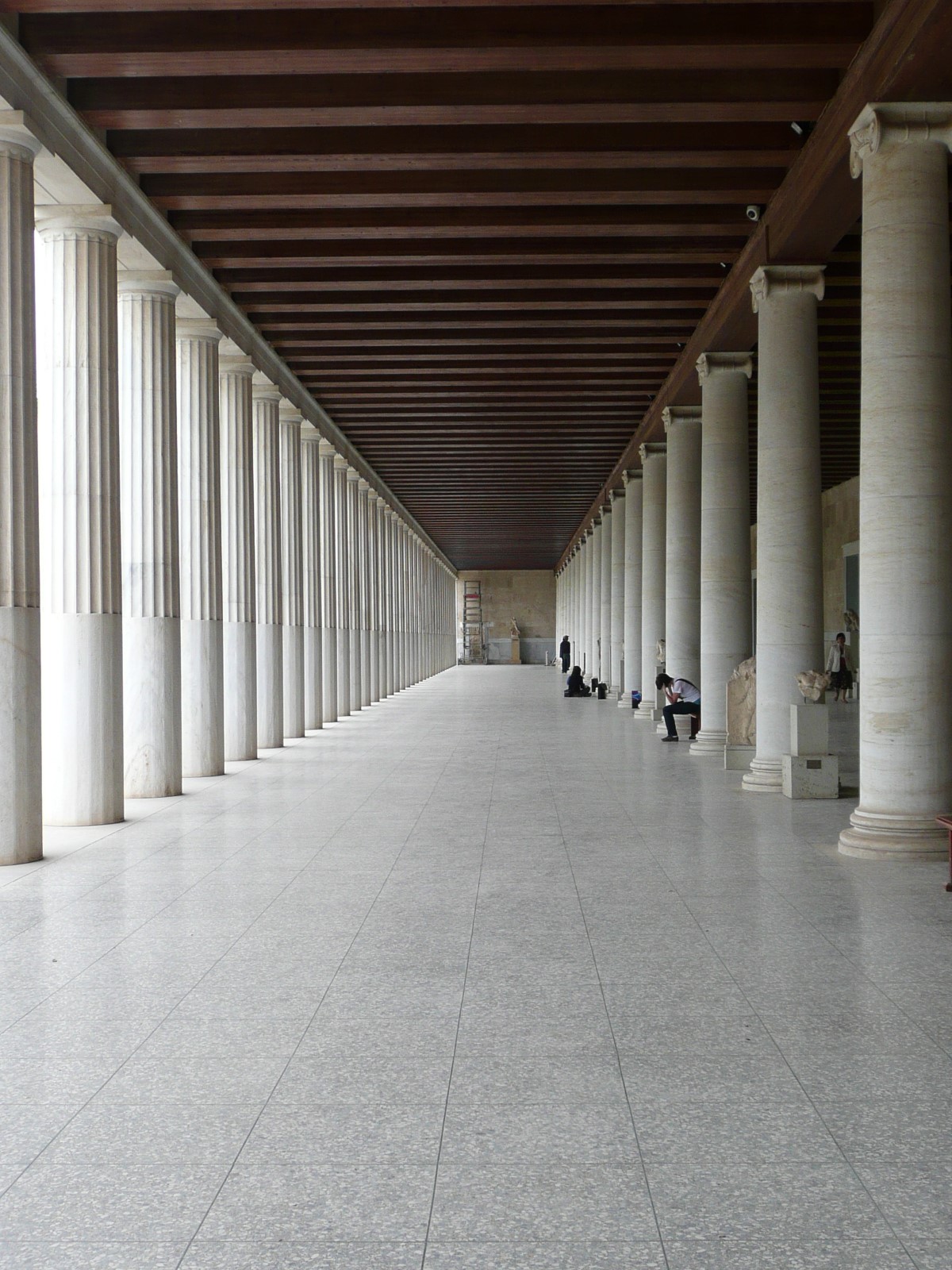
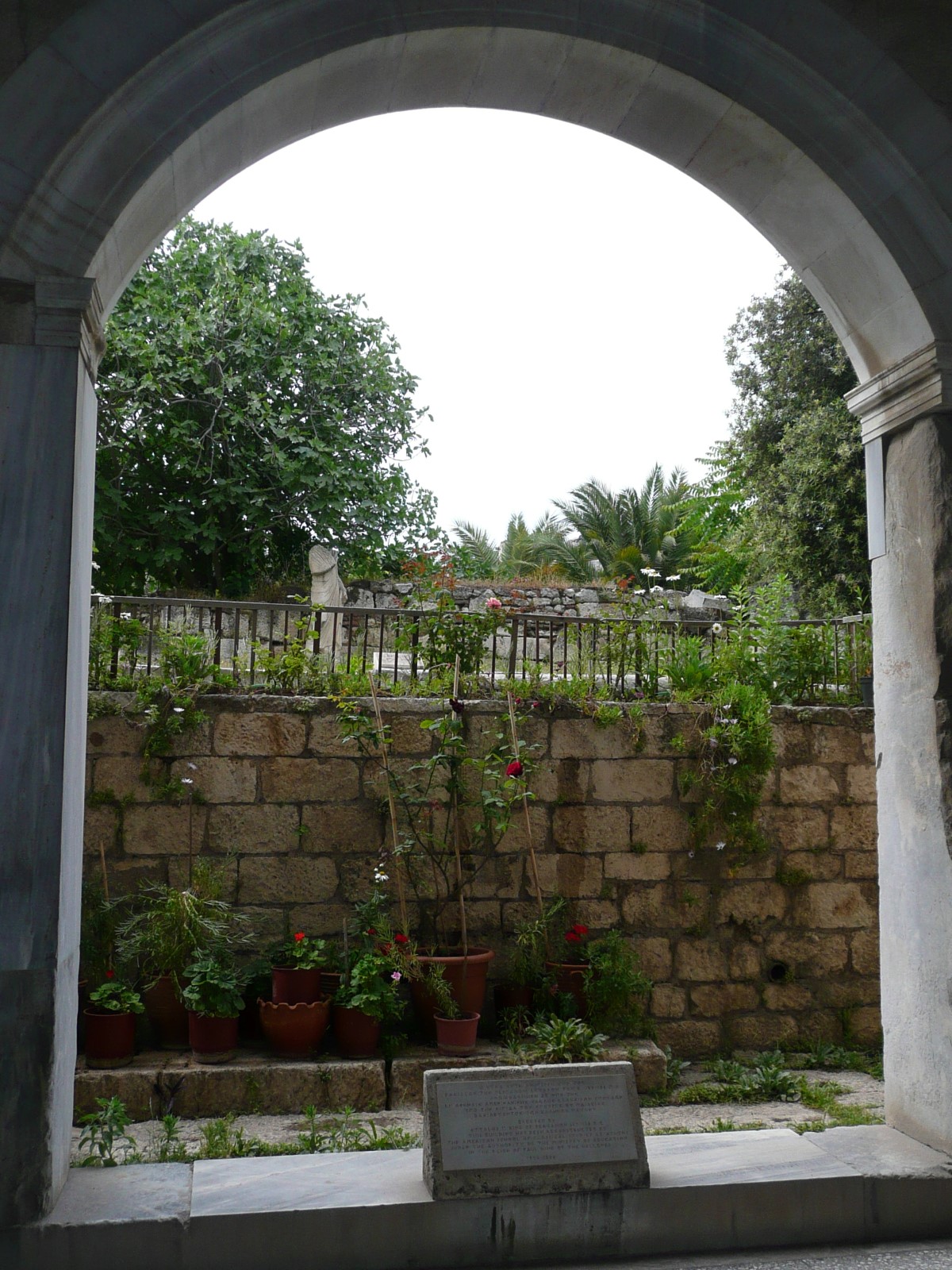
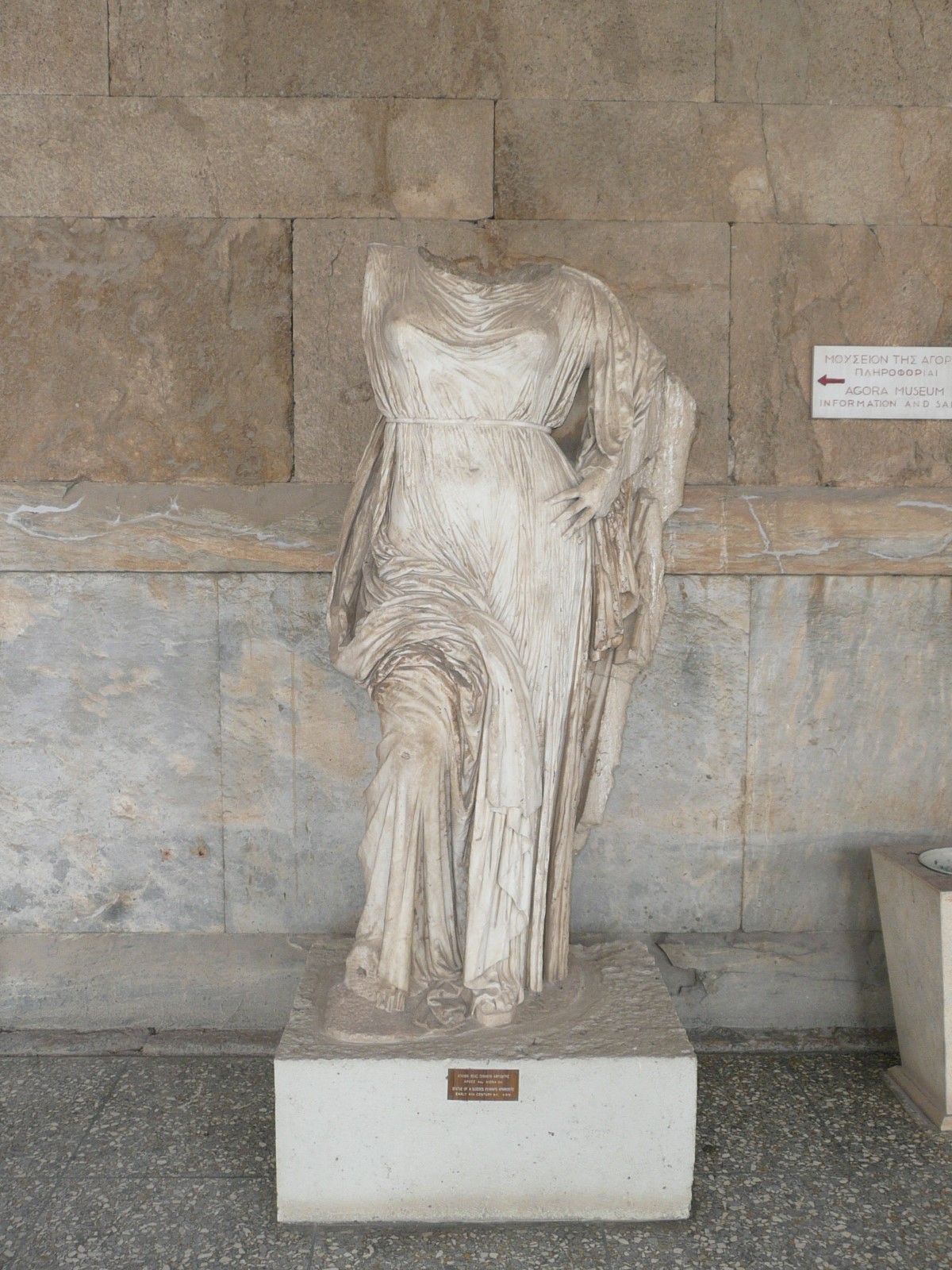
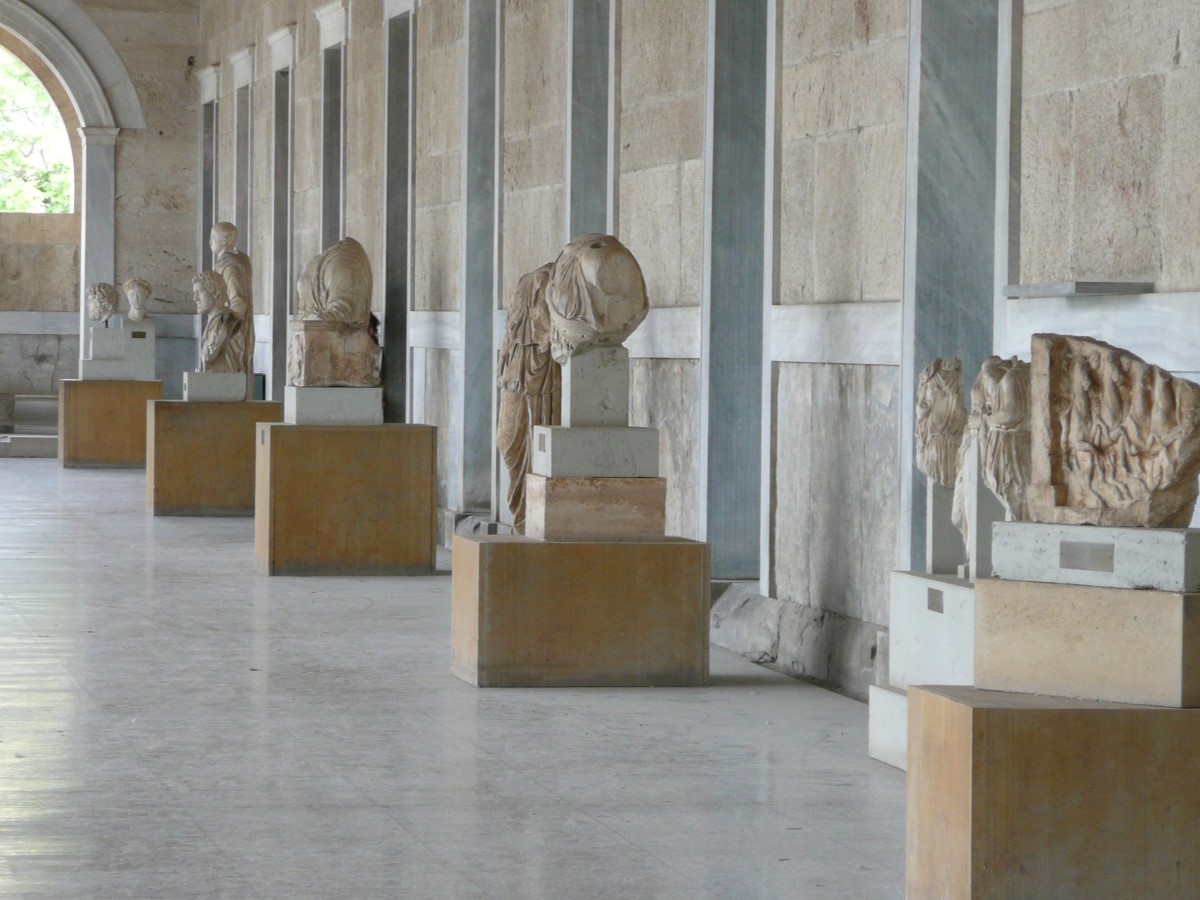
Stoa of Attalos:
Τhe Museum of the ancient Agora (Stoa of Attalos) is housed in the Stoa of Attalos, a reconstructed building of around 150 B.C. (it was fully reconstructed between 1952 and 1956). It was built by and named after King Attalos II of Pergamon who ruled between 159 BC and 138 BC. The Stoa of Attalos is recognised as one of the most impressive stoa in the Athenian Agora. The characteristic feature of the museum is that the exhibits are all closely connected with the Athenian Democracy, as the Agora was the focus of the city's public life. The Stoa of Attalos was discovered during the excavations carried out by the Greek Archaeological Society between 1859 and 1902. In 1953-56 it was reconstructed in order to house the finds from the excavations at the Agora. |
|||
|
|||
|
|
|||
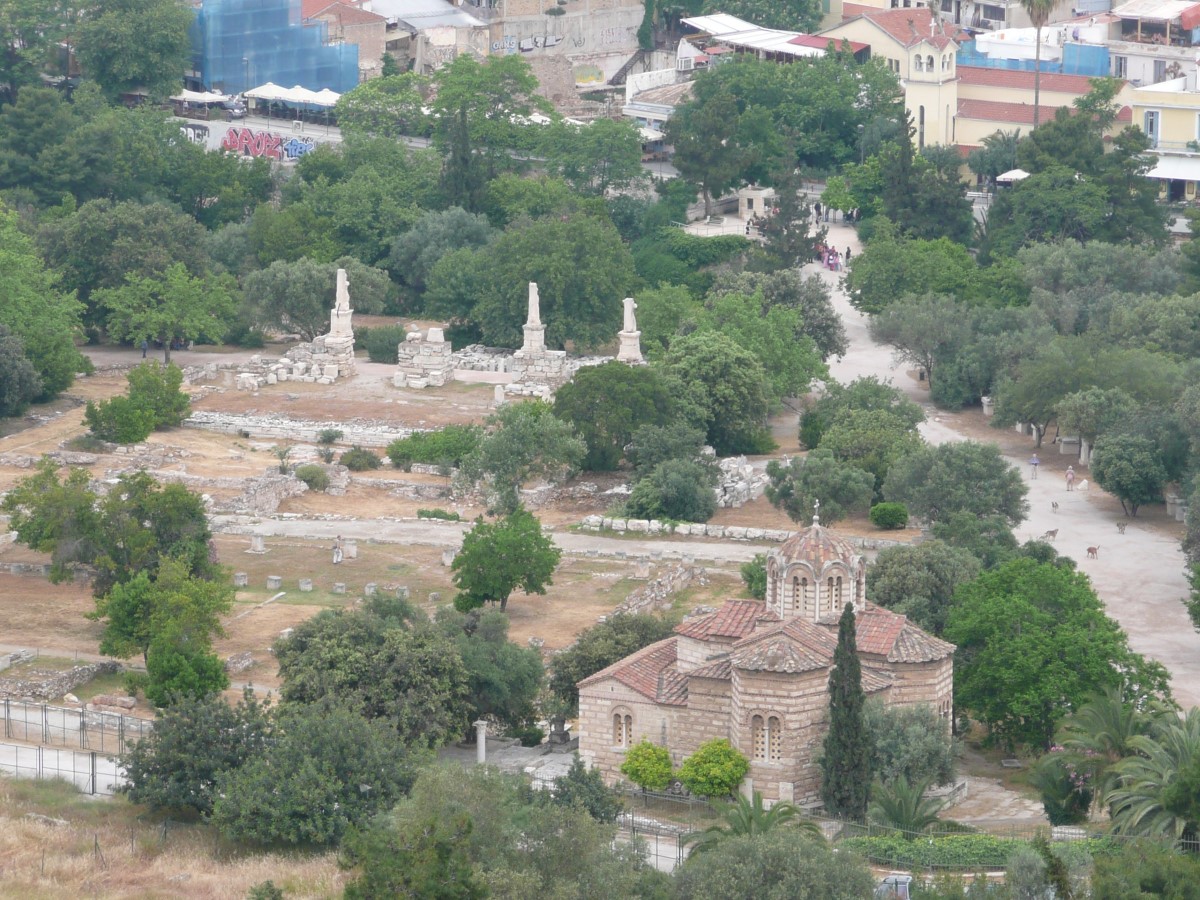
| Misc: Various photos from around the area. | |||
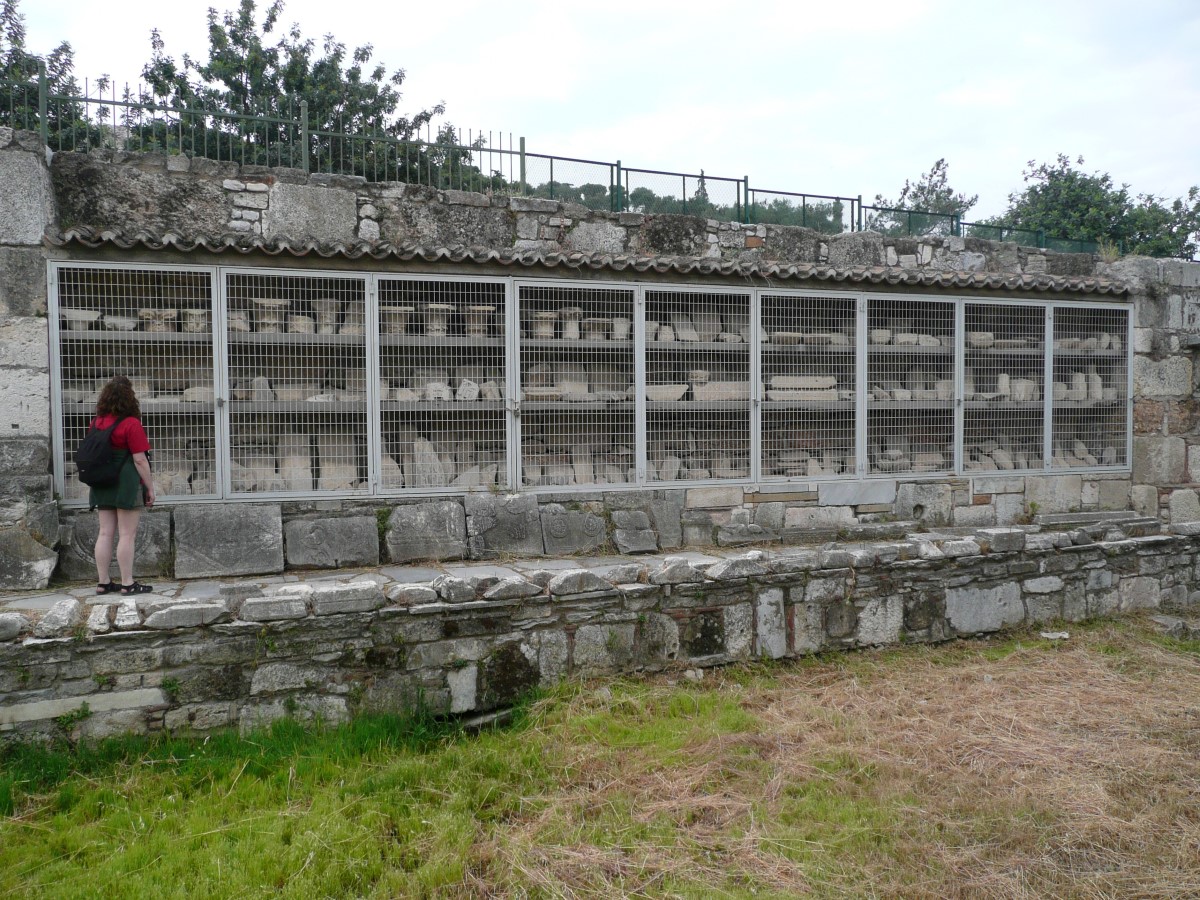
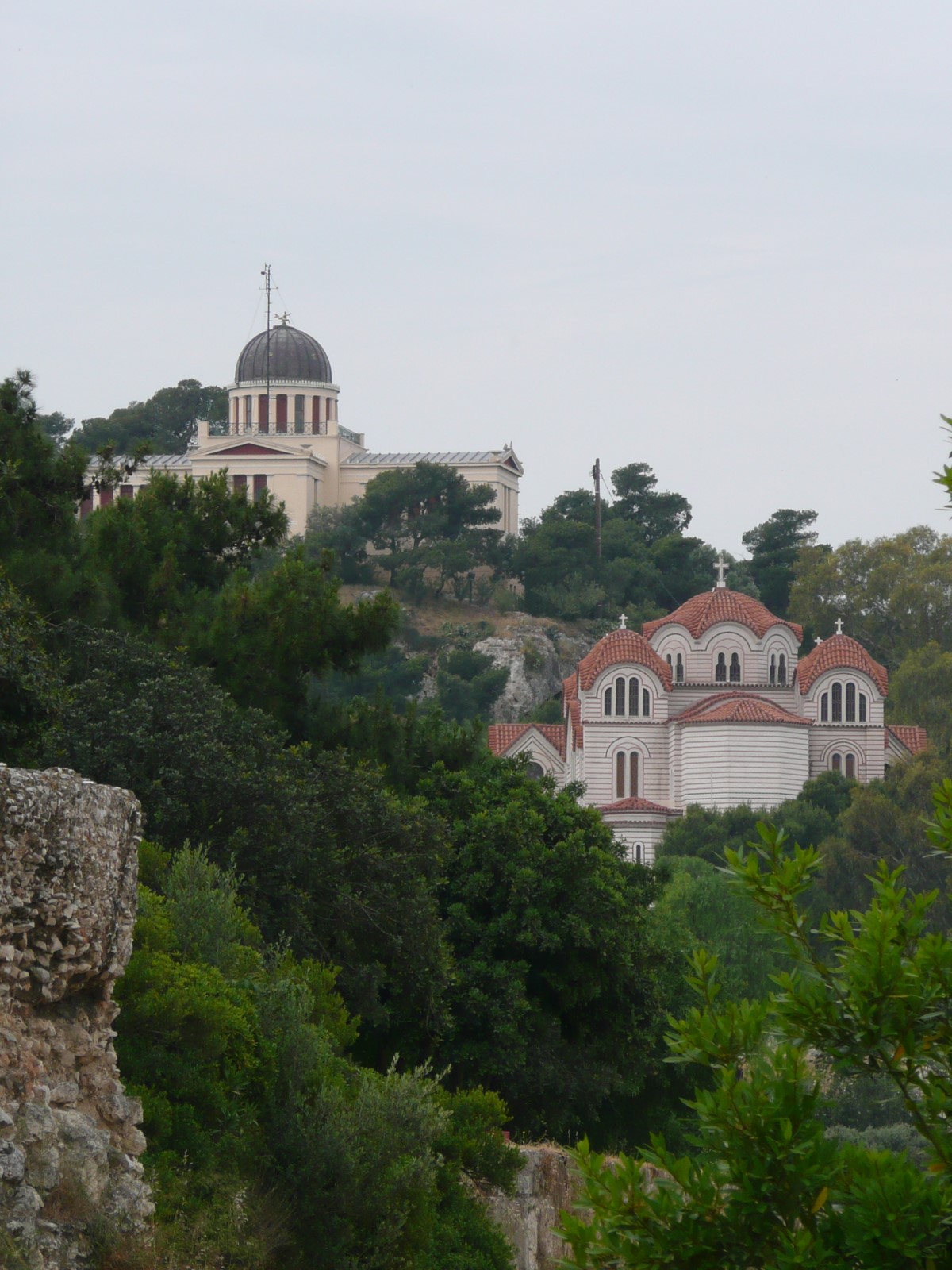
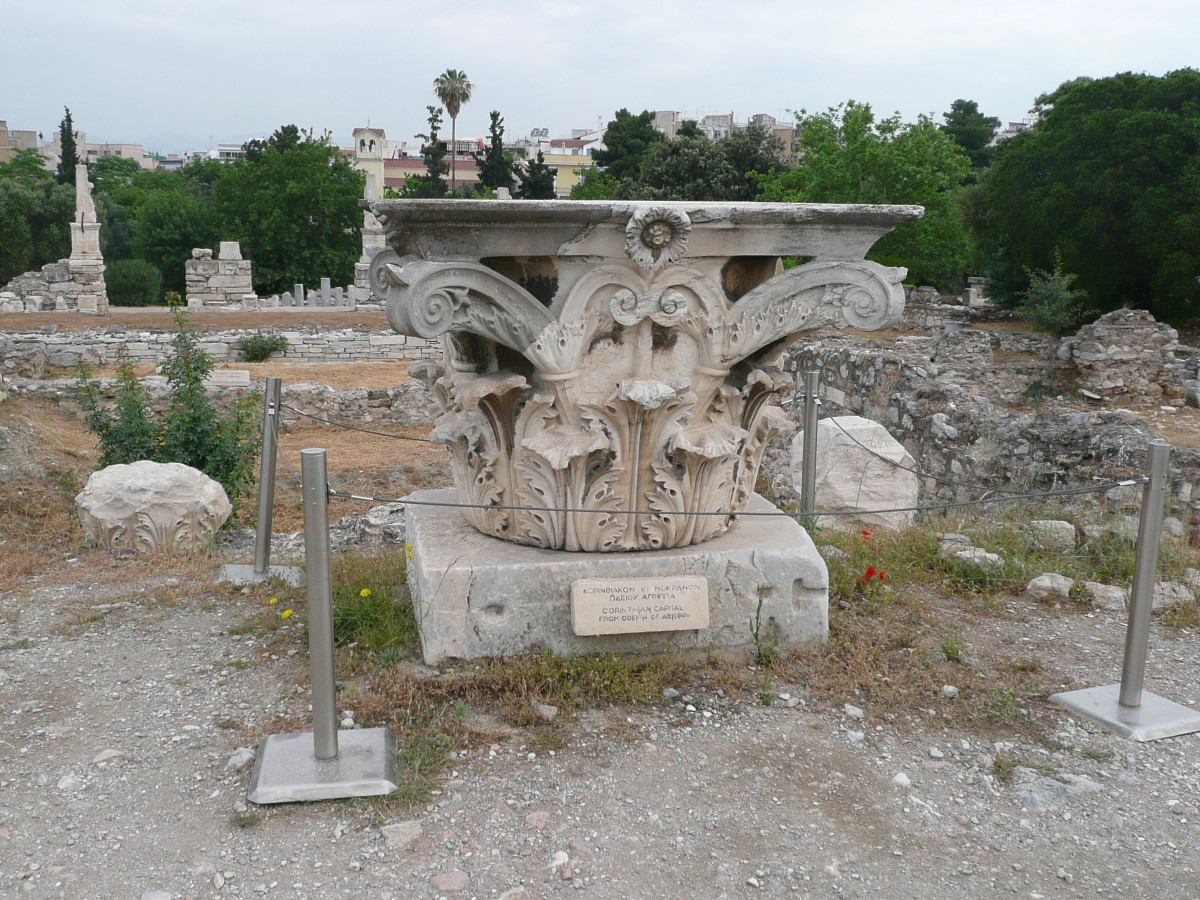
|
|||
| Roman Agora | |||
|
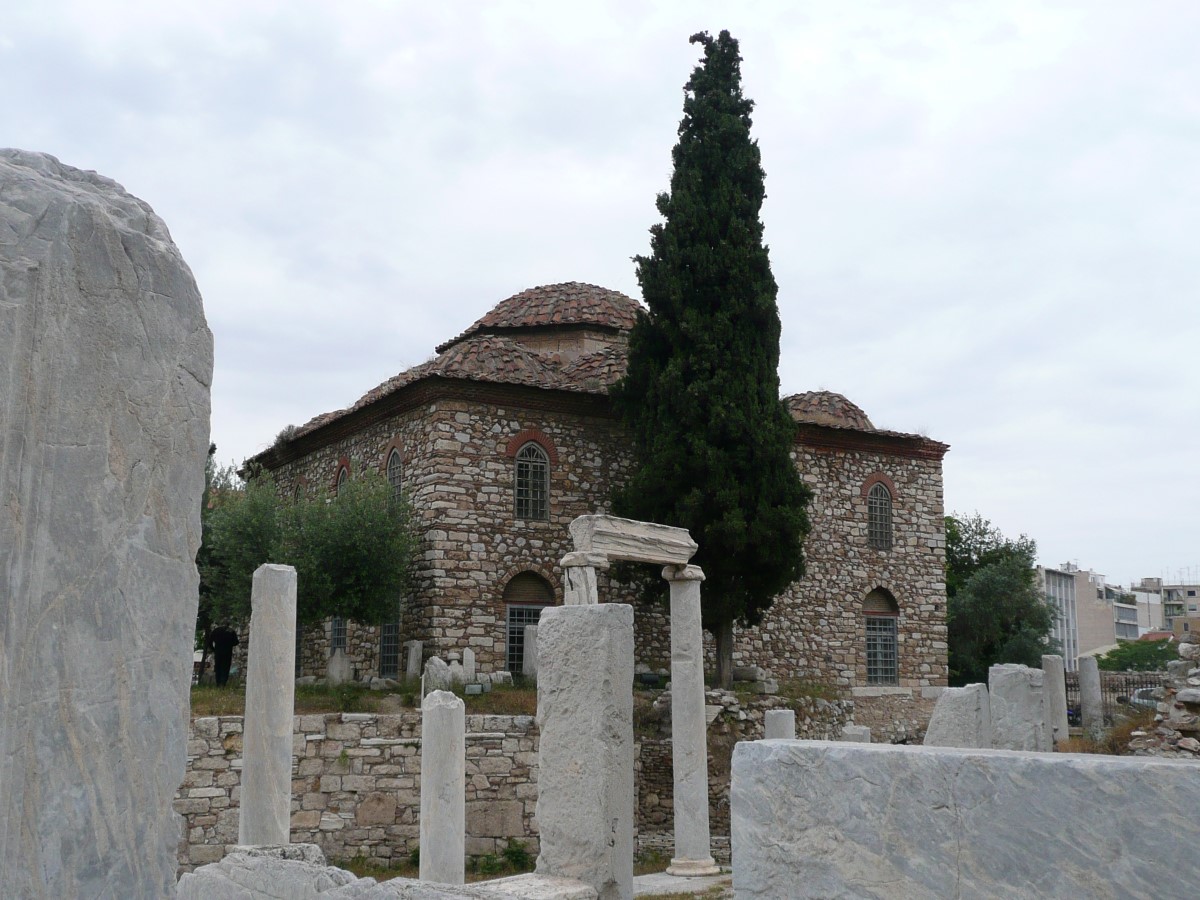
Lying east of the Ancient Agora, the Roman Agora actually has nothing to do with Romans, but took this name because it was constructed during Roman times -1st century CE- in order to serve a growing Athens.
It is a single architectural complex consisting of a vast rectangular court, measuring 367 ft by 315 ft, surrounded by colonnades. The courtyard was surrounded by stoas, shops and storerooms. It has an east, Ionic propylon and a west, Doric propylon, known as the Gate of Athena Archegetis, which linked it to the Greek Agora. It was built between 19 and 11 BCE with a donation of Julius Caesar and Augustus. During the reign of Hadrian the court was paved with slabs. After the invasion of the Herulae in 267 CE, the city of Athens was restricted to the area within the Late Roman fortification wall, and the administrative and commercial center of the city was transferred from the Ancient Agora to the Roman Agora and the Library of Hadrian. |
|||
|
|
|||
| Misc: Various photos from around the area. | |||
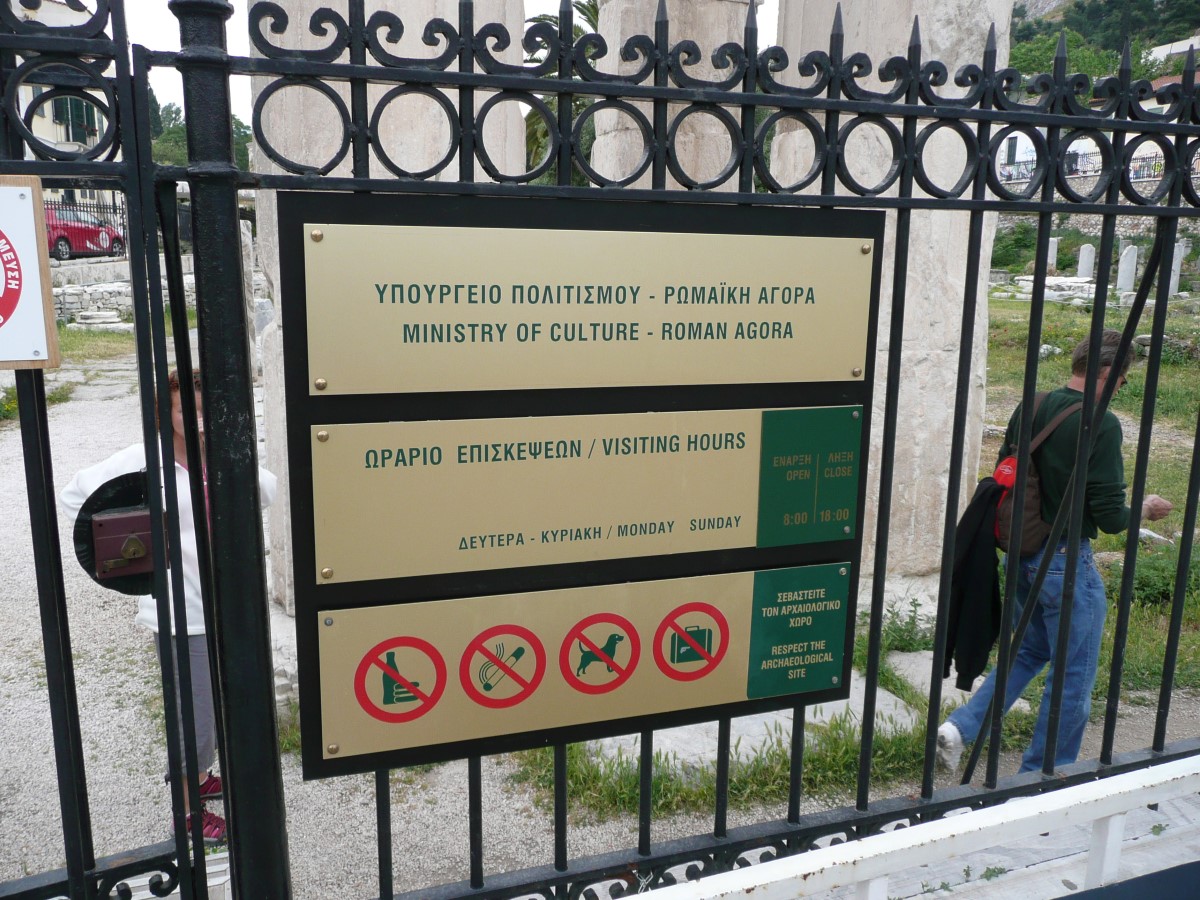
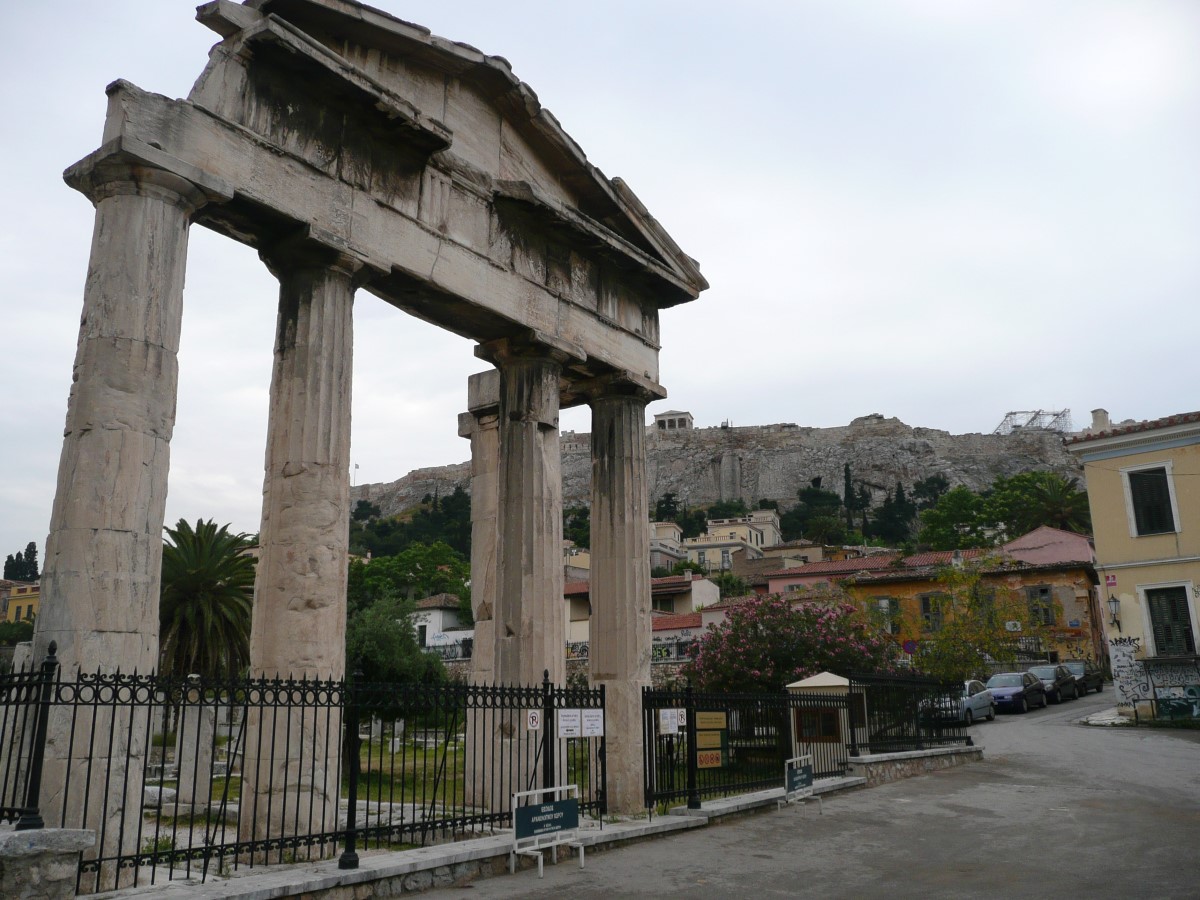
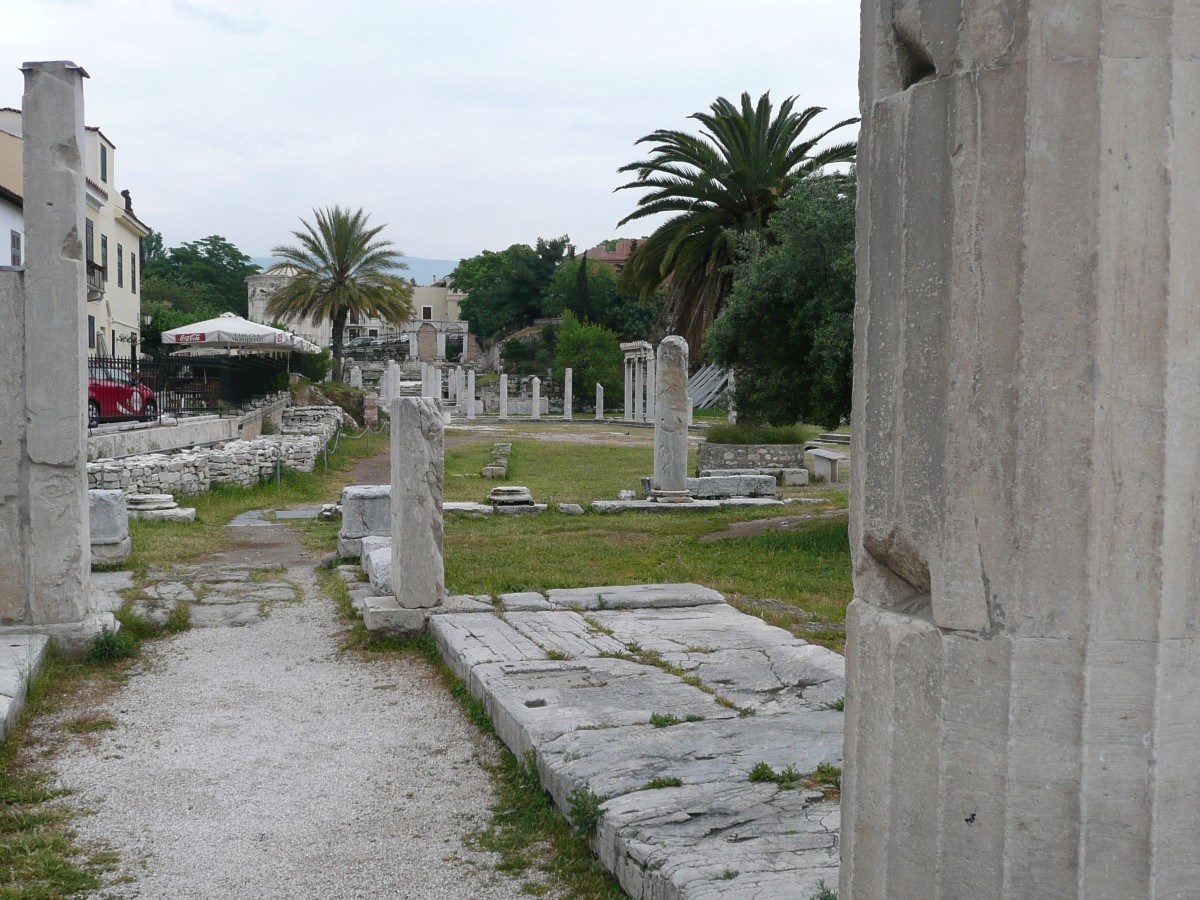
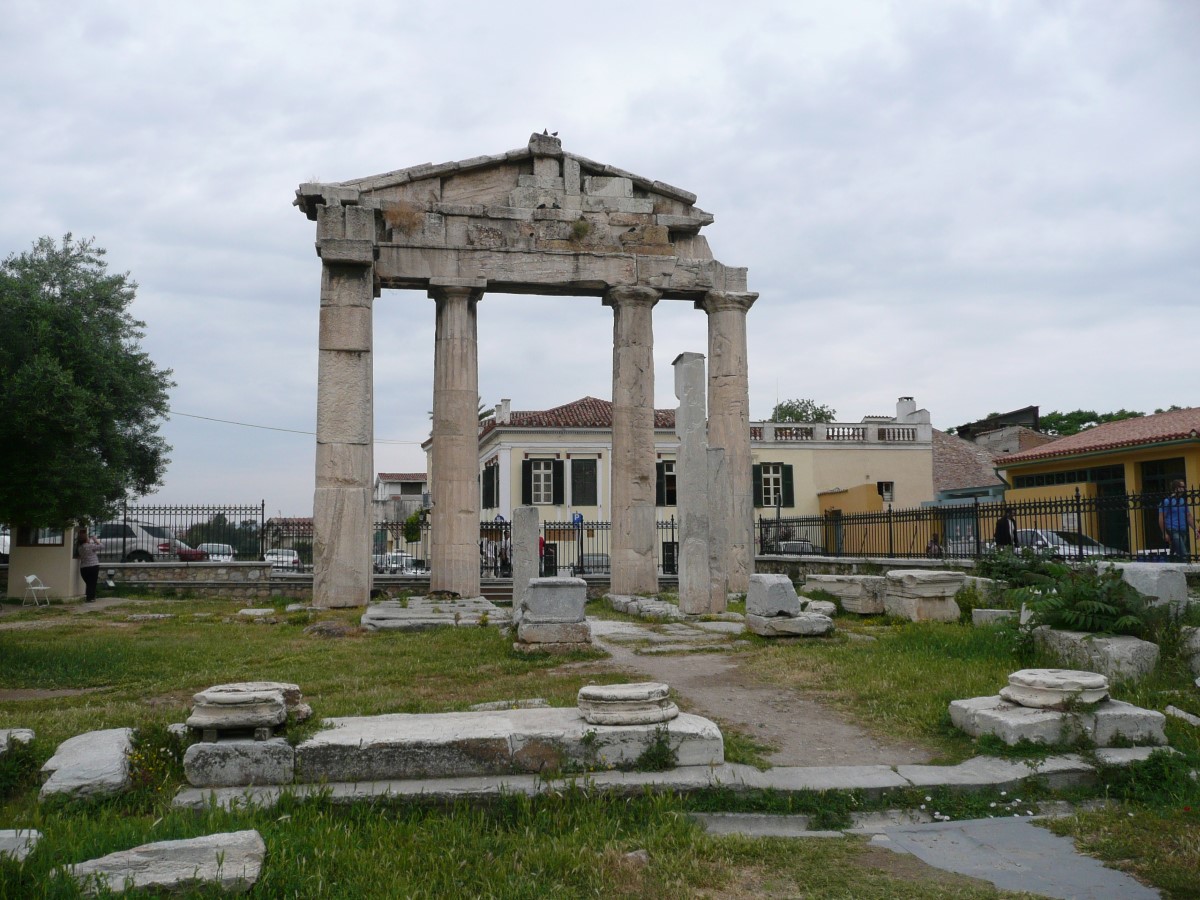
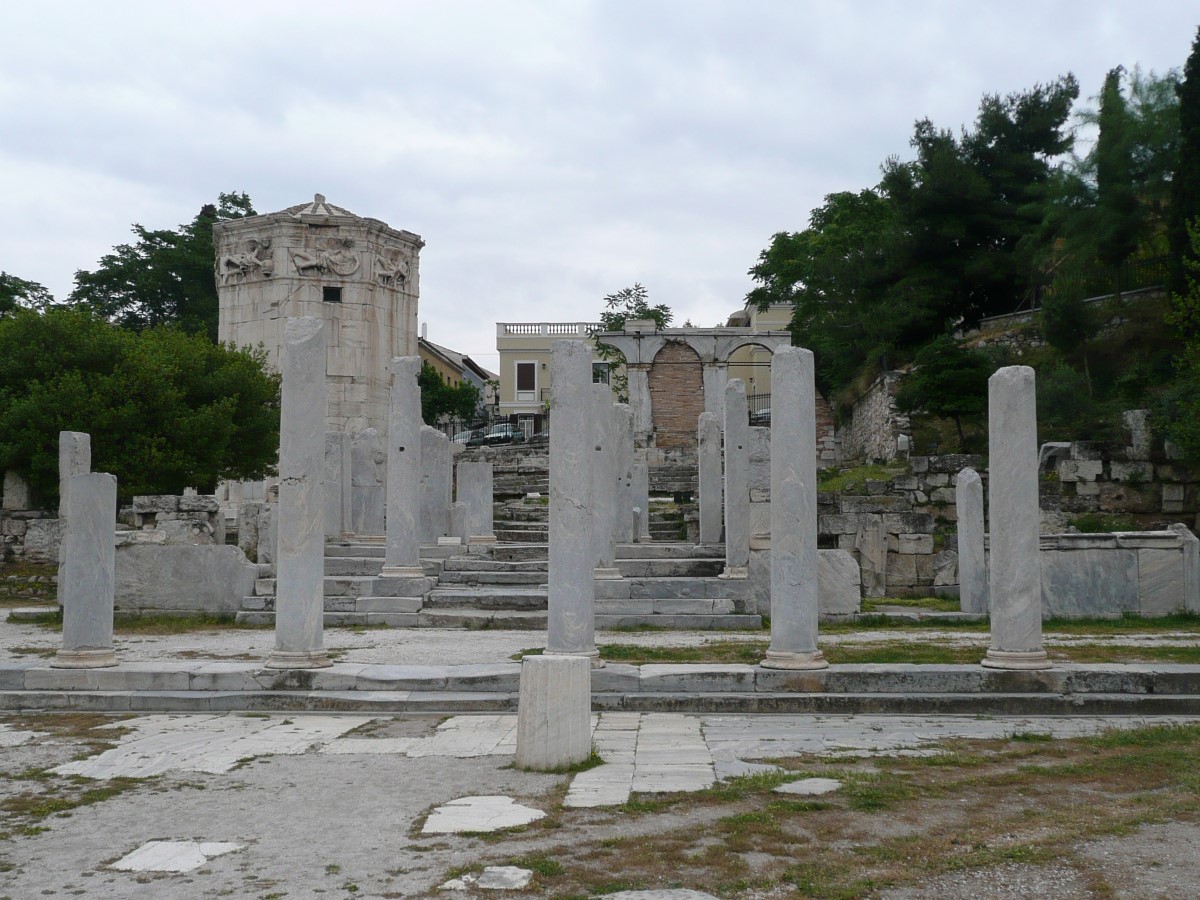
|
|||
|
|
|||
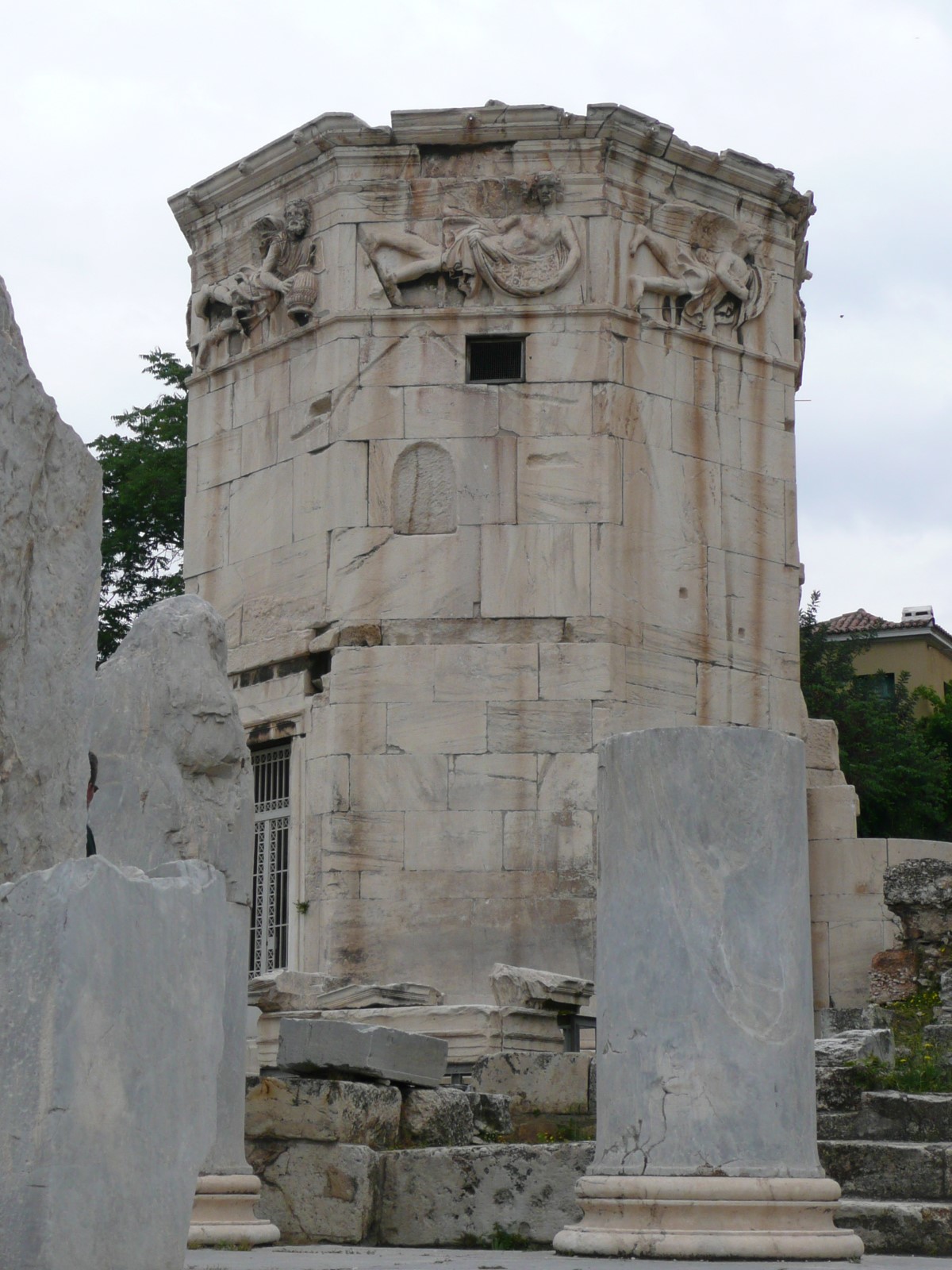
| Tower of the Winds: The tower is a tall, octagonal building immediately east of the Roman Agora. It was designed by a famous astronomer (Andronikos of Kyrrhos) to be an elaborate water clock (on the inside), sundial (on the outside), and weather vane (on the top). The nickname "Tower of the Winds" is derived from the personifications of the 8 winds carved on the 8 sides of the building. Scholars used to think that the Tower of the Winds was built in the 1st century B.C. (that is, during the early Roman empire), but many archaeologists now prefer a construction date in the mid-2nd century B.C. (during the Hellenistic period). | |||
|
|||
| Library of Hadrian | |||
|
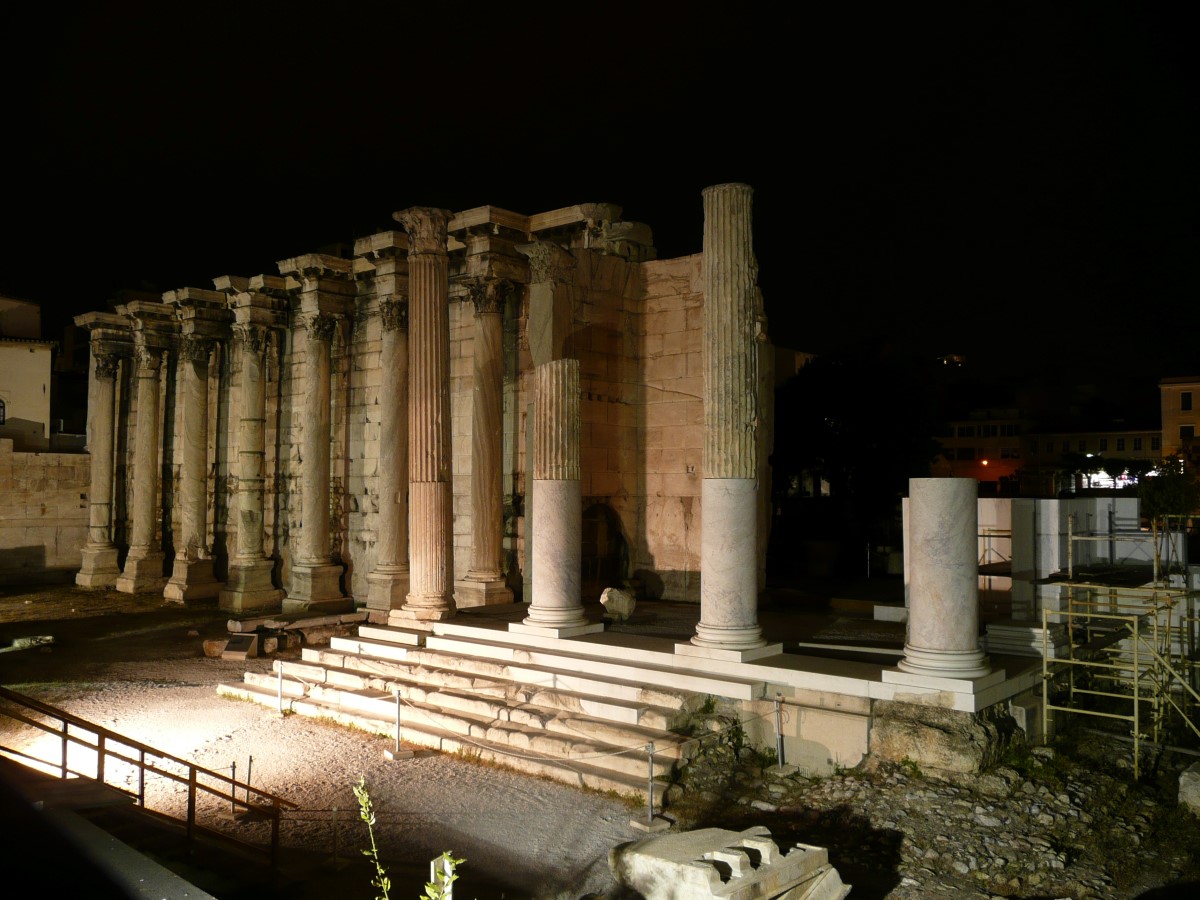
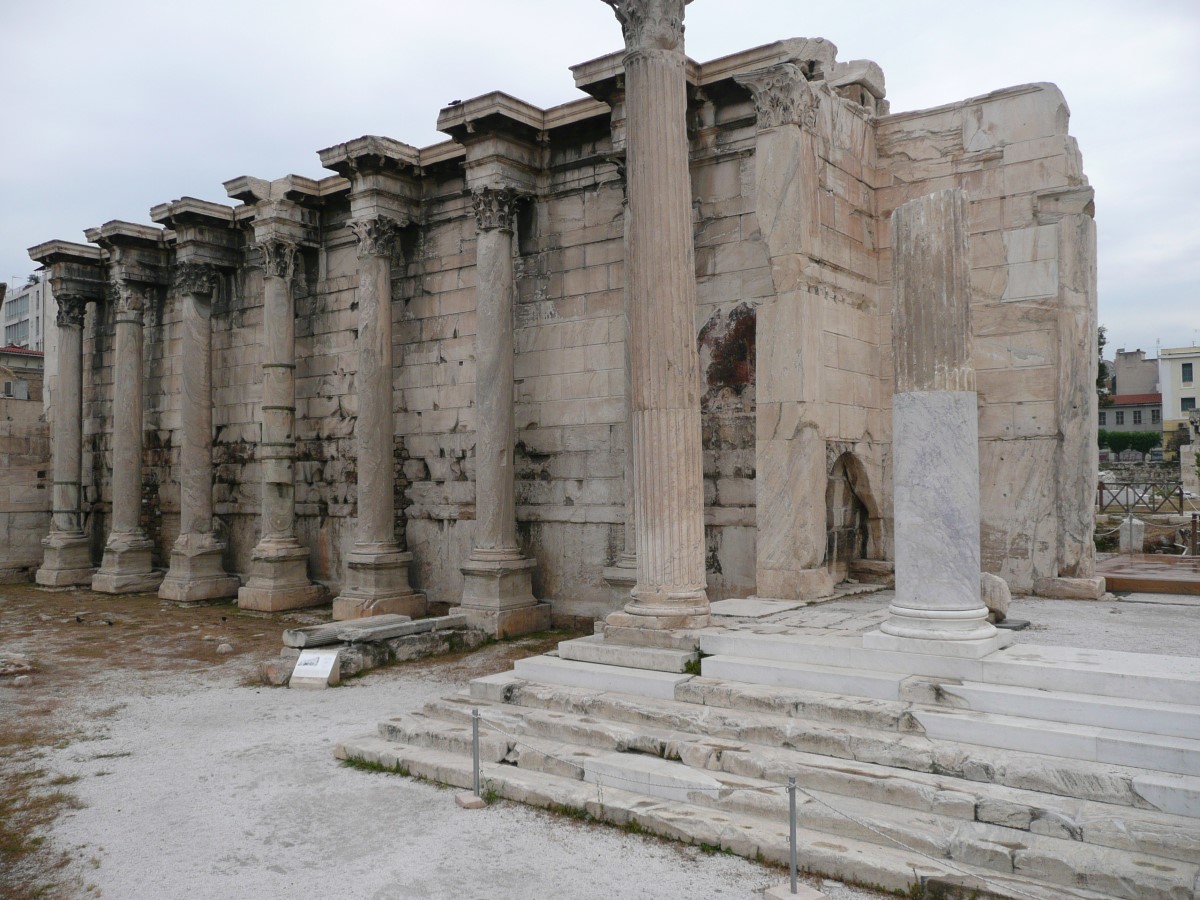
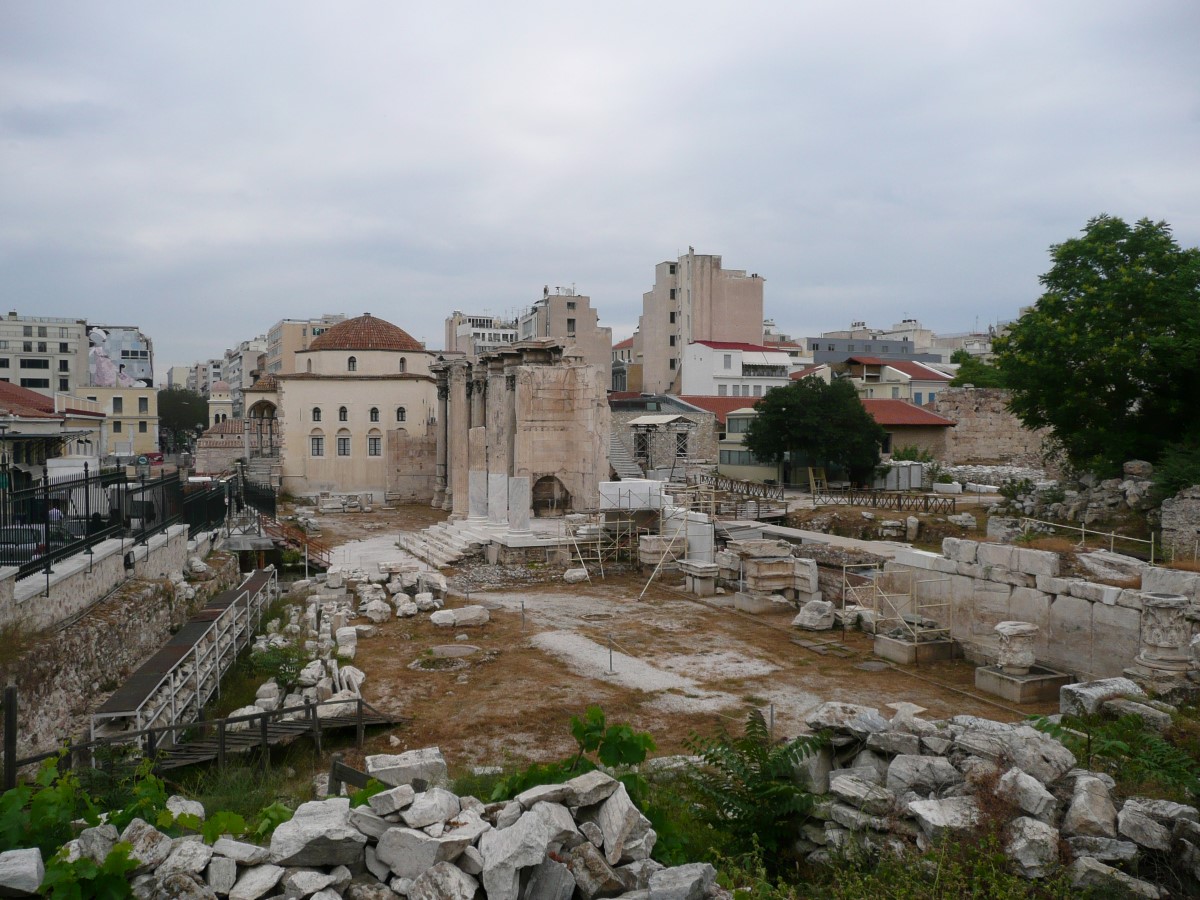
The Library of Hadrian is located on the north side of the Acropolis, immediately north of the Roman Agora. The complex was built by the Roman emperor Hadrian in 131/2 A.D. Although the building has been called the "Library" of Hadrian since the early 19th century, it is important to realize that it was much more than that. Archaeologists recognize that the architectural form of the complex is closely modeled on the Temple Pacis ("Temple of Peace") in Rome, one of a series of Imperial fora constructed by the Roman emperors. The Library of Hadrian provided the people of Athens with a new, multi-purpose, public square and cultural center that contained a garden, works of art, a library, and lecture halls. |
|||
|
|||
| Around the Town | |||
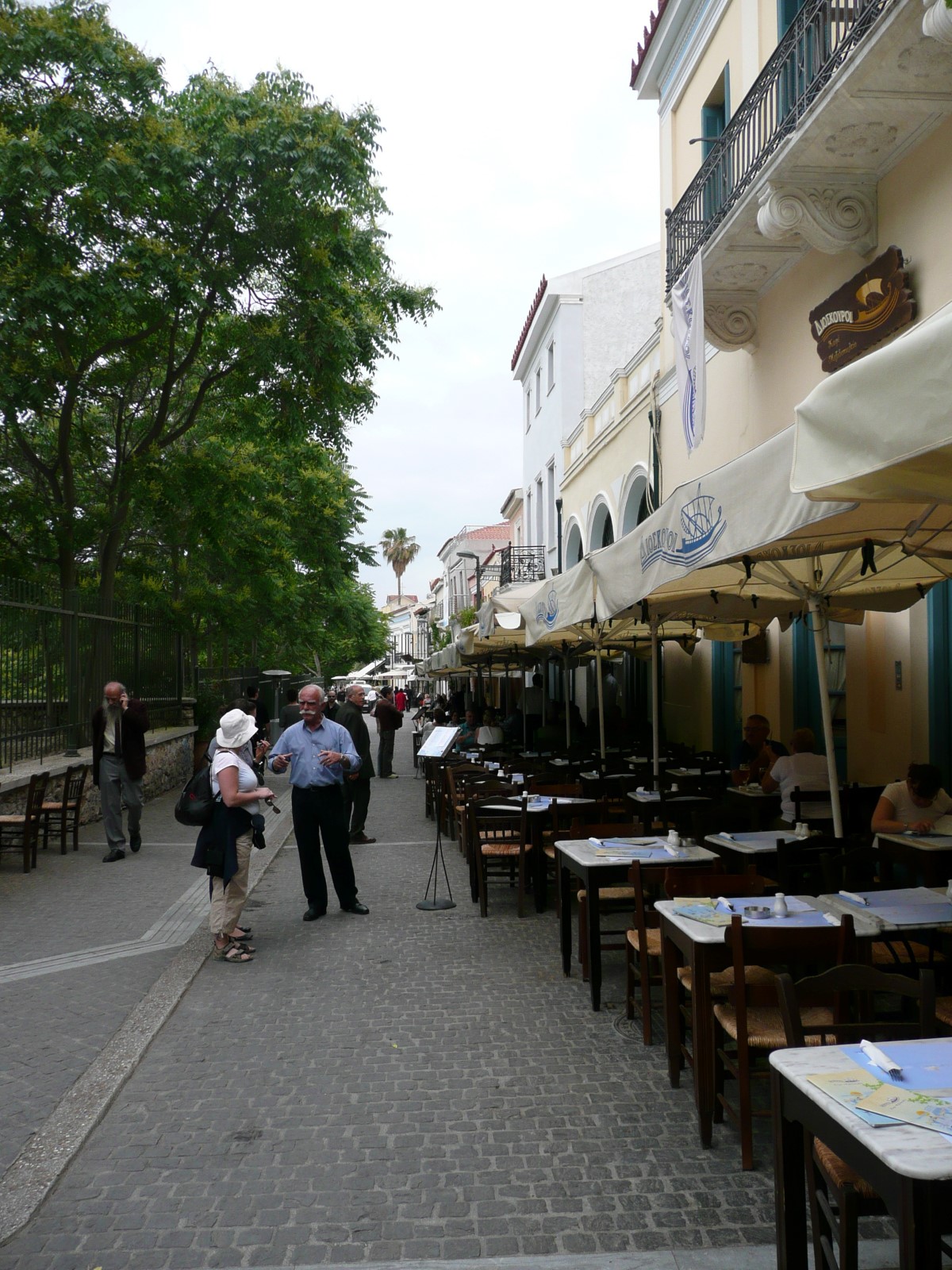
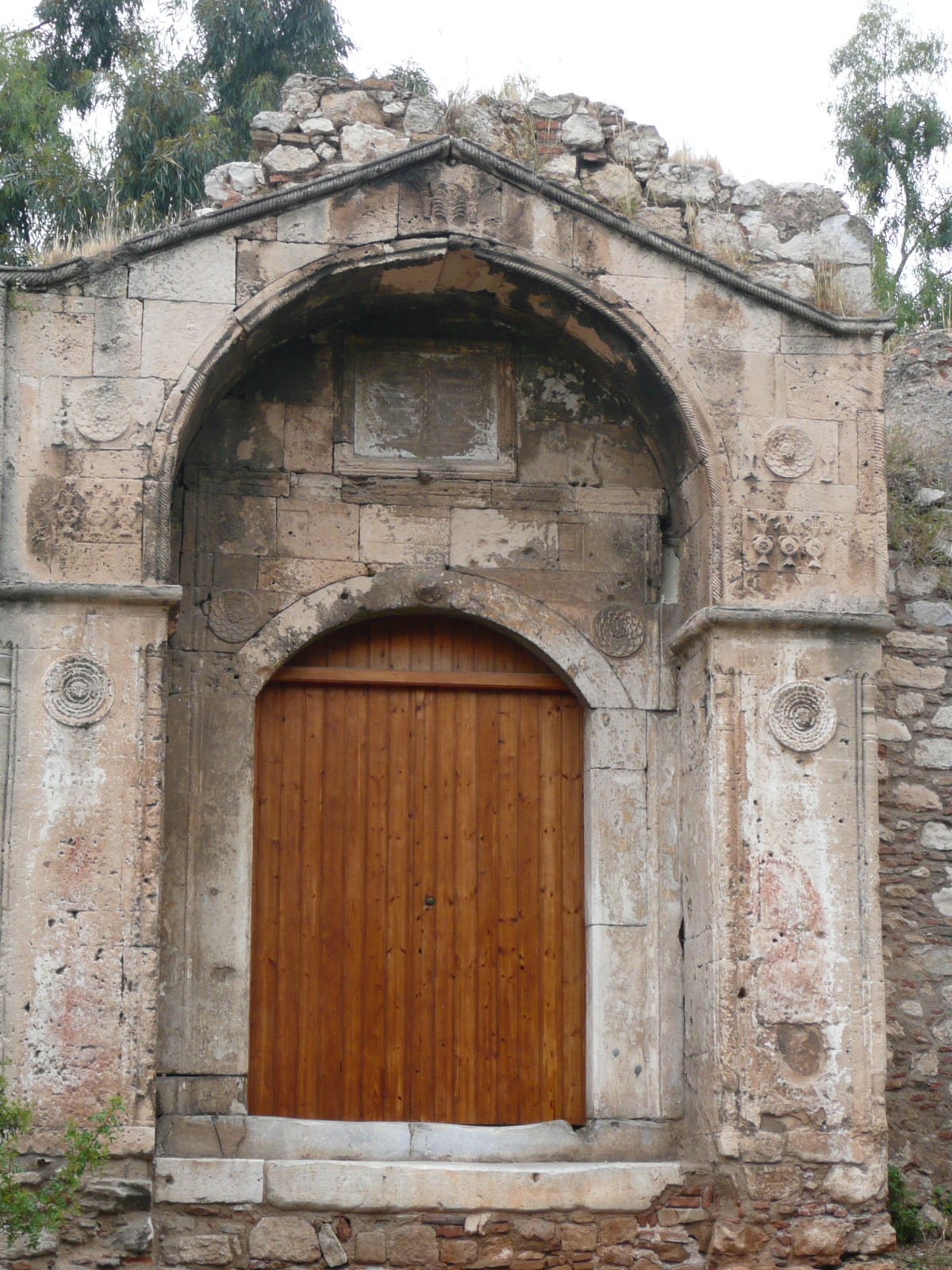
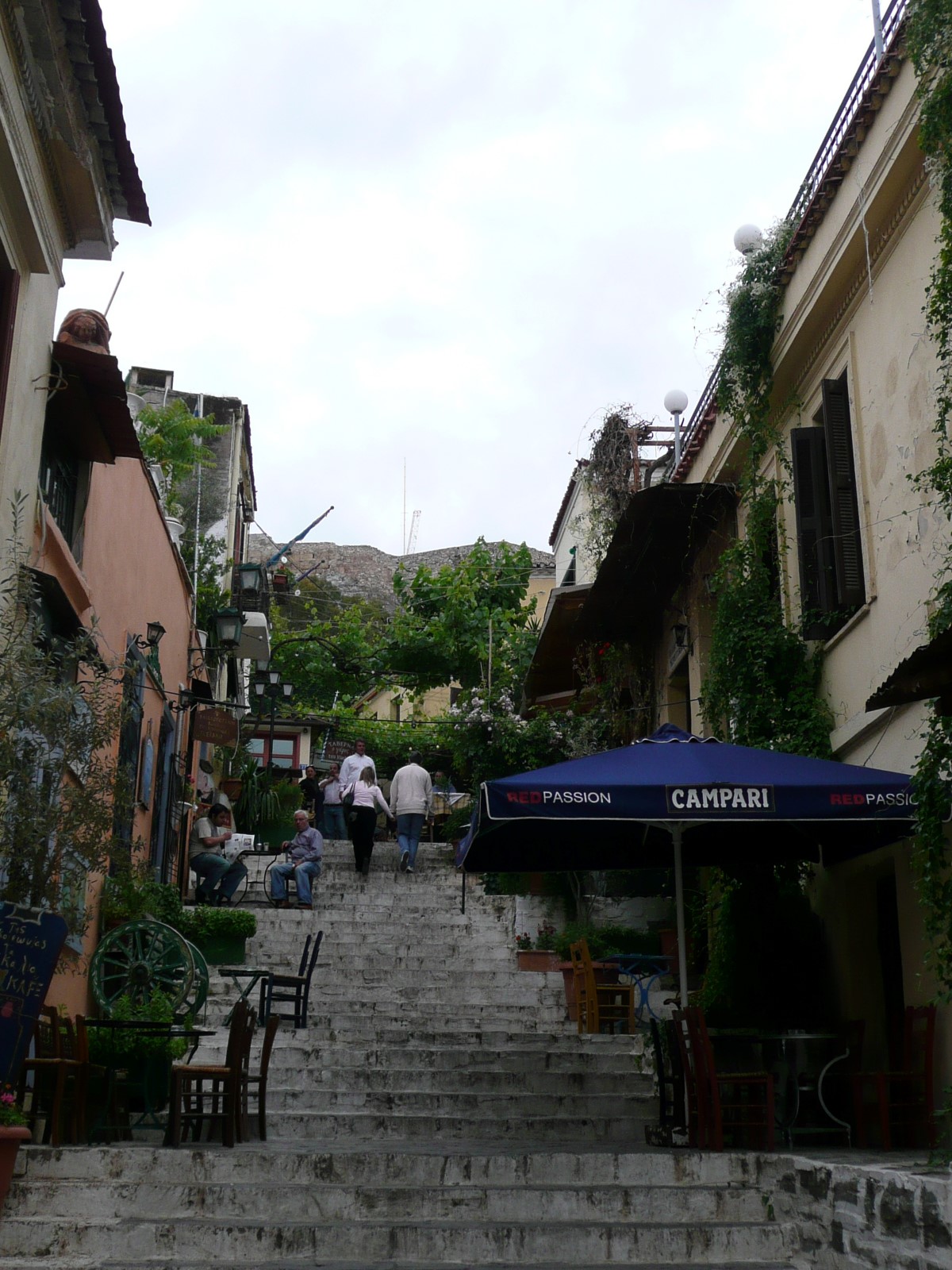
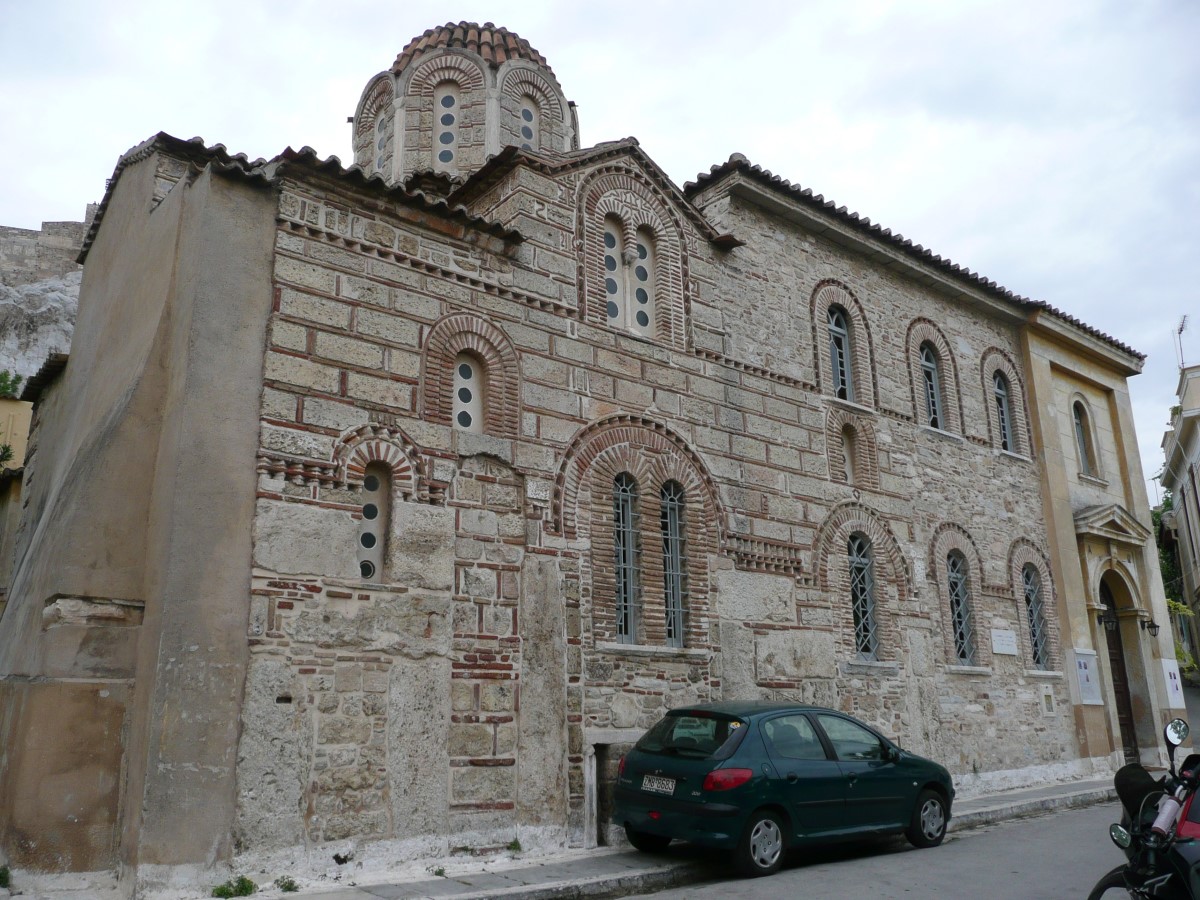
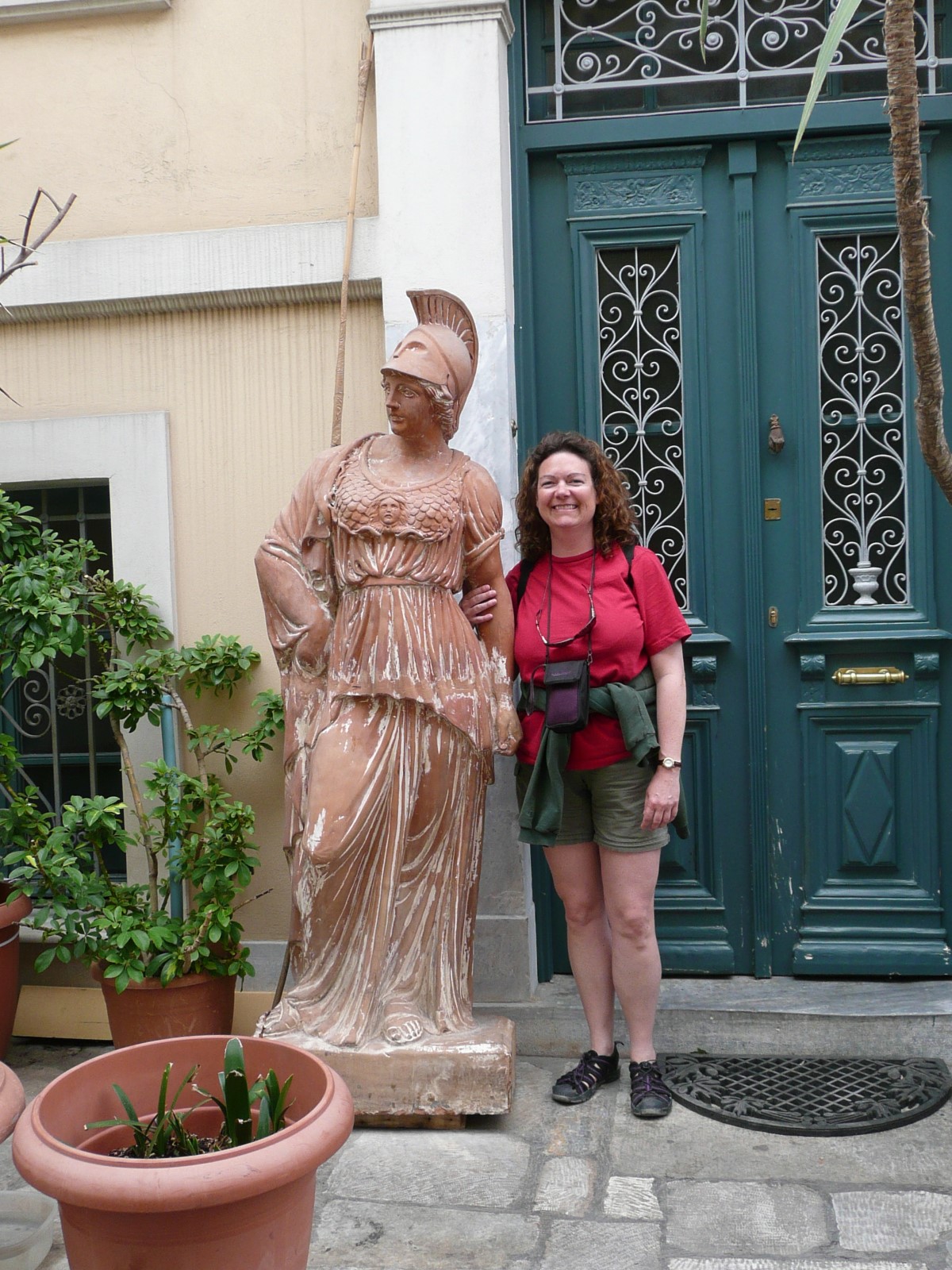
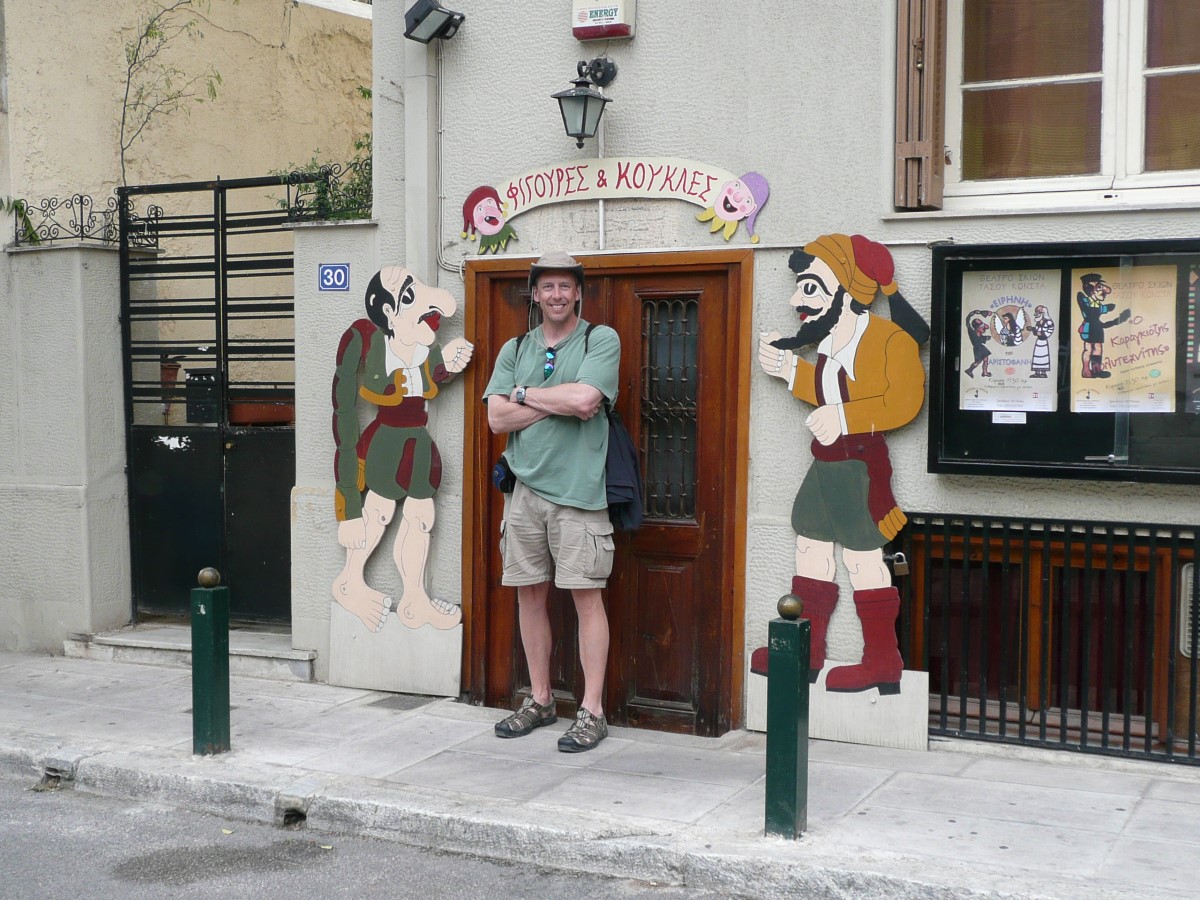
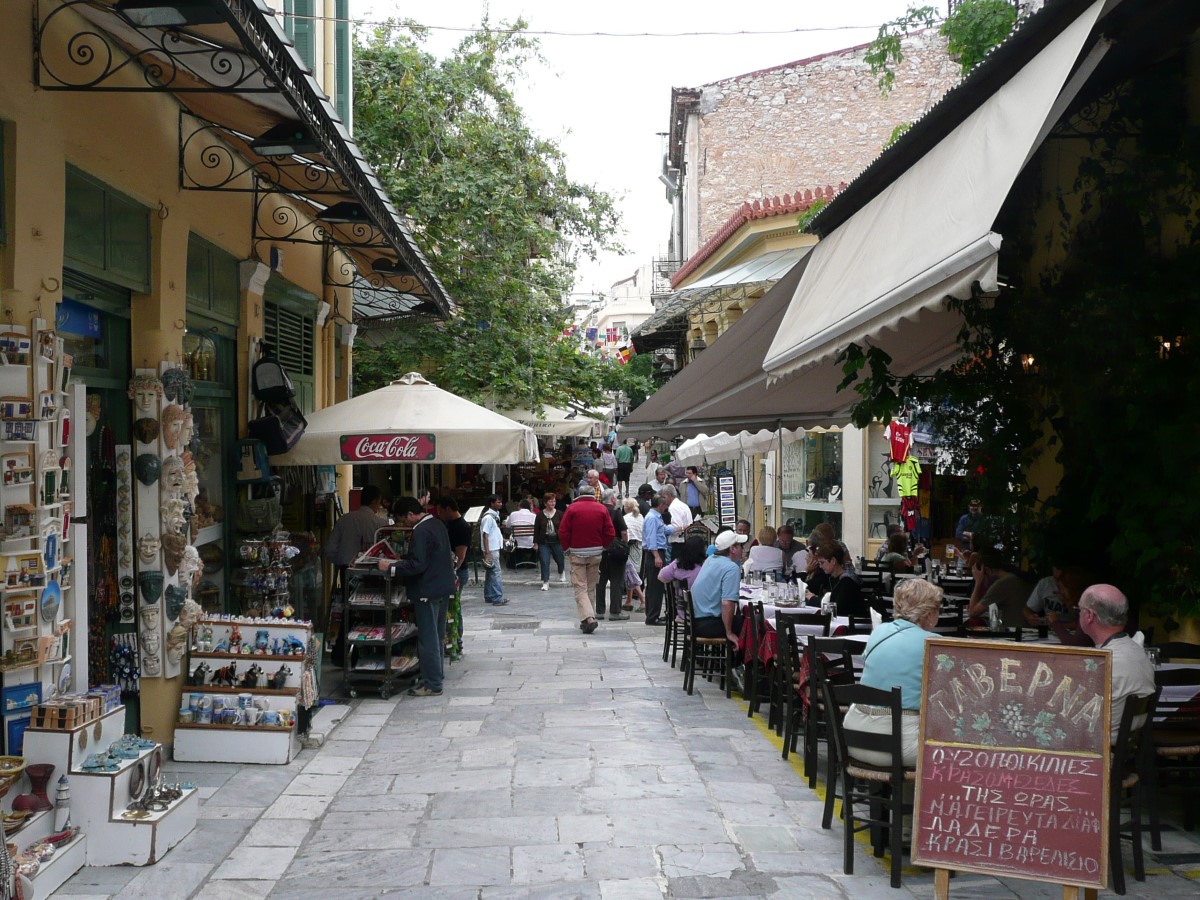
| Misc: Various photos from around the town. | |||
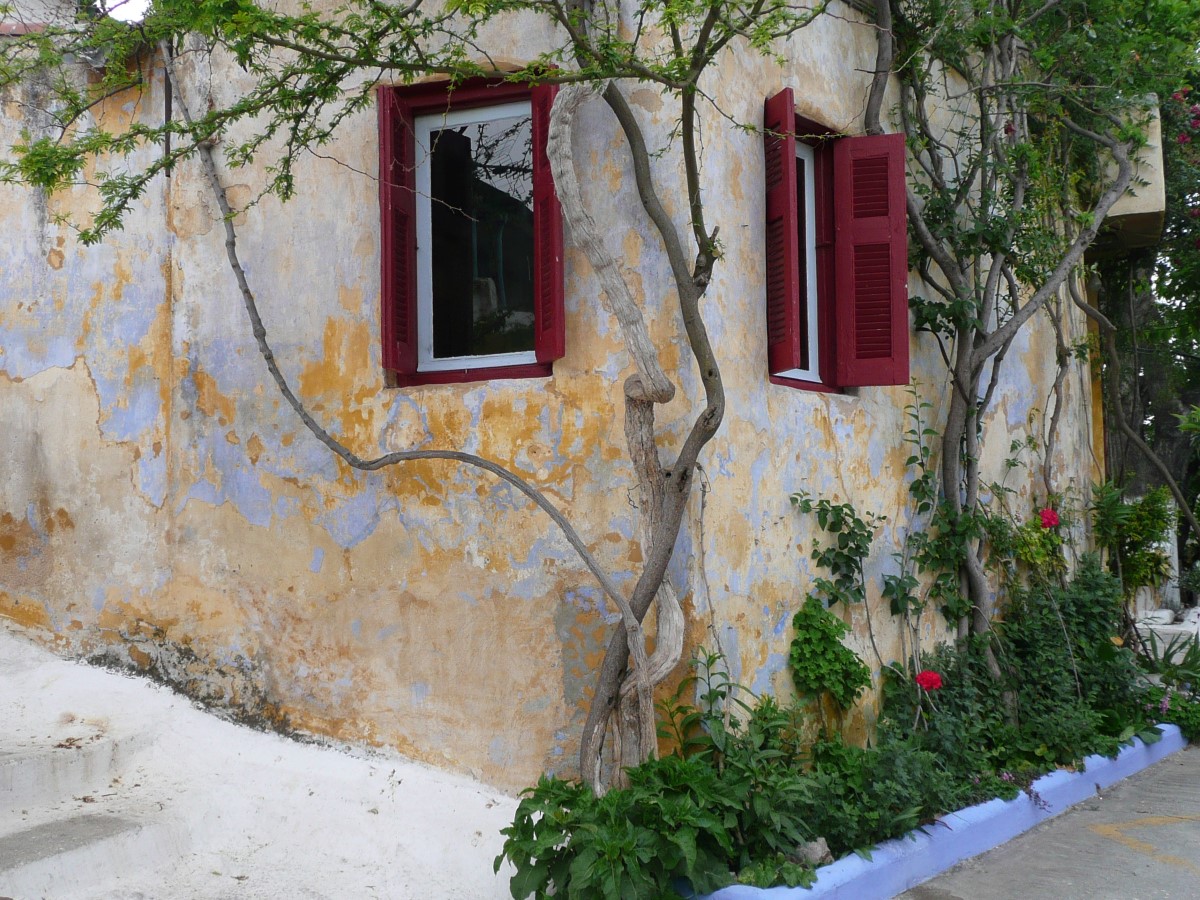
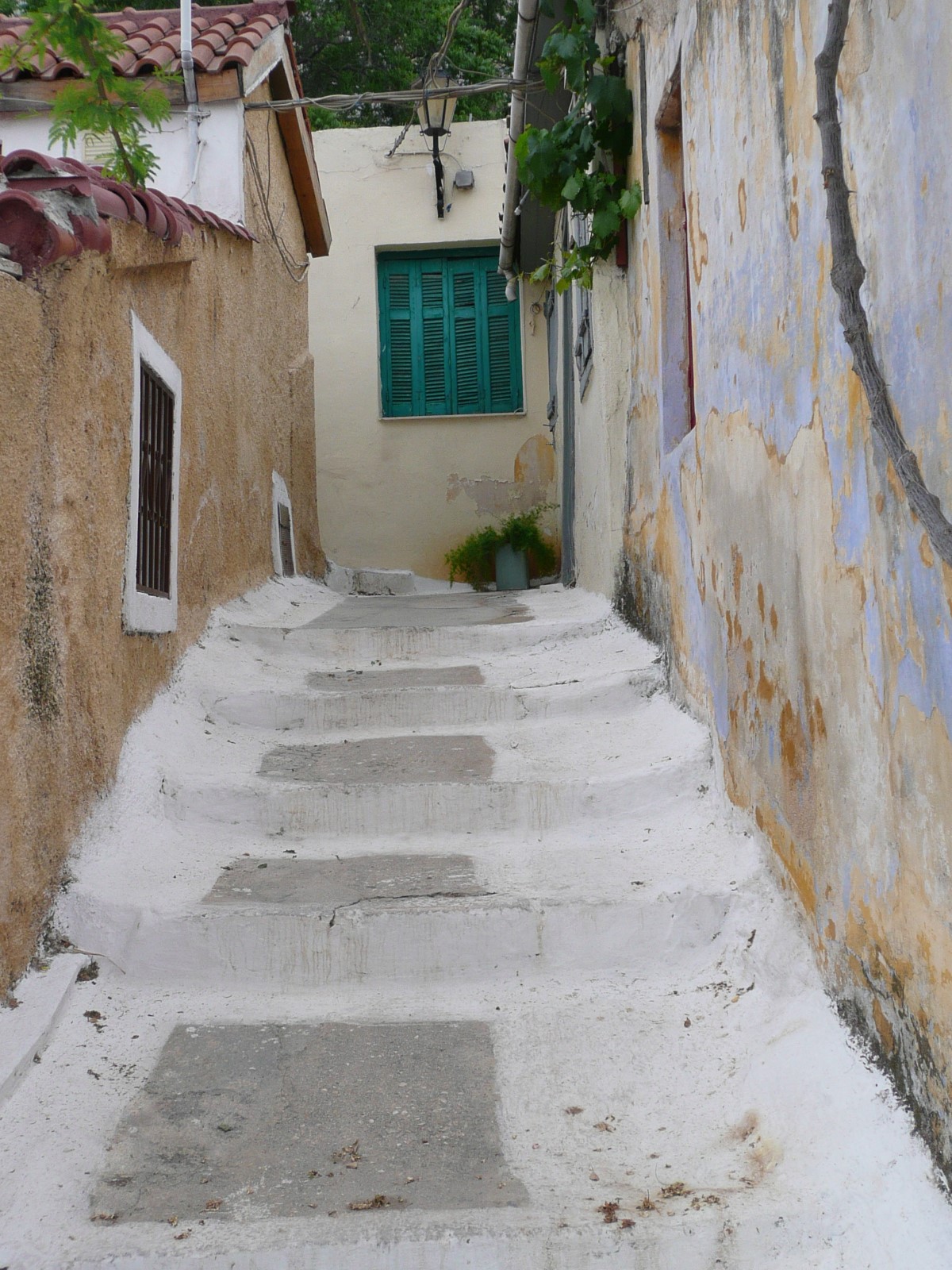
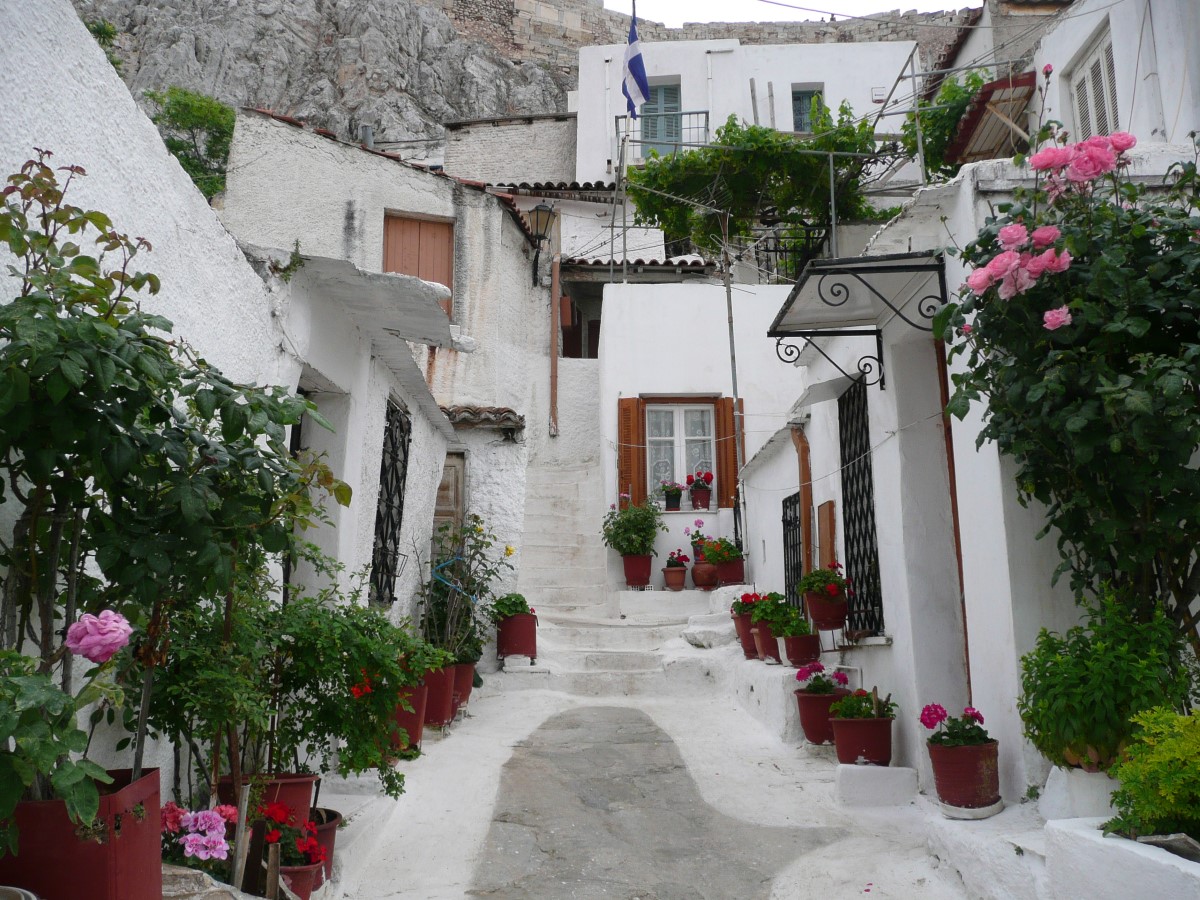
|
|||
|
|
|||
|
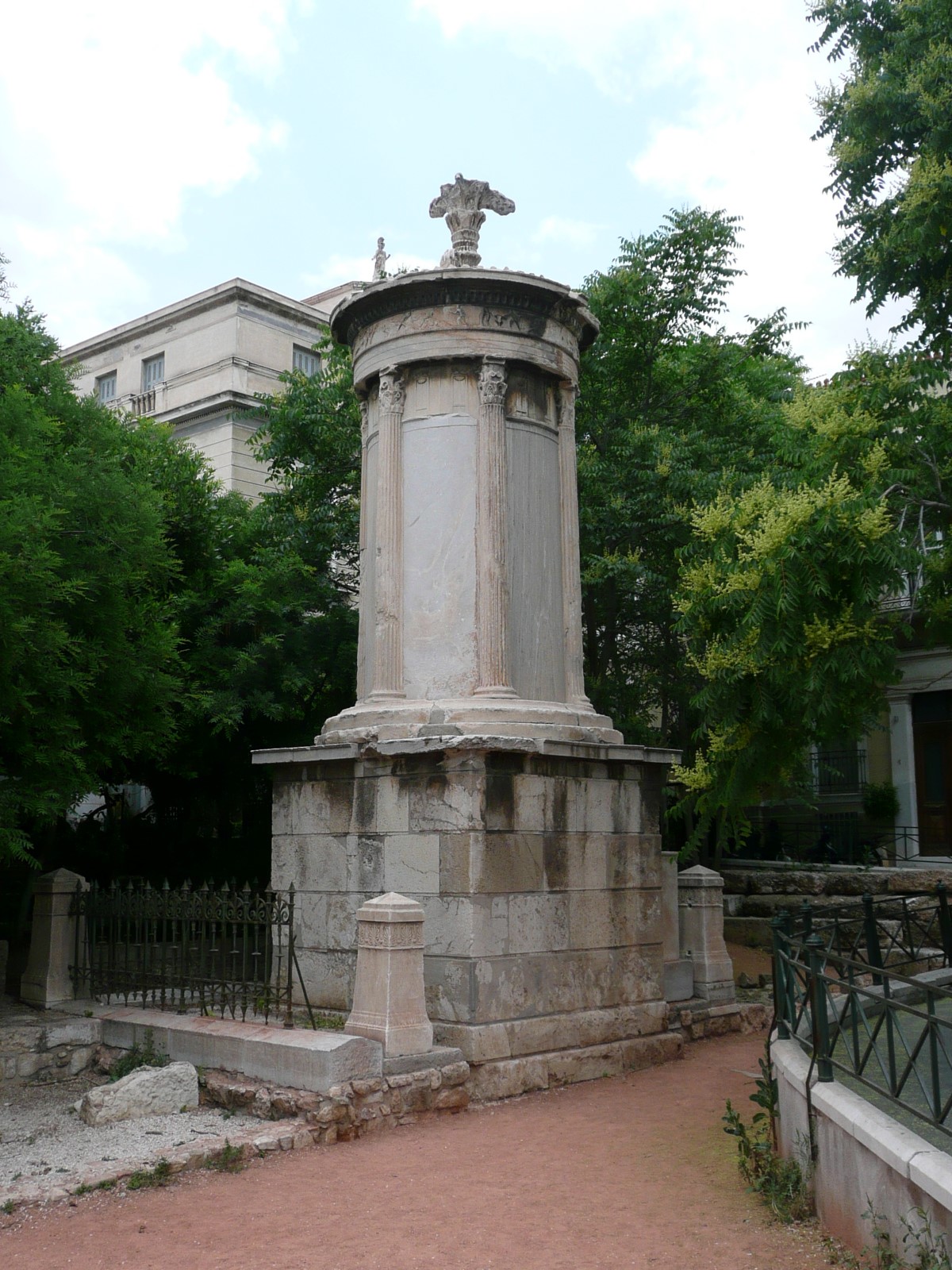
Monument: This choragic monument was built in 334-333 B.C. at the time of the archan
Euvenetos. In 1669 A.D. it was incorporated into the Monastery of the Frankish order of Capuchin monks and was used as a cell, library and study room. Lord Byron was accommodated in the monastery as well as several travelers like Chateaubriand and others. It was destroyed in 1824 during the Greek War of Independence by Omer Pasha's forces. |
|||
|
|||
|
|
|||
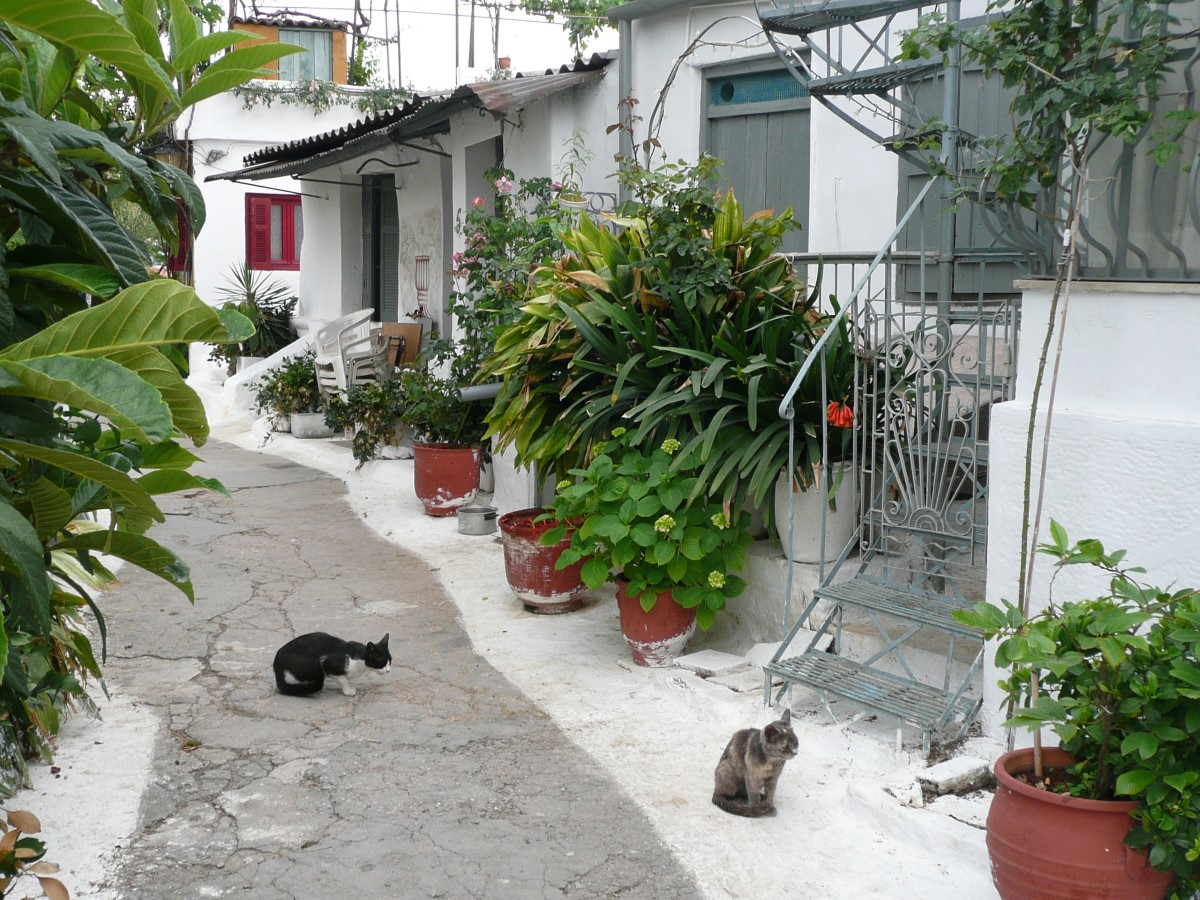
| Cats: Some of the many cats we ran into throughout the city. | |||
|
|||
|
|
|||
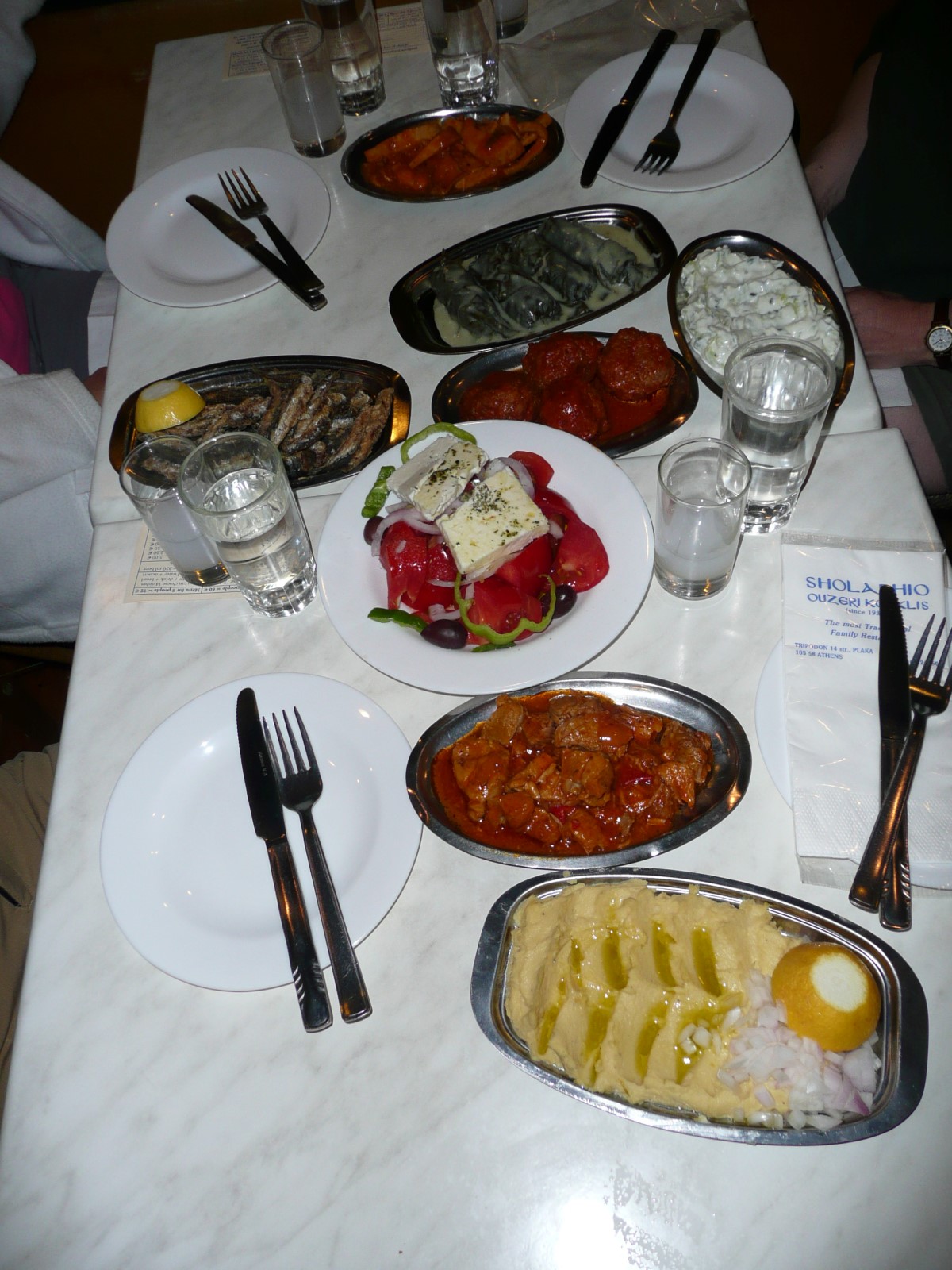
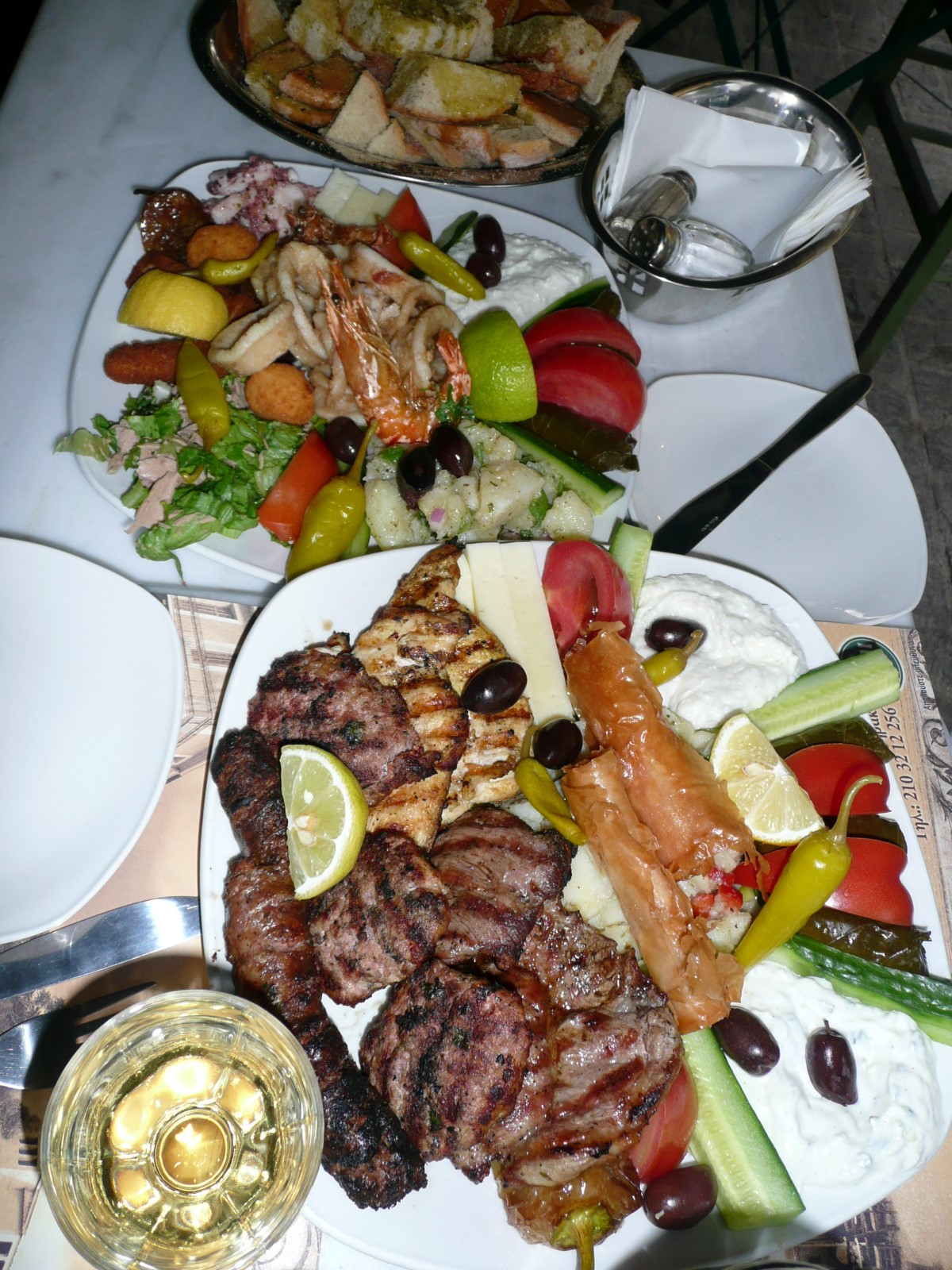
| Food: Some of the food we had. | |||
|
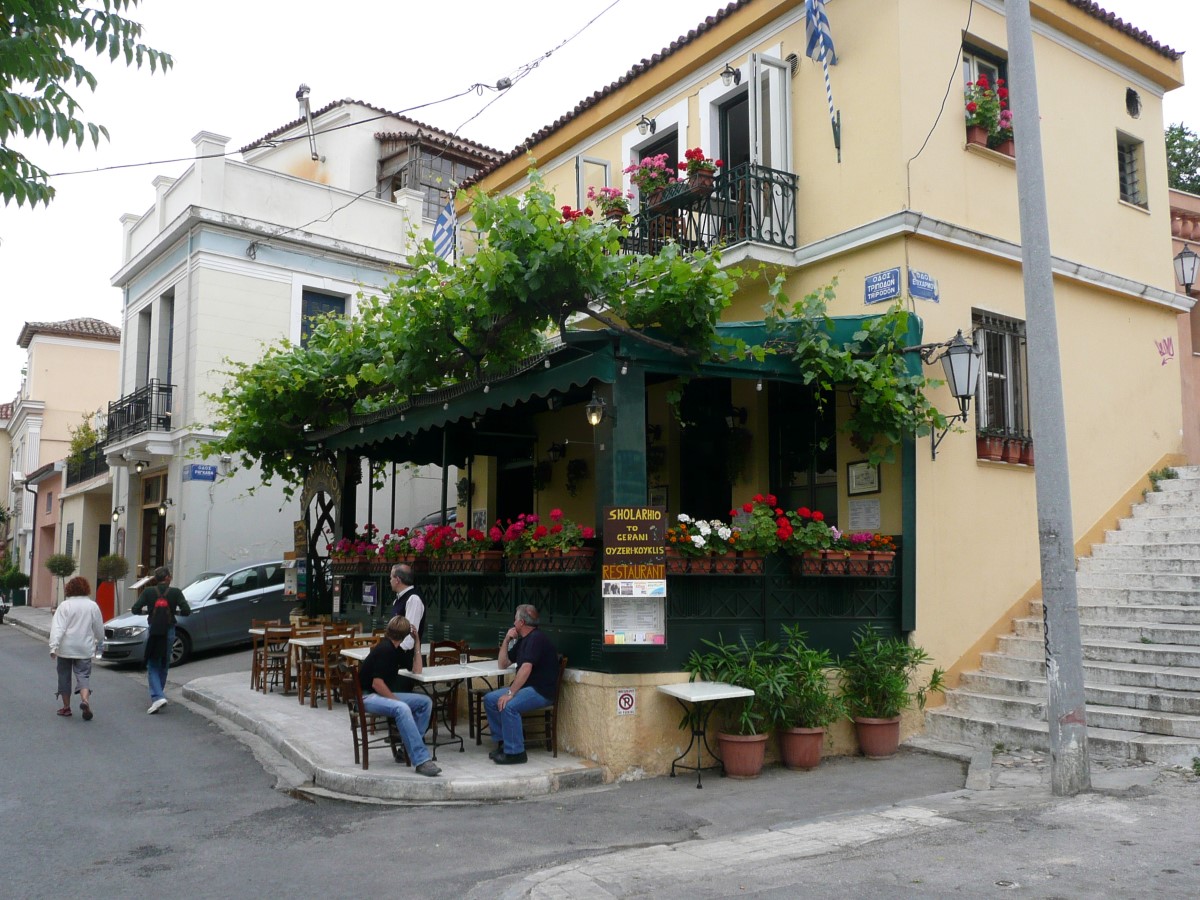
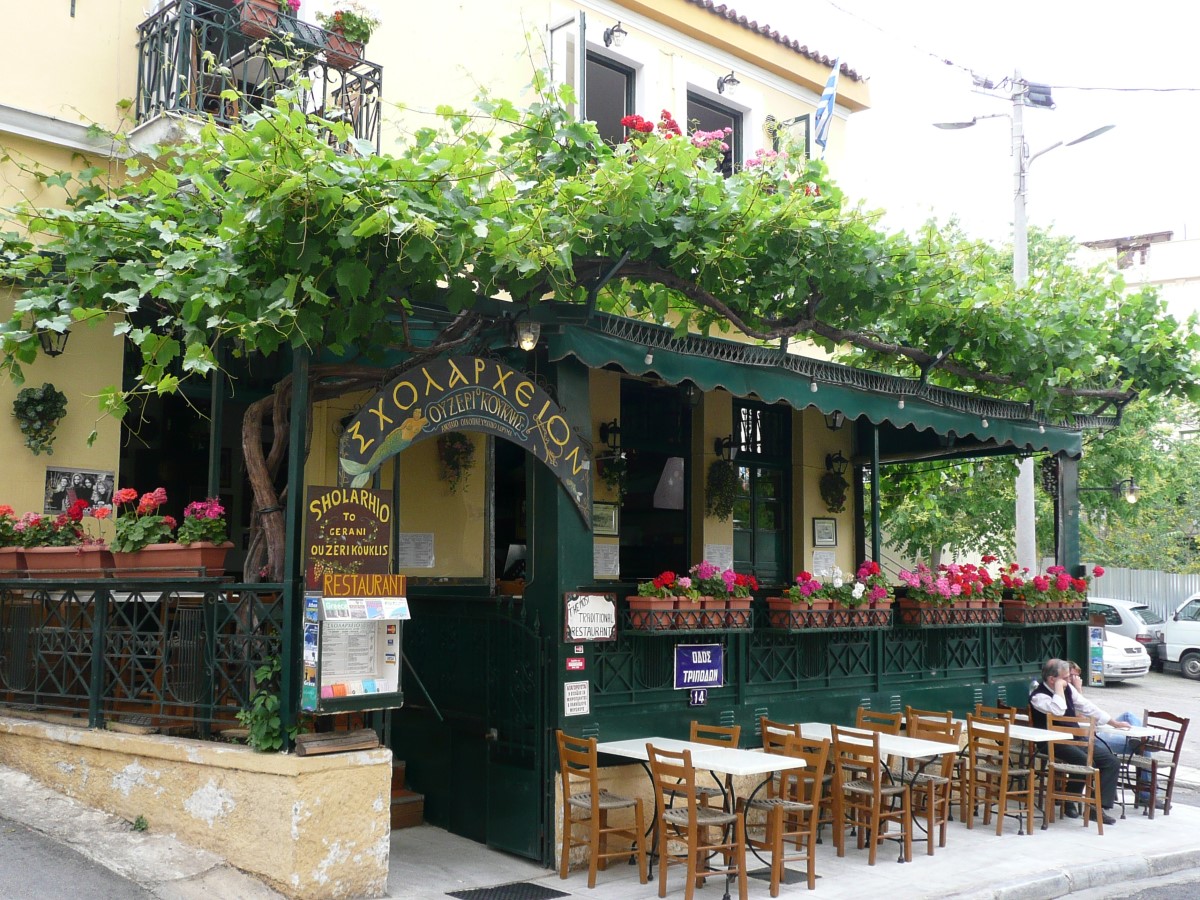
This is the restaurant where we enjoyed our first
meal in Athens. It was a fixed price for 4 people and gave you a choice
of 10 of the 20 different dishes they make along with wine and water. It
was a good deal and allowed us to try several different things.
Food from another restaurant:
|
|||
|
|
|||
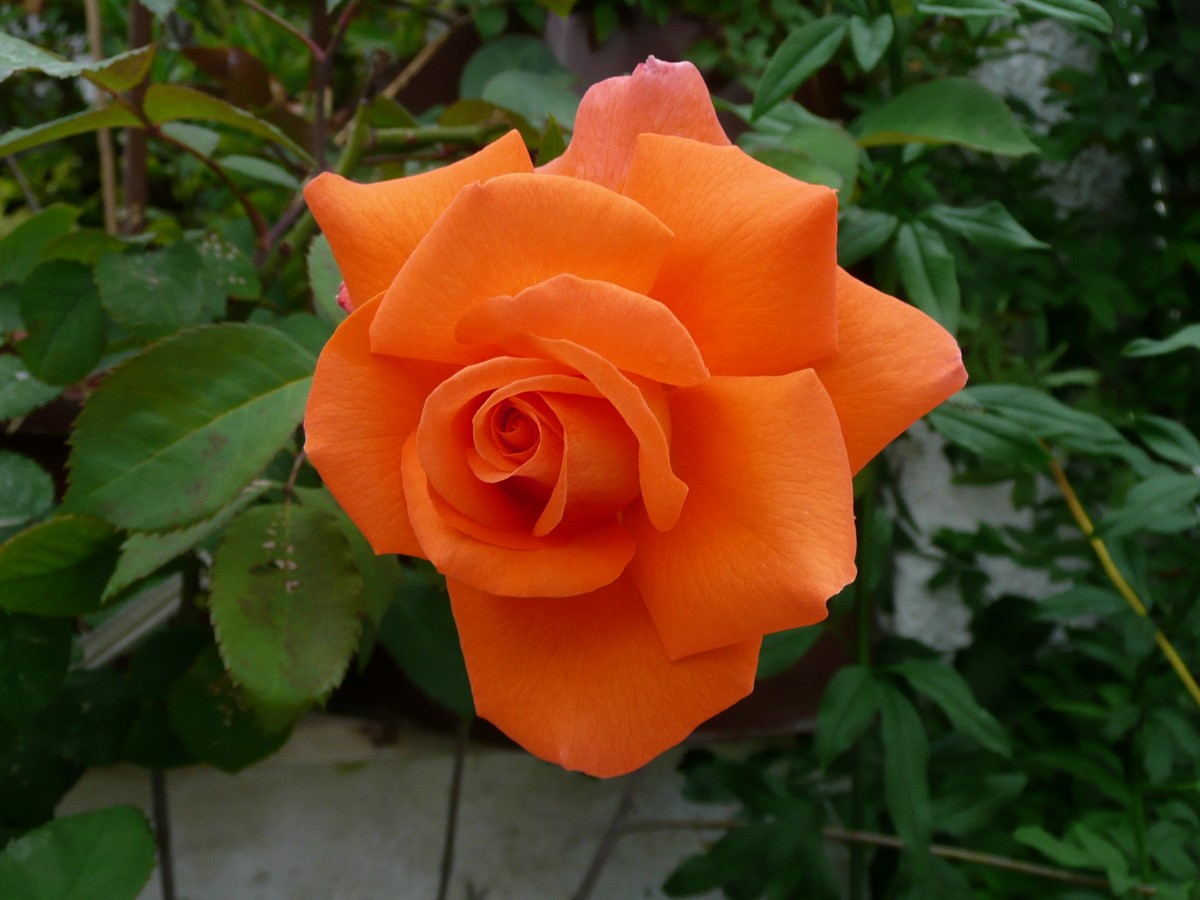
| Just a Rose: I thought was pretty and the photo turned out good. | |||
|
|||
|
|
|||
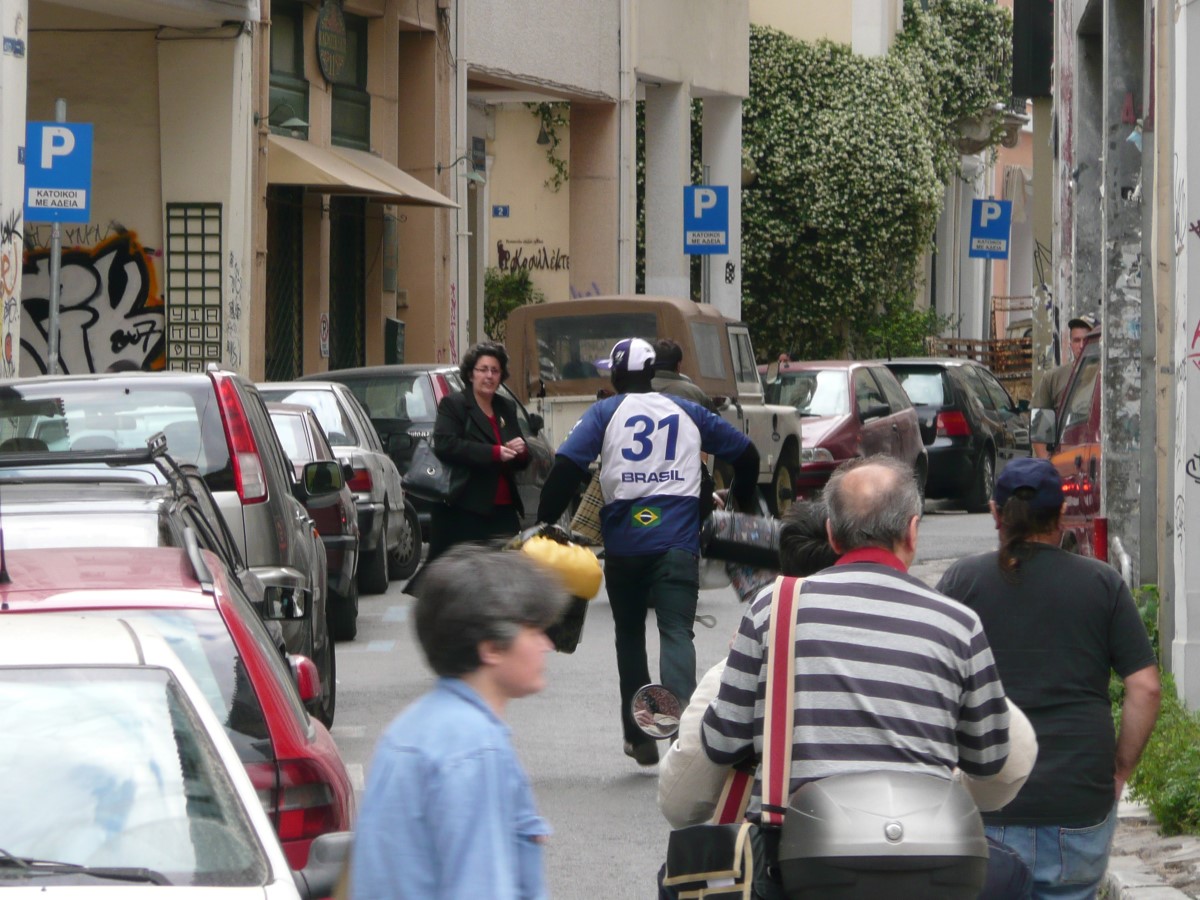
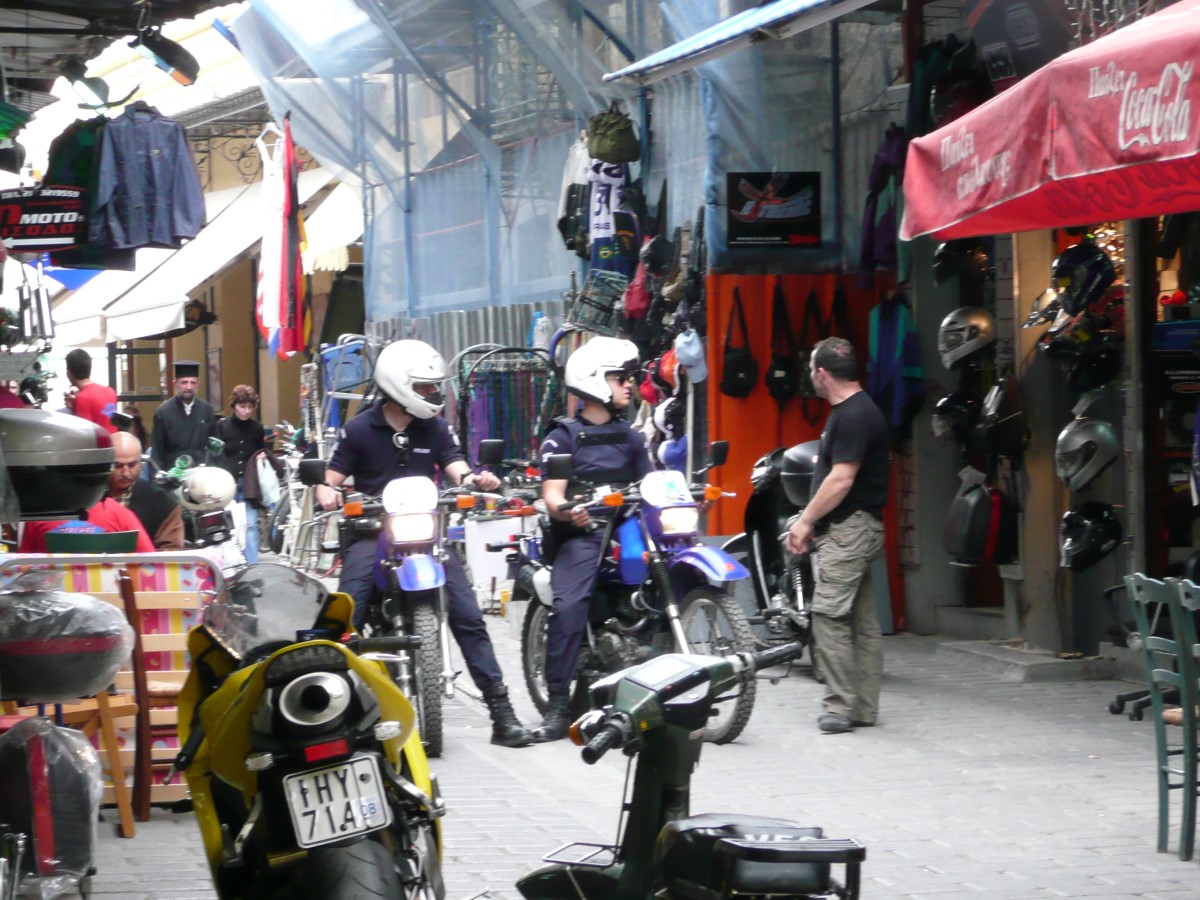
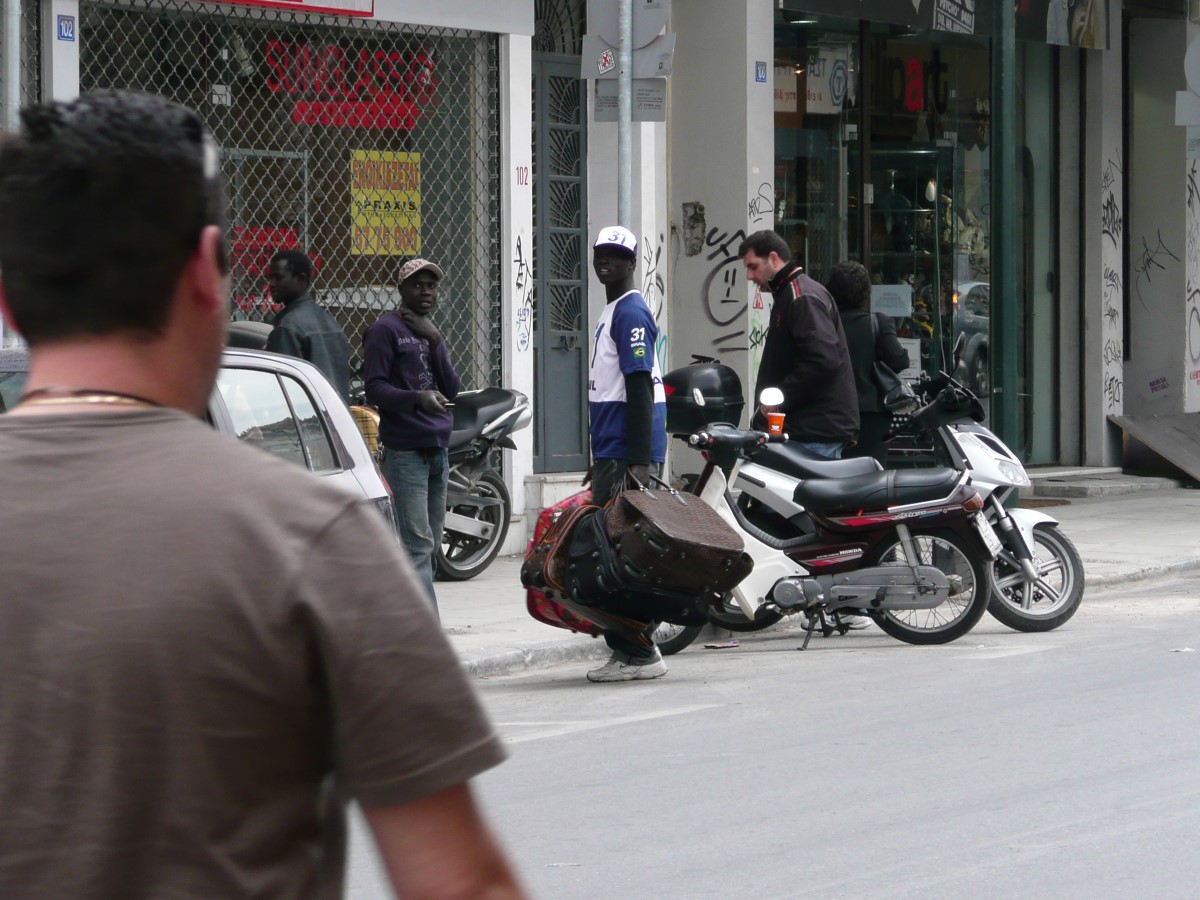
| Street Vendors : It is illegal to sell items on the street. You will see people but down a blanket with items for sale while their partners keep a lookout for the police. If the police get near, they quickly grab the 4 corners of the blanket and run off with everything so they don't get caught. We have seen this in Rome as well, it's kind of entertaining to watch. Here you see one of the guys running down the street as the motorcycle police showed up. | |||
|
|||
|
|
|||
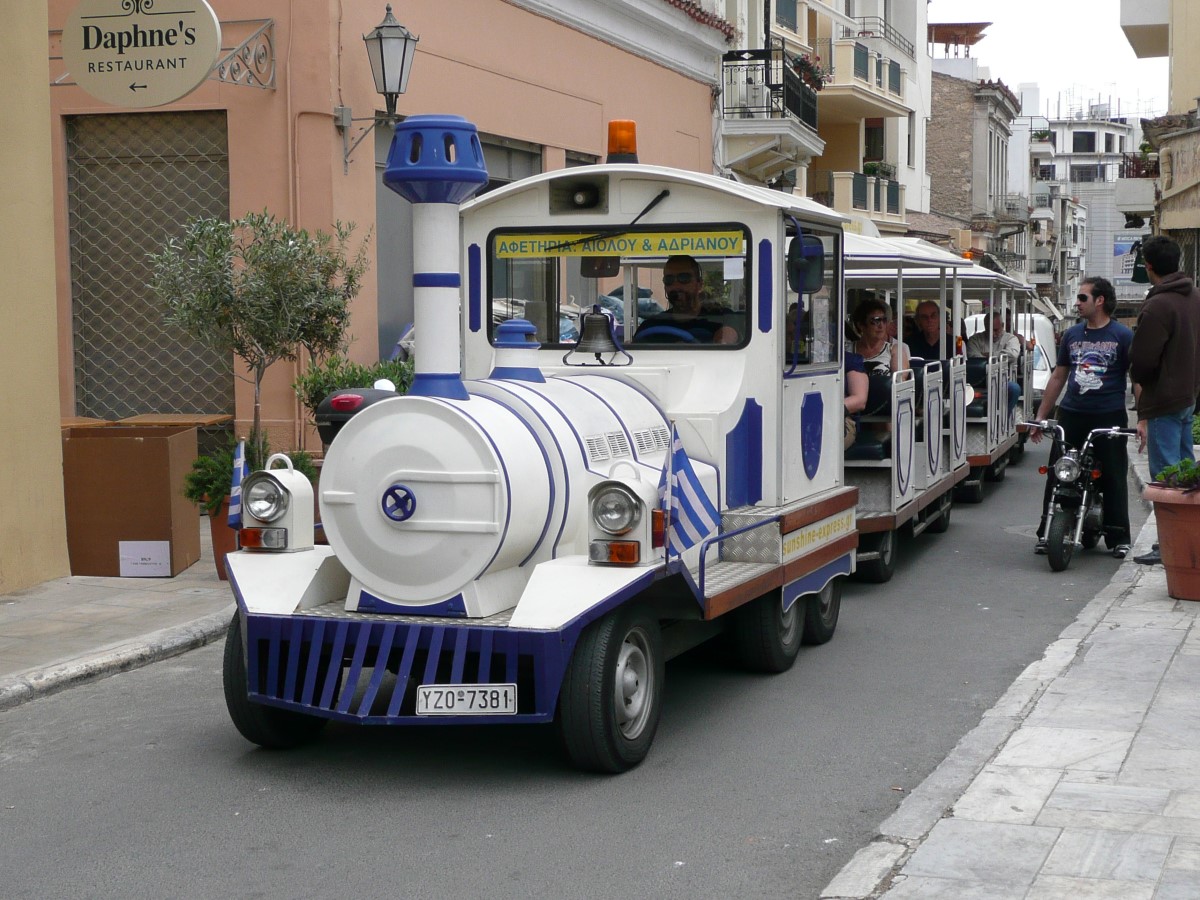
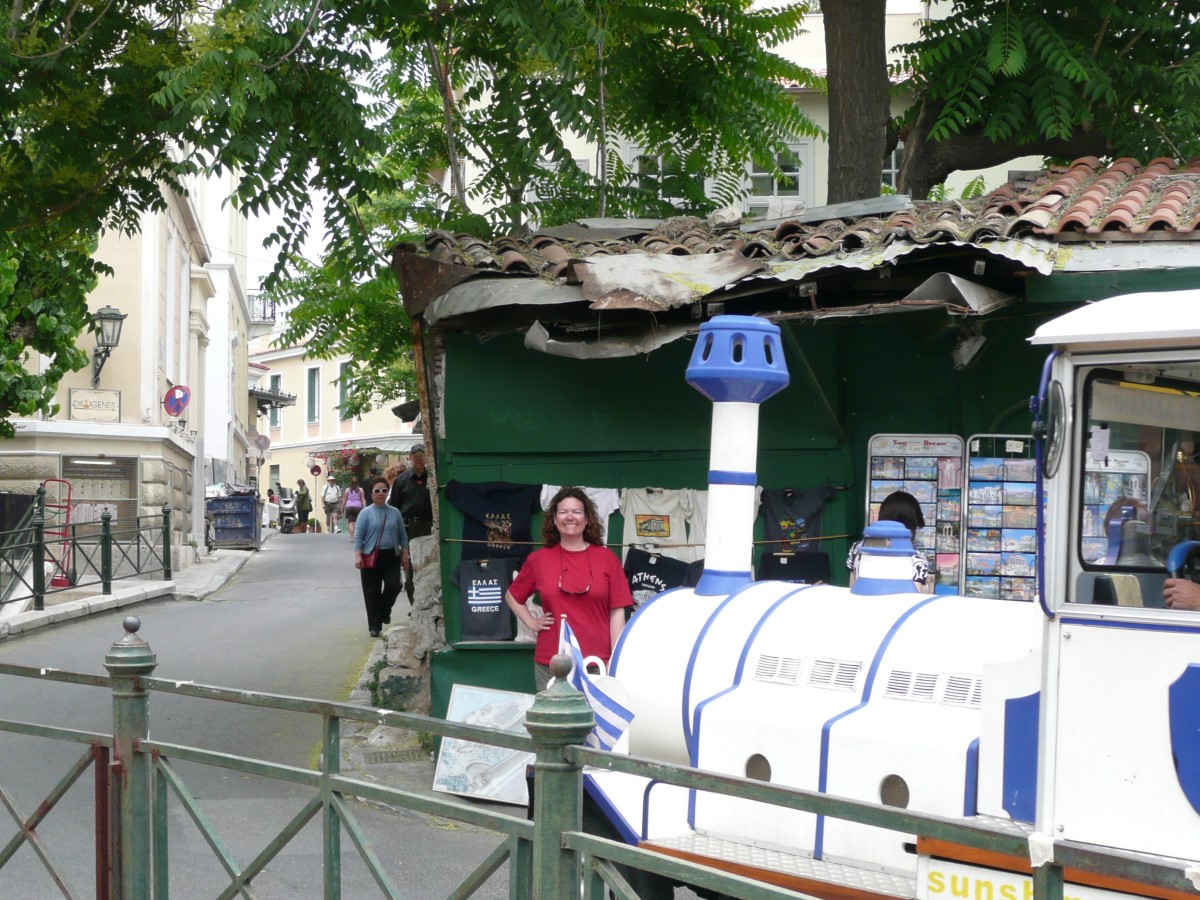
| Tourist Train: One of the small trains taking tourist around the town. | |||
|
|||
|
|
|||
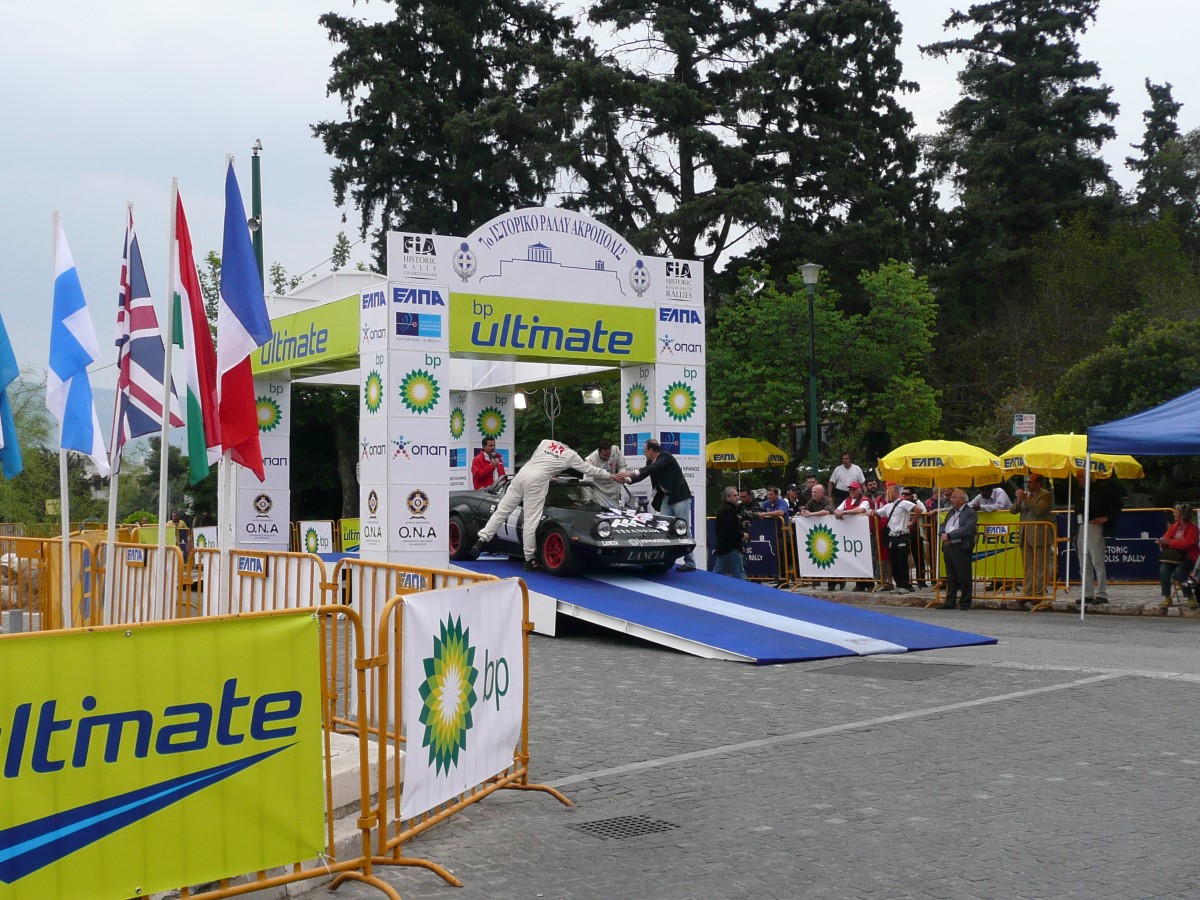
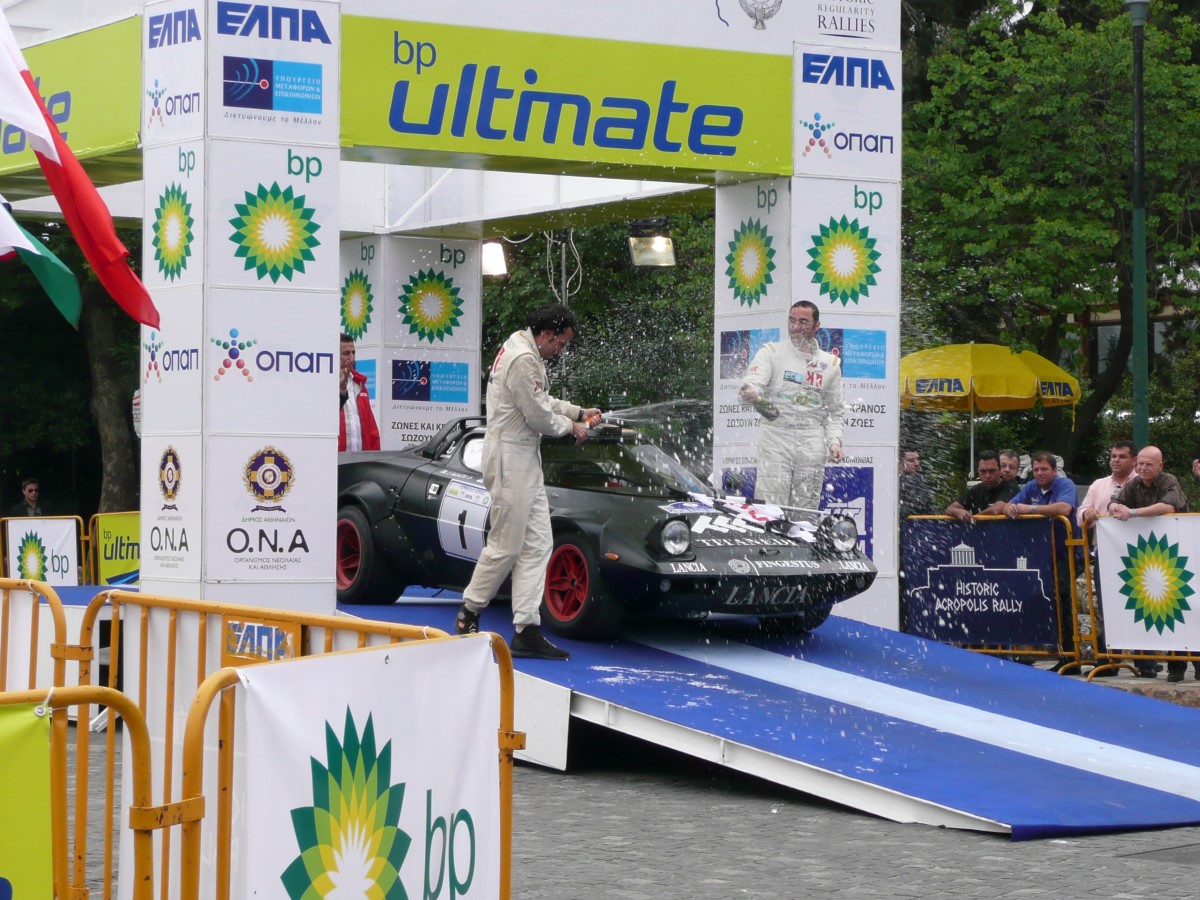
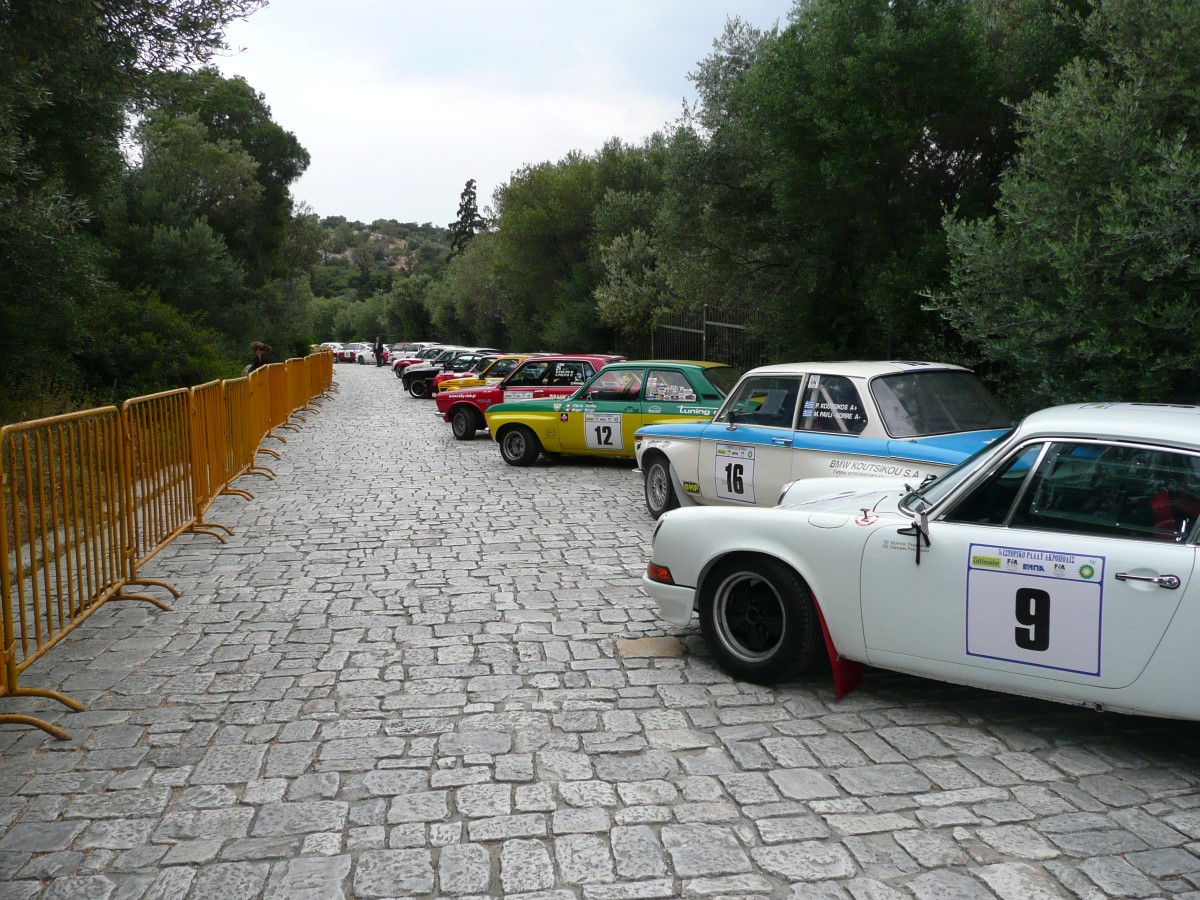
| Car Race: Don't really know what this was, but we think this was the winner. | |||
|
|||
| Various Churches | |||
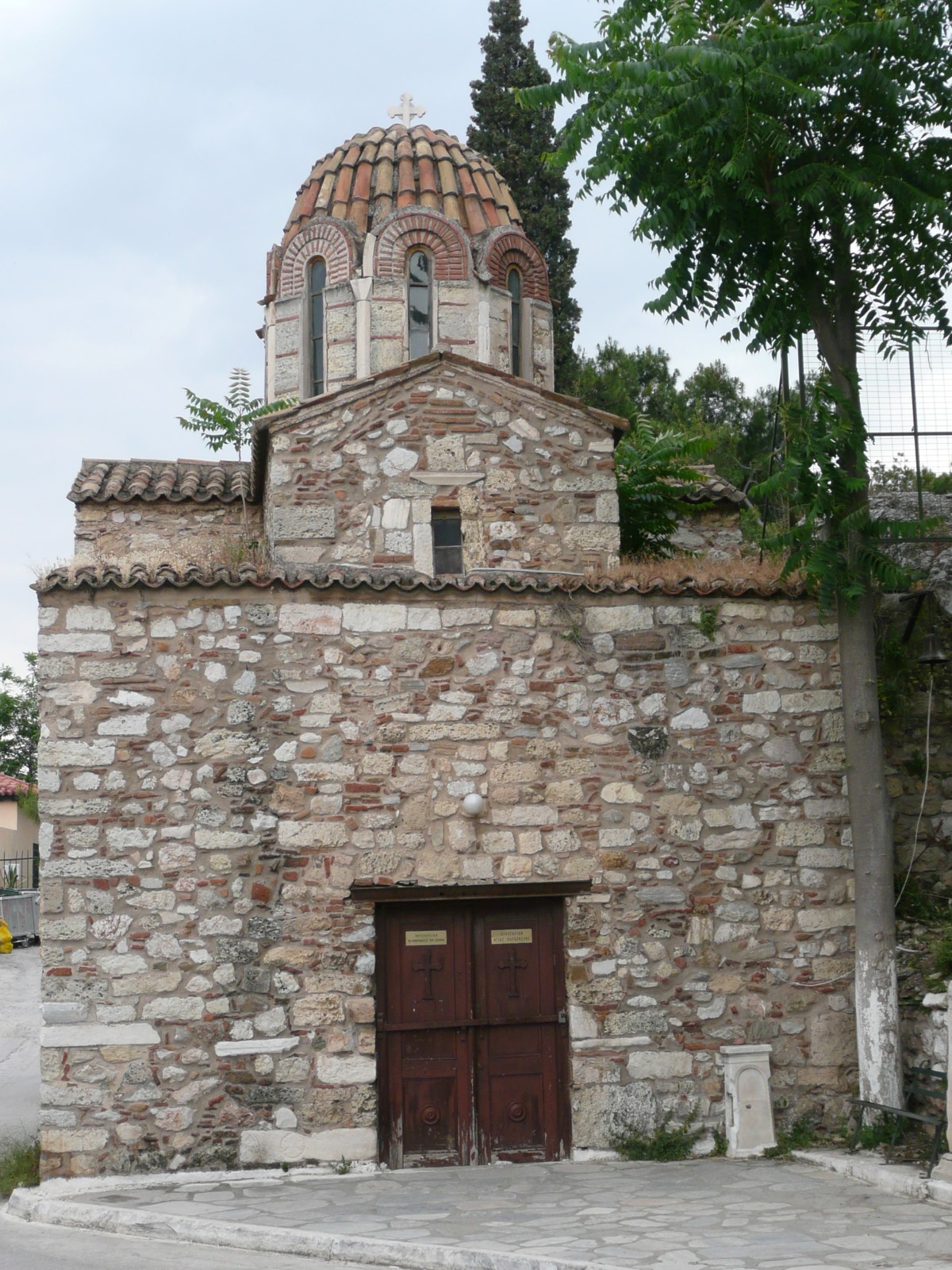
| Church of the Metamorphosis: This small Byzantine church is situated on the northern slope of Acropolis. Metamorphosis means Transfiguration in Greek. | |||
|
|||
|
|
|||
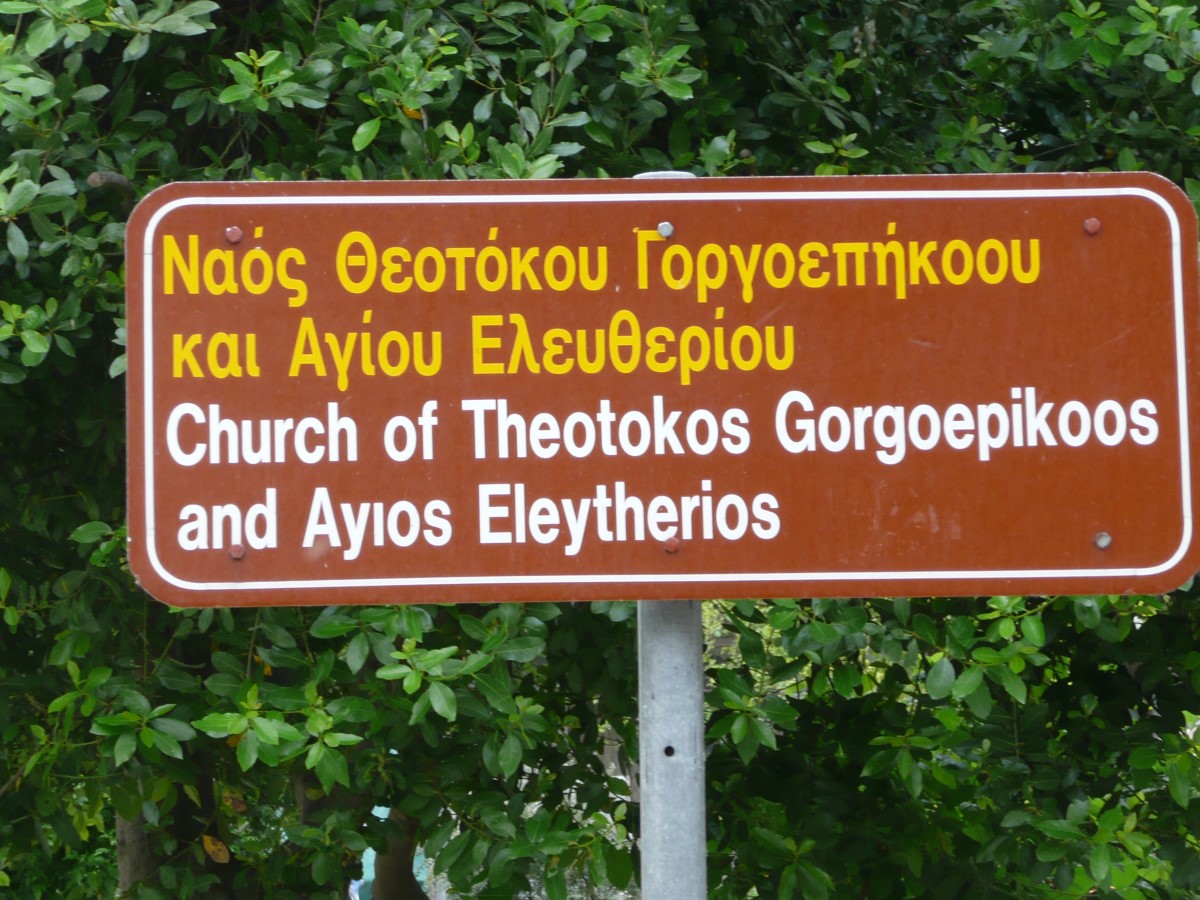
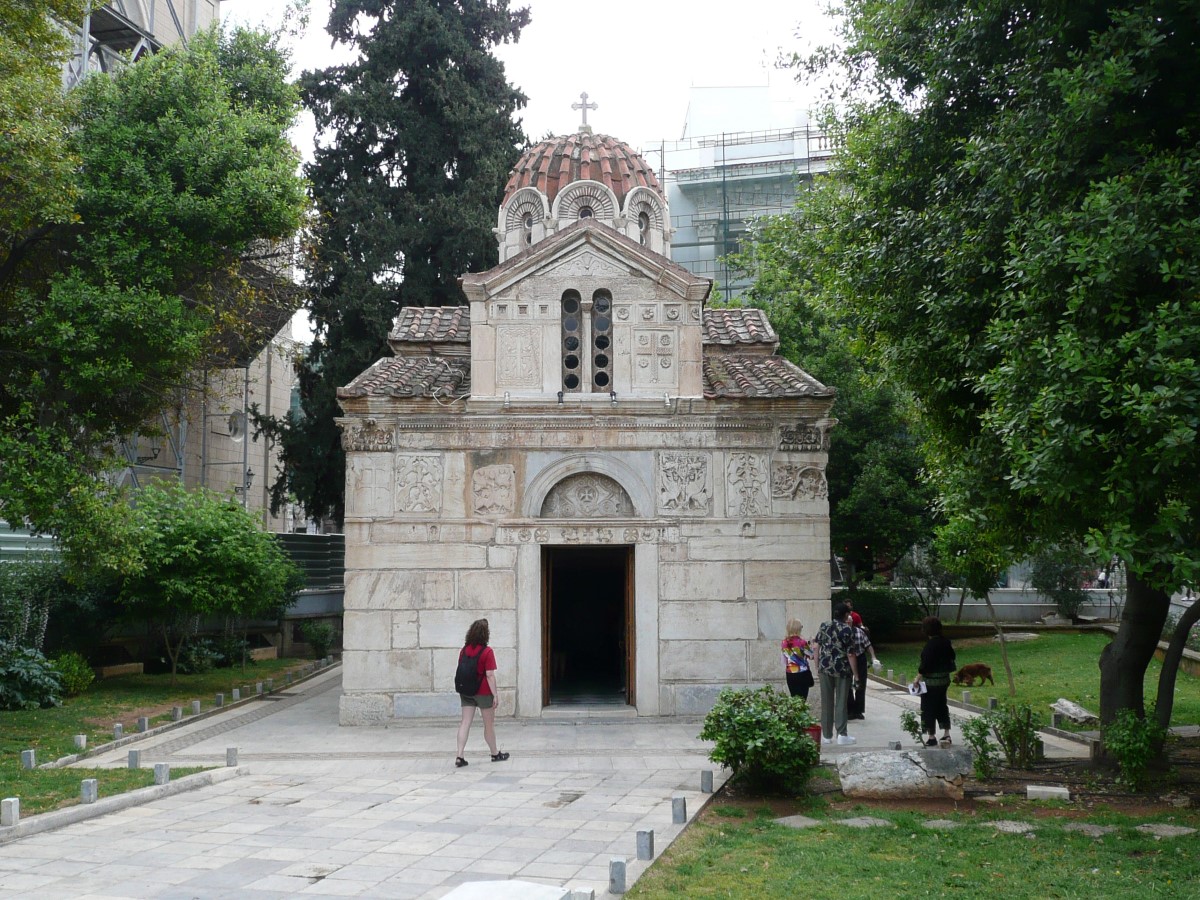
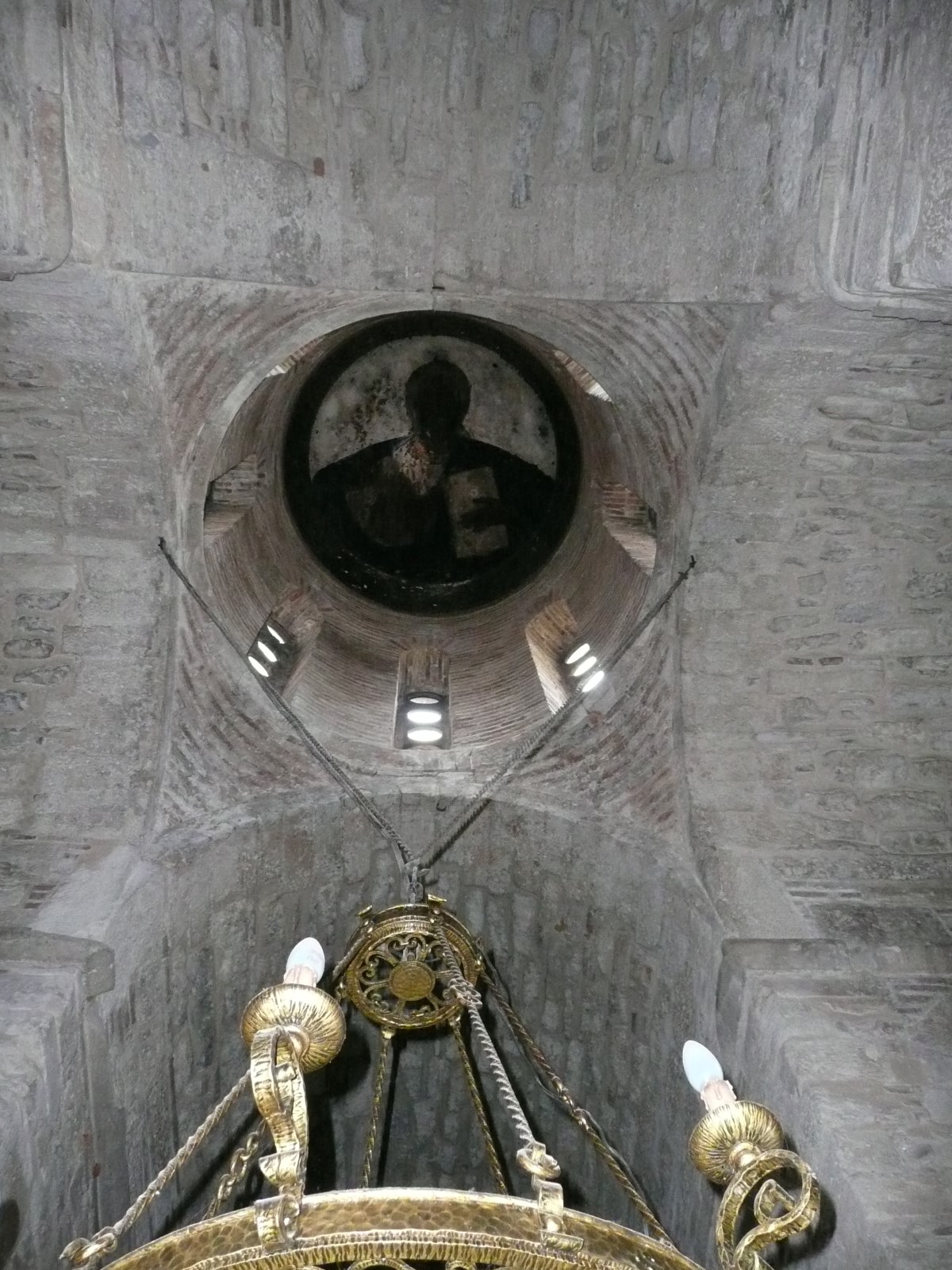
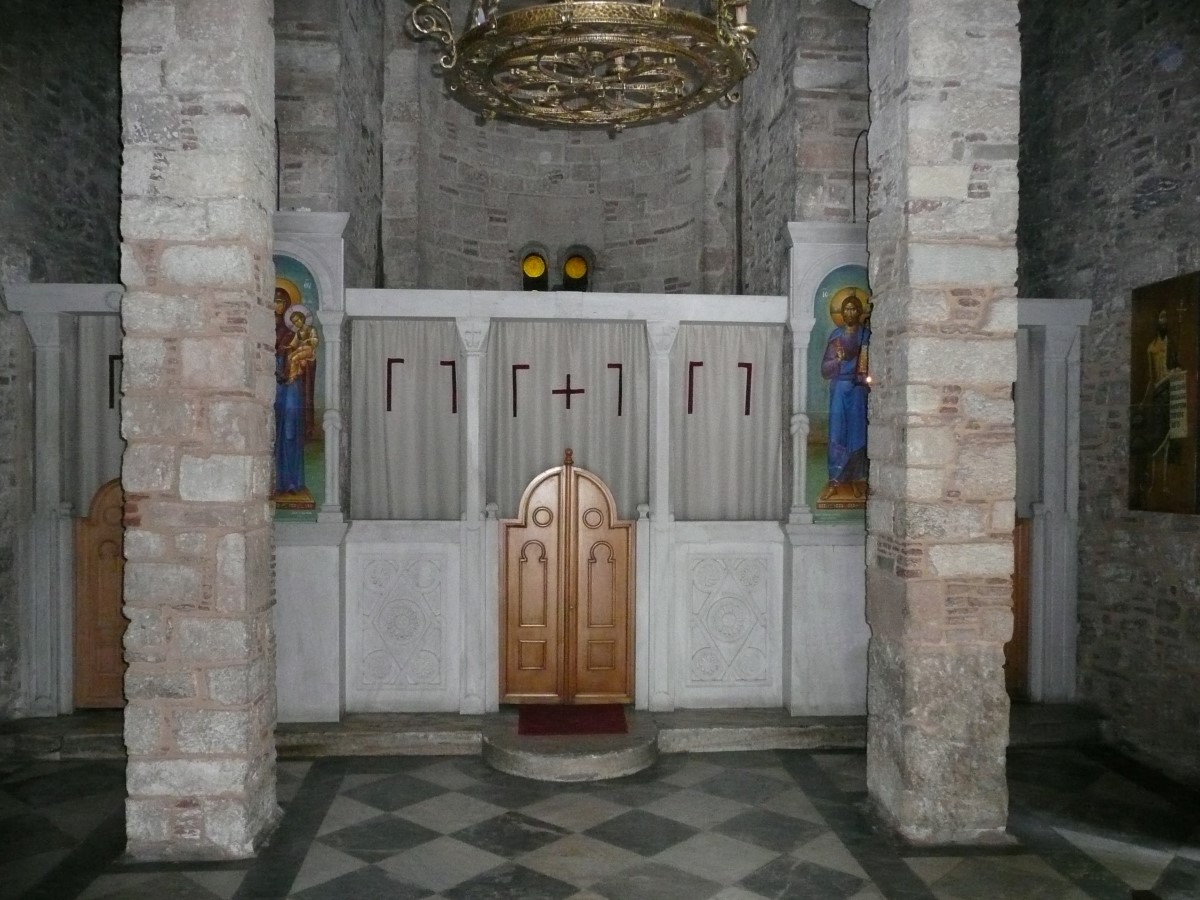
| Another of the many small churches located throughout Athens. | |||
|
|||
|
|
|||
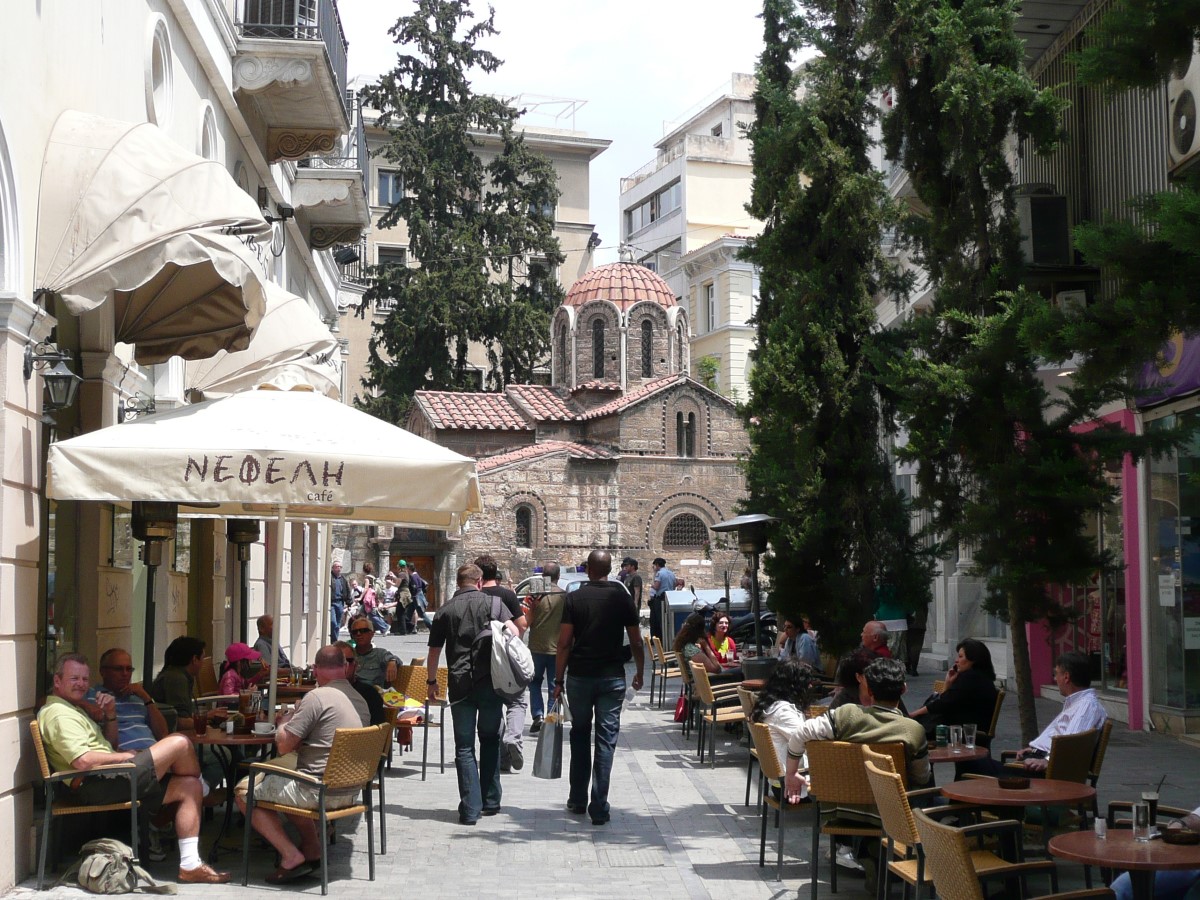
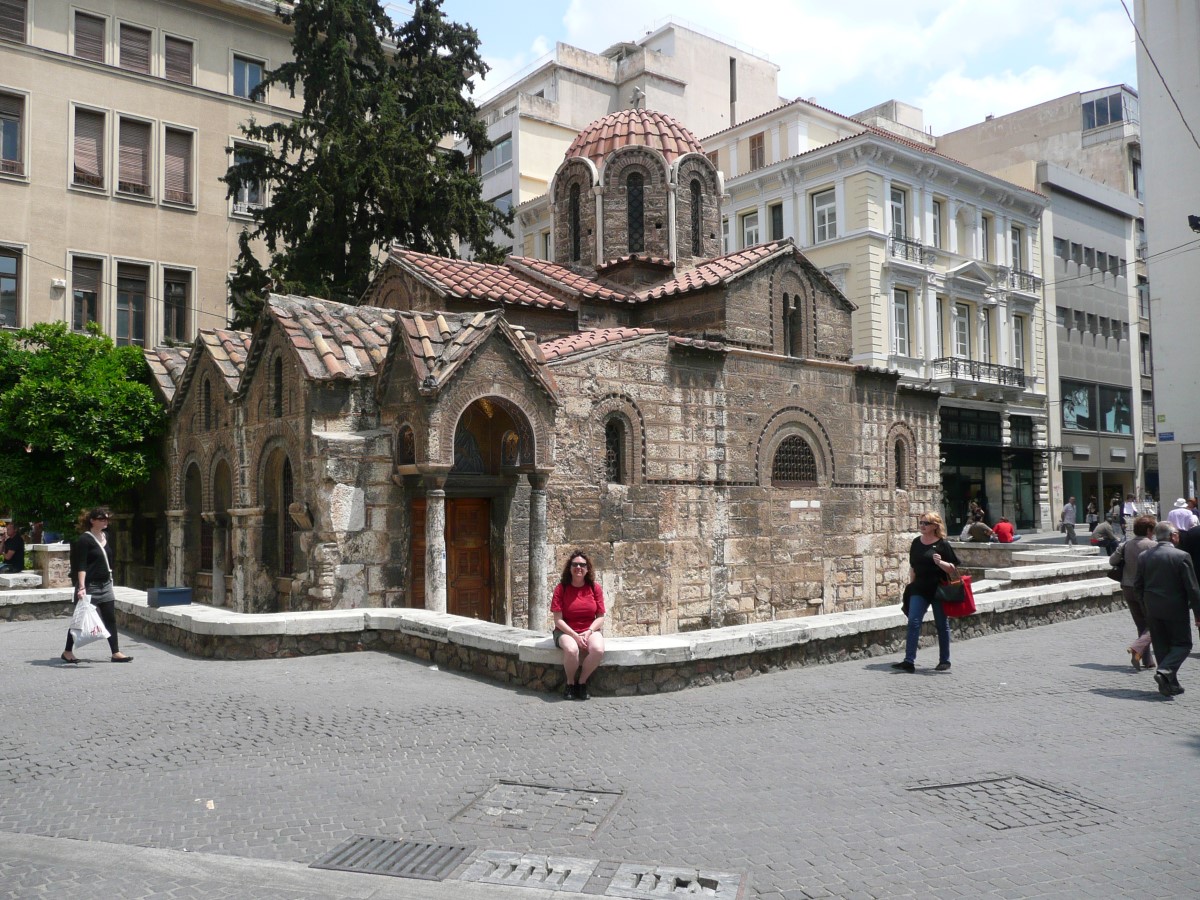
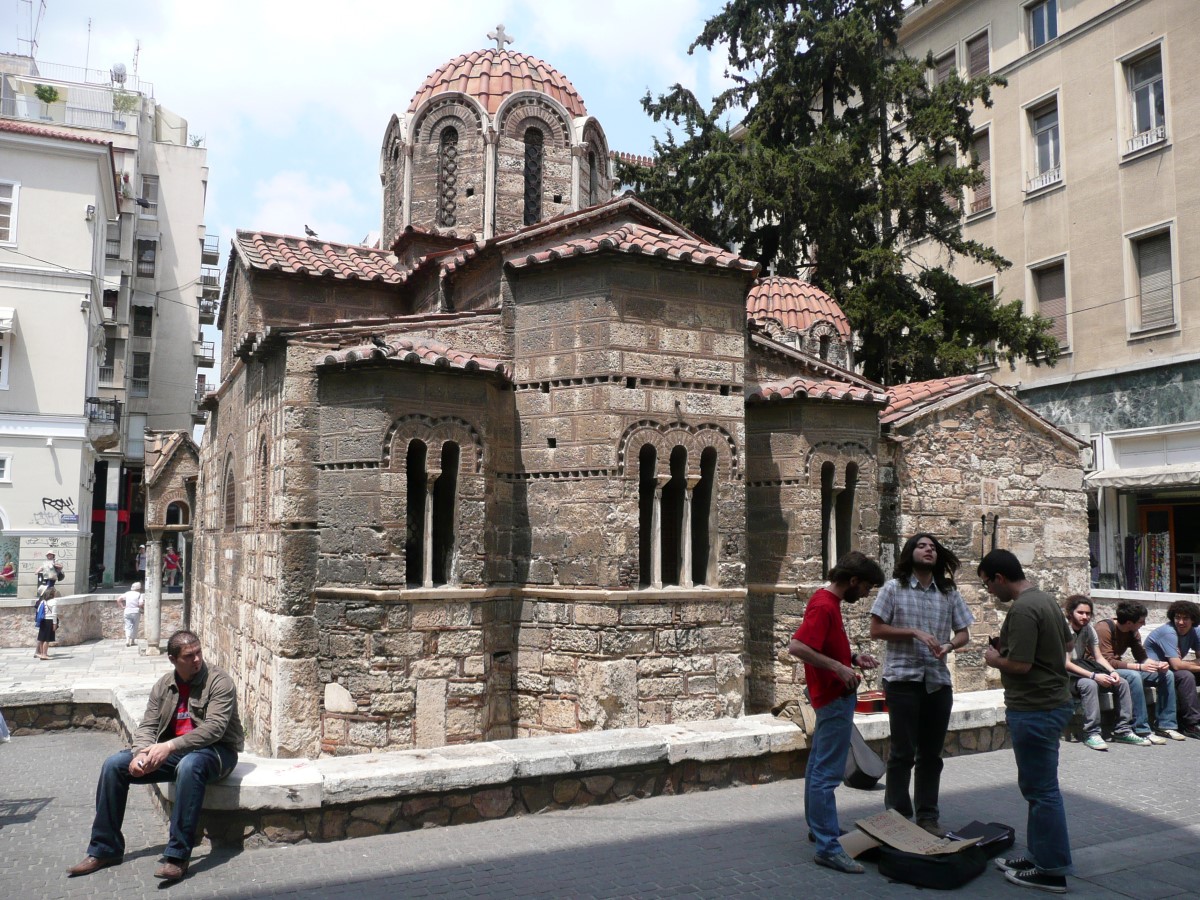
| Another church | |||
|
|||
|
<<< Previous Page Next Page >>> |